Battle of Ideas Festival Audio Archive
The Battle of Ideas festival has been running since 2005, offering a space for high-level, thought-provoking public debate. The festival’s motto is FREE SPEECH ALLOWED. This archive is an opportunity to bring together recordings of debates from across the festival’s history, offering a wealth of ideas to enjoyed. The archive also acts as a historical record that will be invaluable in understanding both the issues and concerns of earlier years and the ways in which debates have evolved over time.
Listen on:

Episodes
May 30, 2024
May 30, 2024
1hr 29 min
Recorded at the Battle of Ideas festival 2022 on Sunday 16 October at Church House, London.
ORIGINAL INTRODUCTION
How should we approach Shakespeare today? Challenging the reverence many hold for Britain’s greatest writer, some have argued that staging the Bard today is a tricky issue. For example, actress Juliet Stevenson stated that the alleged anti-Semitism in The Merchant of Venice meant that it could not be made ‘acceptable’. Some Shakespeare plays, she said, ‘where history has overtaken them, should just be buried’.
Others have taken the approach that the way to make Shakespeare ‘acceptable’ is to encourage his plays to meet the political sensitivities of a modern audience. The Globe in London hosted a series of educational workshops on how to teach ‘anti-racist Shakespeare’, looking at Othello and The Tempest in particular. Under the artistic directorship of Michelle Terry, The Globe also focused on ‘inclusivity’ in Shakespeare, with colour and gender-blind casting. Off stage, others have argued that teaching Shakespeare in schools should be met with caution, as his works contain ‘problematic, outdated ideas’ like ‘misogynoir’ and ‘homophobia’.
Purists might gasp at such meddling, and defend the progressive sensibilities of a genius writing in politically contentious times. After all, if The Merchant of Venice is so anti-Semitic, why is Shylock given the most meaningful speech in the play? But others argue that without reinterpretation, any work of great literature would languish. If it is the nature of great art to able to be speak across the ages, what is wrong with ‘decolonising’ Shakespeare in 2022? Should we be relaxed about moves to ‘modernise’ art from over 400 years ago? Or are we in danger of dumbing down these classics to suit contemporary political ends?
SPEAKERSProfessor Aaqil Ahmeddirector, Amplify Consulting Ltd; professor of media, University of Bolton; former head of religion, Channel 4 and BBC
Lindsay Johnswriter and broadcaster, BBC TV and radio arts and history documentaries; patron, Shakespeare Schools Foundation;
Tomiwa Owoladewriter and critic; contributing writer, New Statesman
Dr Alka Sehgal Cuthbertdirector, Don't Divide Us; author, What should schools teach? Disciplines, subjects and the pursuit of truth
Daniel Smithteacher of English; second in department, Reigate School, Surrey; author, Macbeth: 25 key quotations for GCSE
CHAIRGregor Claudeart teacher, Coopers Company and Coborn School
May 30, 2024
May 30, 2024
1hr 28 min
Recorded at the Battle of Ideas festival 2022 on Saturday 15 October at Church House, London.
ORIGINAL INTRODUCTION
From delinquent teenagers to free-love hippies, the family has often appeared to be in crisis. Today, many seem to be eschewing the traditional arrangement: millennials, now the largest generation, are less likely to live with a spouse and child than any of their elders. Likewise, rather than beginning the journey of starting their own families, record proportions of young people are still living with their parents. Among those who do form family groups, rates of marriage and children are lower and fewer people care for, or stay close to, elderly relatives.
Some argue that this might be down to the fact that the family is often cast as an outdated institution, even a relic of the post-war era and a bastion of white supremacy and homophobia. The recent liberalisation of divorce law, with the introduction of ‘no-fault divorce’, was celebrated by some as a step forward for choice and freedom. However, others bemoaned the potential for individuals to simply ‘give up’ on family commitments. Many commentators have observed that it is no coincidence that virtues long associated with family life – duty, stability, selflessness and thrift – are also in decline.
In her new book, The Problem with Parenting: how raising children is changing across America, Nancy McDermott investigates the changing nature of childrearing from the 1970s onwards, making the case for a renewal of a societal commitment to children and the rising generation. Given the mountain of evidence to show that stable, two-parent families are best for children, is family, for all its flaws, worth defending? Does family life make life more meaningful? On the other hand, can discussions about family life become too narrow, sidelining the many successful families that don’t adhere to a traditional heterosexual framework? Is the traditional family worth defending, or is there a better way to live?
SPEAKERSNeil Davenportcultural critic; head of faculty of social sciences, JFS Sixth Form Centre
Nancy McDermottauthor, The Problem with Parenting: how raising children is changing across America; chapter leader, Foundation Against Intolerance and Racism (FAIR)
Matthew Pattenpolitical and communications director, Centre for Social Justice; former charity CEO; former member, European Parliament
CHAIREllie Leeprofessor of family and parenting research, University of Kent, Canterbury; director, Centre for Parenting Culture Studies
May 30, 2024
May 30, 2024
1hr 20 min
Recorded at the Battle of Ideas festival 2022 on Sunday 16 October at Church House, London.
ORIGINAL INTRODUCTION
Last July, the deputy prime minister, Dominic Raab, accused Labour’s deputy leader, Angela Rayner, of ‘champagne socialism’ because she went to the Glyndebourne music festival to watch opera and drink champagne instead of joining colleagues on RMT picket lines. Raab’s comment was unfortunate, but it highlights the prevailing sentiment: opera is the preserve of the rich and upper-class people.
Is it because of this perception of elitism that young and new audiences don’t go to opera? After all, it’s not just right-wing politicians who hold this view; many within the left-leaning arts sector also seem to regard elitism as a problem for opera – a phenomenon neatly encapsulated by the Stormzy vs Mozart controversy.
In fact, opera houses around the world have undertaken numerous initiatives aimed at widening access to their shows. The Royal Opera House even hired an outside expert to tackle imperialism and orientalism in Puccini’s Madama Butterfly and cast its first black lead in Verdi’s Otello. Nevertheless, all sort of people attended the Arena di Verona Opera Festival in Italy last June to see the 1913 historical production of Verdi’s Aida where the white soprano Anna Netrebko sang with her face painted in black.
So how does opera stay relevant and attract new audiences? Do opera houses have to decolonise opera? Or do they simply have to stage truly exciting productions?
SPEAKERSHenrietta Bredindeputy editor, Opera magazine; author, Labour of Love
Dolan Cummingsauthor, Gehenna: a novel of Hell and Earth; associate fellow, Academy of Ideas; co-founder, Manifesto Club
Peter Hankeconductor and artistic director, Voces Academy; associate fellow, Oxford University
Michael Hollicksub-editor; opera lover
CHAIRElisabetta Gasparonilinguist; teacher; founder, Aesthetic Study Group
May 30, 2024
May 30, 2024
1hr 33 min
Recorded at the Battle of Ideas festival 2022 on Saturday 15 October at Church House, London.
ORIGINAL INTRODUCTION
Millennials have become infamous for having been brought up by overprotective parents, who shield them from physical and emotional harm. It’s said this has created a risk-averse, over-dependent generation of ‘snowflakes’. Such over-protection has continued as children become adults: some parents even attend their offspring’s job interviews.
In policy circles, this expansion of childhood has led to demands that we should raise the age for selling cigarettes, drinking alcohol and more. Yet this trend exists alongside demands for votes at 16. We seem unable to distinguish between dependent children and independent young adults, or how to exert adult authority.
Children are also frequently imbued with grown-up motives and understanding, a trend dubbed by sociologists as ‘adultification’. Sex education lessons are full of adult concepts; toddlers are encouraged to read by sexualised drag queens. School-yard bullying incidents have been transformed into ‘hate crimes’ that must be reported to outside authorities. In August, it was reported the Metropolitan Police had strip searched 650 children between 2018 and 2020. The Met has since conceded that they have ‘given officers advice around dealing with schools, ensuring that children are treated as children’. We might be worried that they needed reminding.
Conversely, once the line between adults and children is erased, appropriate adult authority – for example, in terms of disciplining children’s poor behaviour – can be demonised as authoritarian. Newspapers are full of stories of youth rampaging, out-of-control, with adults refusing to intervene, often fearing that they will be punished. Indeed, recently Ofsted downgraded the rating of one Kent school from ‘good’ to ‘inadequate’ because it was too strict, noting that ‘many pupils find this oppressive’, while their parents slammed the enforcing of ‘militaristic’ school rules such as mandatory morning smiles, compulsory eye contact with staff, and calling teachers ‘Sir’ or ‘Miss’.
Where do we draw the line between protecting children and giving them responsibility? Is it right to use state authority to criminalise childish behaviour? What does being a child or being an adult mean today?
SPEAKERSJessica Butcher MBEtech entrepreneur; co-founder, Tick.; co-founder, Blippar; commissioner, Equality and Human Rights Commission
Professor Frank Furedisociologist and social commentator; author, The Road to Ukraine: how the West lost its way and 100 Years of Identity Crisis: culture war over socialisation
Jacob Phillipsdirector, Institute of Theology and Liberal Arts, St Mary’s University, Twickenham; author, Obedience is Freedom
Barry Smithfreelance education consultant; former headmaster, Great Yarmouth Charter Academy; former founding deputy head, Michaela School; former regional director, Hackney New School
Don Watkinsauthor, Free Market Revolution, Equal Is Unfair and I Am Justice
CHAIRSally Millarddirector of finance; co-founder, AoI Parents Forum
May 23, 2024
May 23, 2024
1hr 16 min
Recorded at the Battle of Ideas festival 2022 on Saturday 15 October at Church House, London.
ORIGINAL INTRODUCTION
The high-profile murders during lockdown of Arthur Labinjo-Hughes and Star Hobson, killed by those supposed to care for them, shocked the country. A national review into their murders and an independent review of children’s social care have called for an overhaul of child protection, earlier and more decisive intervention, and improved workforce skills and knowledge.
The government’s Care Review highlighted the rise in killed and injured children, during the lockdown periods between April and September 2020, and some agencies have predicted that, within the next decade, 100,000 children could be in care. The former education secretary, Nadhim Zahawi, promised ‘system change on a national scale’ – but will it make any difference?
Is the system skewed to crisis intervention? Are social workers under- or over-intervening? Does the system need to address underlying issues, such as child poverty, domestic abuse and mental health? Or has a society-wide preoccupation with safety culture distracted agencies from protecting those children most at risk from abuse and neglect?
SPEAKERSTom Bewickchief executive, Federation of Awarding Bodies; presenter, Skills World Live; co-founder and chair, board of directors and trustees, BEYOND
Dave Clementspolicy advisor; writer; co-editor, The Future of Community
Dr Rakib Ehsanauthor, Beyond Grievance: what the Left gets wrong about ethnic minorities
Susie Hawkessenior lecturer in social work, University of Wolverhampton
CHAIRDr Ken McLaughlinformer social worker; academic; author, Social Work Politics and Society: from radicalism to orthodoxy and Stigma, and its discontents
May 23, 2024
May 23, 2024
50 min
Recorded at the Battle of Ideas festival 2022 on Sunday 16 October at Church House, London.
ORIGINAL INTRODUCTION
It seems that governments can’t get enough of meddling in our lifestyle choices, especially since the turn of the century. We’ve seen a widespread ban on smoking in public spaces and workplaces. In Scotland and Wales, there is now a minimum unit price for alcohol. Across the UK, sugary drinks are now taxed, forcing most manufacturers to reformulate to keep prices down while depriving their customers of choice. Debate is raging on whether to ban ‘buy one, get one free’ deals in supermarkets.
For politicians, these are vital steps in protecting the health of the nation when diseases related to smoking, boozing and obesity are leading causes of ill-health and mortality. Proponents argue that individual choice must be set aside to protect others and to reduce the strain on health services. But critics see these as attacks on personal autonomy, often with little impact on the problems they are supposed to solve.
But it’s not just governments: the moral imperative to live a healthy life has become all-encompassing. Day after day, we are bombarded with advice from all quarters about what we eat and drink, how much exercise we should do, and the latest fads about ‘superfoods’, supplements and alternative therapies.
Have we become too obsessed with health, and if so, why? Should our habits be a matter of personal choice or is it right to place restrictions on them? Is making food and booze more expensive in the midst of a cost-of-living crisis a good idea? Grab the breakfast of your choice, ‘healthy’ or otherwise, and join us for some lively banter on living longer.
SPEAKERSJustine Briandirector, Civitas Schools; commentator on food issues
Christopher Snowdonhead of lifestyle economics, Institute of Economic Affairs; editor, Nanny State Index; author, Killjoys
John Vincentco-founder, LEON; creator, FeedNHS; co-author, 2013 government School Food Plan; founder, The Longhouse
CHAIRDr Mo Lovattnational coordinator, Debating Matters; programme coordinator, Academy of Ideas
May 23, 2024
May 23, 2024
1hr 32 min
Recorded at the Battle of Ideas festival 2022 on Saturday 15 October at Church House, London.
ORIGINAL INTRODUCTION
Governments, environmental campaigners and social planners used to worry about excessive population growth. Even today, some environmentalists insist that having fewer children is the moral thing to do. Yet more and more are changing their tune, and are beginning to worry about the effects of collapsing birth rates.
Shrinking birth rates mean fewer working-age adults who generate the wealth needed to support pensioners – declining populations directly hit the economy. At the extreme end, birth rates below replacement levels suggest the end of humanity itself.
Many insist, at least in the UK, that children are simply unaffordable for a generation facing spiralling housing costs, poor job prospects and expensive childcare. Others note that even in periods of historical poverty, people have found ways and means to support children. Could lifestyle factors, individual choice and widely accessible birth control be behind the baby slump? Some conservative commentators insist that a flight from responsibility (and young couples avoiding growing up) are to blame, while others argue that many women are simply choosing to have children later in life in order to enjoy the freedoms of work and leisure for longer.
Should we care about the birth rate at all? Is a strong birth rate a sign of a society confident about the future? Should anything be done to address it, or should governments steer clear of trying to influence reproductive choices?
SPEAKERSEllie Leeprofessor of family and parenting research, University of Kent, Canterbury; director, Centre for Parenting Culture Studies
Dr Paul Morlanddemographer; business consultant; author, Tomorrow's People: the future of humanity in ten numbers
Louise Perrycolumnist, New Statesman; features writer, Daily Mail; author, The Case Against the Sexual Revolution; co-founder, The Other Half
Sandy Starrdeputy director, Progress Educational Trust
CHAIRJacob Reynoldspartnerships manager, Academy of Ideas
May 23, 2024
May 23, 2024
1hr 32 min
Recorded at the Battle of Ideas festival 2022 on Sunday 16 October at Church House, London.
ORIGINAL INTRODUCTION
Is our attitude to work changing? UK job vacancies remain high, but many people are opting for early retirement, part-time or ‘flexibilised’ working. In addition, low morale, stress and burnout are increasingly cited as the main reasons for people leaving or wanting to leave their job.
Professional bodies have complained that their members – such as doctors, nurses and teachers – are threatening to quit due to the mental-health impact of their work. Last summer, one of the main reasons cited for the HGV driver shortage was that the job had become too ‘tough’, discouraging young people from taking it up. Recent reports and general, widespread opinion seems to be that jobs just aren’t good for us.
Many jobs are renowned for being monotonous and boring, but ‘earning your keep’ used to be a source of pride and self-respect. Is this no longer the case? One of the reasons cited for the post-pandemic labour shortage was the record number of workers choosing not to return to work by voluntarily removing themselves from the official ‘seeking employment’ statistics.
Has work really become too much to put up with? Will our desire for an easier life, more family and leisure time make us feel as good about ourselves the way a job ‘well done’ used to do? Is the nature of jobs to blame? Or have we simply fallen out of love with work?
SPEAKERSBrian Dennytrade-union journalist, Rebuild Britain; author, Rebuild Britain’s Fishing Industry; curator, Working River: songs and music of the Thames project
Simon Hoppepartnerships success director
Linda Murdochformer director of careers, University of Glasgow
Angelica Walker-Werthwriter, editor and programmes manager, Objective Standard Institute
Dr Glynne Williamsassociate professor, school of business, University of Leicester
CHAIRPara Mullanformer operations director, EY-Seren; fellow, Chartered Institute of Personnel and Development
May 23, 2024
May 23, 2024
1hr 36 min
Recorded at the Battle of Ideas festival 2022 on Saturday 15 October at Church House, London.
ORIGINAL INTRODUCTION
With FBI raids on a former president’s home and accusations from the current president that the conduct of his predecessor’s ‘extreme right’ supporters amounts to ‘semi-fascism’ – what the hell is happening in America? As outsiders look at the toxic domestic state of US politics, it seems difficult to see how the US will rise to its traditional leadership role on the world stage. In an unstable world, wracked by major economic challenges and a war at the heart of Europe adding to destabilising geopolitical tensions, the health of US democracy is of interest beyond its own borders.
Despite Joe Biden beginning his presidency in 2021 by declaring that ‘America is back’ – and that he’d reverse the previous administration’s efforts to put ‘America First’ – the present midterm campaign-trail is not focusing on international issues. Instead, November’s congressional election is being posed by some as a battle for the ‘soul of the nation’. Biden has ratcheted up his rhetoric against the former president Donald Trump and his allies in recent speeches, casting the modern Republican Party as a threat to America itself. MAGA Republicans, disparagingly dubbed ‘Trumpies’, stand accused of threatening ‘the very foundations of our republic’. Meanwhile, Trump claims this is a slur against the 74million who voted for him in 2020, while his supporters claim the government is guilty of egregious persecution – including hyperbolic accusations of high treason used to justify the FBI raid on Mar-a-Lago, or the labelling of the 6 January Capitol riot as an organised insurrection. It certainly seems that within America, politicians behave as though the enemy is at home, while world economic and political matters are a distant concern.
But even if the political campaigns ignore foreign policy, electoral outcomes will shape America’s place in the world. Outside of the US, global leaders are questioning whether America is fit to ‘lead the world’, exemplified by its messy exit from the 20-year war in Afghanistan. When first elected, Biden promised a new Cold-War narrative that would return America to its global activist role. However, nearly two years later, the US has struggled to influence any events regarding the war in Ukraine decisively. Meanwhile, China’s Belt and Road Initiative is beginning to challenge the economic influence of the US in some parts of the world. Despite these negative trends, the US remains the world’s largest economy, with a global influence far beyond that of China, and many US weapons are proving effective against Russia in Ukraine. So, to what extent is America really declining?
Perhaps, more pertinently, do Americans themselves even care about remaining the preeminent power when midterm debates focus so much on internal fights over divisive cultural questions like school choice, abortion, and voting issues? Much of the mainstream political discussion in the US is caught up in the culture wars, with rows over race, gender ideology and so-called ‘woke’ politics seeming to divide communities. Will the upcoming midterms, which crucially set the stage for the 2024 presidential elections, hasten or hinder America’s apparent international decline? Will an electoral challenge resolve or exacerbate internal divisions? What is happening in America, and what consequences will it have for the rest of the world?
SPEAKERSYaron Brookchairman of the board, Ayn Rand Institute; host, The Yaron Brook Show; co-author, In Pursuit of Wealth: the moral case for finance
Jack Garlandstudent, University of California, Los Angeles; writer and editor, Bruin Political Review
Dr Richard Johnsonwriter; lecturer in US politics, Queen Mary, University of London; author, The End of the Second Reconstruction: Obama, Trump, and the crisis of civil rights
Helen Searlschief operating officer, Feature Story News; founder, Washington Hyenas book club; Ulysses enthusiast
CHAIRFraser Myersdeputy editor, spiked; host, The spiked podcast
May 23, 2024
May 23, 2024
1hr 36 min
Recorded at the Battle of Ideas festival 2022 on Saturday 15 October at Church House, London.
ORIGINAL INTRODUCTION
The UK government’s Rwanda policy has been met with widespread criticism. The process of deporting migrants from the UK to Rwanda was challenged by human-rights lawyers and organisations as a continuation of the ‘hostile environment’ policy, and a dangerous display of Home Office racism. Even moderate critics complained about the government using avoidance tactics, by effectively shipping its immigration problems overseas.
But while some bemoaned the Rwanda policy as either unsustainable or immoral, there are many in the UK who support the idea of a government taking action in regards to its borders. Concerns about people traffickers are shared by those with both liberal and conservative views on immigration, and many still believe in the Brexit promise that a sovereign nation should be able to control its own borders. It doesn’t help that discussions about levels of immigration are often reduced to caricatures of luvvie liberals and little Englanders, with more nuanced concerns about resources or solutions pushed to the wayside.
Different ideas about how to tackle illegal immigration have been tested – from wave machines to tense negotiations with France. But are such short-term measures missing a broader problem with immigration policy in the UK? While the government was quick to open its arms to Ukrainian refugees, the process of accepting thousands of people soon ground to a halt under creaking British bureaucracy. And with shortages of labour post-pandemic, some have argued that much of the problem of illegal migration could be solved by taking a fresh look at the Home Office’s stringent points-based system.
Is it time we had an honest discussion about immigration? Is it fair that immigrants often get used to explain a lack of resources in education, housing or GP appointments? Should government be tougher on illegal immigration? And how can we tell the national mood when it comes to immigration policy, when so much of the debate ends in finger pointing?
SPEAKERSPeymana AssadObama Leader of Europe; councillor, London Borough of Harrow; first person of Afghan origin elected to UK public office; founder, Labour Foreign Policy Group
Dr Jim Butcherlecturer; researcher; co-author, Volunteer Tourism: the lifestyle politics of international development
William Cloustonparty leader, Social Democratic Party
Matthew Leshhead of public policy, Institute of Economic Affairs
Professor Patrick Vernon OBEindependent non-executive director, Birmingham and Solihull ICS; social commentator; co-author, 100 Great Black Britons; creator, Every Generation Game: Windrush Edition; fellow, Clore and Winston Churchill
CHAIRJustine Briandirector, Civitas Schools; commentator on food issues
May 22, 2024
May 22, 2024
1hr 13 min
Recorded at the Battle of Ideas festival 2022 on Saturday 15 October at Church House, London.
ORIGINAL INTRODUCTION
For the first time in Northern Ireland’s existence, the leader of a nationalist party is in line to become first minister. In May’s elections, Sinn Fein won the most seats – leading some to argue that the prospect of a united Ireland is closer than ever. In a recent poll conducted by the University of Liverpool and Irish News, 43 per cent of respondents answered that they would ‘vote for a united Ireland tomorrow’ if a border poll were called, compared to 39.5 per cent who said they would not.
Since elections last year, Scotland has been governed by a pro-independence coalition of the SNP and Greens, who now want to hold a new referendum on Scotland’s future. Although a clear majority voted to stay in the Union in 2014, pro-independence campaigners and politicians argue that Brexit has changed the political landscape and ‘IndyRef2′ is the only way to resolve the matter.
While calls for border polls and referendums in Northern Ireland and Scotland differ in historical and political context, they share one similarity: Westminster seems desperate to prevent them. In both cases, a vote would require the agreement of the UK government – which is currently implacably opposed. Scotland’s first minister, Nicola Sturgeon, has been forced to refer plans to hold a second referendum to the Supreme Court after the UK government refused to grant permission for a legally binding vote.
Should we be concerned that the relationship between the UK and its constituent nations seems to be tipping into one of coercion rather than consent? Are attempts to block independence referendums a sign of the weakness of the Union? When opinion polls suggest voters are, at best, ambivalent about constitutional change, should these issues take a back seat in favour of more immediate matters, like the cost-of-living crisis? Or is denying an Irish border poll, or a Scottish Indyref2 the kind of retreat from democracy that should worry all democrats?
SPEAKERSBen Collinswriter; communications consultant; former chief executive, The Northern Ireland Federation of Housing Associations; author, Irish Unity: time to prepare
Dolan Cummingsauthor, Gehenna: a novel of Hell and Earth; associate fellow, Academy of Ideas; co-founder, Manifesto Club
Ewan Gurrcharity pioneer; consultant; columnist, Dundee Evening Telegraph; co-founder, Sovereignty
Lord Moylanconservative peer
CHAIRKevin Rooneyhistory and politics teacher; editor, irishborderpoll.com; convenor, AoI Education Forum; co-author, The Blood Stained Poppy
May 22, 2024
May 22, 2024
1hr 40 min
Recorded at the Battle of Ideas festival 2022 on Saturday 15 October at Church House, London.
ORIGINAL INTRODUCTION
Across Europe, politicians are braced for a febrile winter. In the Netherlands, farmers continue to protest against new measures to reduce nitrogen that require a huge reduction in the number of farms. In Germany, awkward questions are being raised about the country’s reliance on Russian gas. In Italy, technocrat extraordinaire Mario Draghi resigned as prime minister, with a coalition of parties led by Giorgia Meloni’s Brothers of Italy – and including Silvio Berlusconi’s Forza Italia – set to replace him. In France, Macron, still haunted by the gilet jaunes protests and bruised by recent elections and the enduring threat of Le Pen, contends with droughts, which have threatened harvests and food production. And Greece is racked by a series of scandals and talks of renewed tensions with Turkey. All the while, tensions continue to play out about the correct response to Russia’s invasion of Ukraine, with Eastern European and Baltic countries demanding ever tougher measures such as tourist and visa bans, whilst leading EU powers like Germany and France worry about the long-term consequences of slowing gas supplies to Europe.
Whilst the shocks and crises vary from country-to-country, almost all European countries are dealing with populist revolts of some shape or form, and a shared economic struggle in times of inflation and energy shortages. What are the roots of this continent-wide malaise?
Why does European politics feel more unstable and unpredictable than ever? Are old certainties, such as Germany’s economic power or Holland or France’s agricultural economy, being put into question? And where is the EU in all of this? In the aftermath of Russia’s invasion of Ukraine, many forecast a new renaissance for the idea of Europe, and the institution of the EU. Such predictions seem now to have been optimistic at best. How can the continent, its politicians and institutions, survive the current storms? What Europe lies at the other side?
SPEAKERSIvar Arpijournalist; publisher and podcaster, Rak höger; co-author, Så blev vi alla rasister and Genusdoktrinen
Sabine Beppler-Spahlchair, Freiblickinstitut e.V; CEO, Sprachkunst36; author, Off-centre: how party consensus undermines our democracy; Germany correspondent, spiked
Thomas Fazijournalist and writer; author, The Battle for Europe: how an elite hijacked a continent - and how we can take it back and The Covid Consensus: the global assault on democracy and the poor - a critique from the Left
David Goodharthead of demography unit, Policy Exchange; author Head, Hand, Heart: The Struggle for Dignity and Status in in the 21st Century and The Road to Somewhere
Stepan Hobzajournalist; staff writer, Lidové Noviny; creator, Kulturní války (Culture Wars) podcast
CHAIRBruno WaterfieldBrussels correspondent, The Times
May 22, 2024
May 22, 2024
44 min
Recorded at the Battle of Ideas festival 2022 on Sunday 16 October at Church House, London.
ORIGINAL INTRODUCTION
Stuart Mitchell has photographed many of the leading political and cultural figures of the past decade, including Boris Johnson, Nigel Farage, Benjamin Netanyahu, Michel Barnier, Donald Trump, Douglas Murray and Tom Stoppard. He also had a front-row seat as Britain left the EU in his role as the Brexit Party’s official photographer and witnessed, up close, the 2020 US Presidential election.
‘As a photographer with privileged access one is able to ghost around the room at key historical moments. This has allowed me to gain an insight into the personalities behind the political projection. I look forward to sharing some of these insights with everyone.’
This will be a unique chance to look through many of Stuart’s most important shots with the photographer himself and ask any questions regarding their role in broader political events. What is the role of photography and imagery in political history?
SPEAKERSStuart Mitchellphotojournalist
CHAIREve Kayexecutive producer; international, primetime and creative arts Emmy winner; Realscreen and Critics Choice TV award winner; RTS winner and Grierson, Broadcast, Banff and PGA award nominee
May 21, 2024
May 21, 2024
1hr 15 min
Recorded at the Battle of Ideas festival 2022 on Sunday 16 October at Church House, London.
ORIGINAL INTRODUCTION
Open debate has been suffocated by today’s censorious climate and there is little cultural support for freedom as a foundational value. What we need is rowdy, good-natured disagreement and people prepared to experiment with what freedom might mean today. Faced with this challenge, the Academy of Ideas decided to launch Letters on Liberty – a radical public pamphleteering campaign aimed at reimagining arguments for freedom in the 21st century.
In her Letter – Translation as Liberation – author and senior lecturer Vanessa Pupavac argues that translation is the truest form of altruism – a process through which we express our human sociability across language borders. Finding creativity in the difficulties of communication across language and time barriers, she argues that the layers of meaning provided by different types of translation give freedom and life to a work.
Vanessa and respondents explore the world of translation. Is translating a text more than simply copying meaning into another language? How have different translations and methods changed the way we view key texts and ideas throughout the ages? How does modern translation fit into contemporary concerns about cultural appropriation – should white translators be trusted with black authors’ texts, for example? And in a climate of suspicion around free speech, does communication matter more than ever?
SPEAKERSDr Marie Kawthar Daoudalecturer in French language and literature, Oriel College, University of Oxford; author, L’Anti-Salomé
Dr Shirley Lawesresearcher; consultant and university teacher, specialising in teacher education and modern foreign languages; Chevalier dans l'ordre des Palmes Académiques awarded
Dr Vanessa Pupavactranslator; associate professor, School of Politics and International Relations, University of Nottingham; author, Translation as Liberation
CHAIRSabine Beppler-Spahlchair, Freiblickinstitut e.V; CEO, Sprachkunst36; author, Off-centre: how party consensus undermines our democracy; Germany correspondent, spiked
May 21, 2024
May 21, 2024
1hr 31 min
Recorded at the Battle of Ideas festival 2022 on Saturday 15 October at Church House, London.
ORIGINAL INTRODUCTION
Open debate has been suffocated by today’s censorious climate and there is little cultural support for freedom as a foundational value. What we need is rowdy, good-natured disagreement and people prepared to experiment with what freedom might mean today. Faced with this challenge, the Academy of Ideas decided to launch Letters on Liberty – a radical public pamphleteering campaign aimed at reimagining arguments for freedom in the 21st century.
In his Letter – Risking it all: the freedom to gamble – writer and poker player Jon Bryan argues that we should all be concerned about the introduction of more restrictions on gambling. Almost every proposal on gambling regulation today is about limiting what we can do, he argues, often taking away both our privacy and basic freedoms. The narrative behind concerns about gambling is the idea that the state should step in and control our finances, as we cannot be trusted with them. The consequences of accepting controls and restrictions in this area of life, he argues, sets a precedent for their introduction elsewhere.
Jon and respondents discuss why being free to risk it all is something worth protecting. How do we deal with problem gambling – tragic stories of people who have become destitute – if not through restrictions? Is there a class element to the way in which gambling is often discussed, with words like feckless playing into existing prejudices about how working-class people manage their lives? And from drinking and smoking to gambling and enjoying extreme sports, why do we seem so keen on controlling the personal decisions citizens are allowed to make about their own lives?
SPEAKERSJon Bryangambling writer and poker player
Mark Littlewooddirector general, Institute of Economic Affairs; broadcaster and columnist, The Times
Ed RennieCatholic writer; political analyst
Brigid Simmonds OBEchair, Betting and Gaming Council
CHAIRHilary Salt FIA, FPMI, FRSAactuary; founder, First Actuarial
Battle of Ideas festival archive
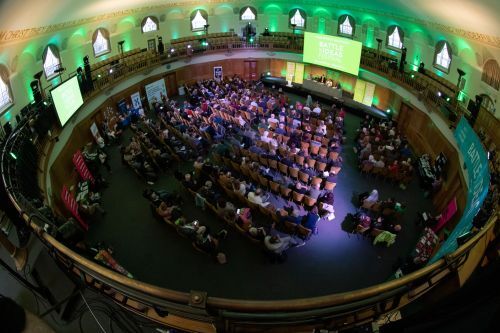
This project brings together audio recordings of the Battle of Ideas festival, organised by the Academy of Ideas, which has been running since 2005. We aim to publish thousands of recordings of debates on an enormous range of issues, producing a unique of political debate in the UK in the twenty-first century.