Battle of Ideas Festival Audio Archive
The Battle of Ideas festival has been running since 2005, offering a space for high-level, thought-provoking public debate. The festival’s motto is FREE SPEECH ALLOWED. This archive is an opportunity to bring together recordings of debates from across the festival’s history, offering a wealth of ideas to enjoyed. The archive also acts as a historical record that will be invaluable in understanding both the issues and concerns of earlier years and the ways in which debates have evolved over time.
Listen on:

Episodes

Jun 29, 2026
Jun 29, 2026
1 hr 30 min
Recorded at the Battle of Ideas festival 2025 on Sunday 19 October at Church House, Westminster.
ORIGINAL INTRODUCTION
Keir Starmer and Angela Rayner made housing a central pillar of their domestic agenda when they were elected. Yet from two disgraced housing ministers to younger generations’ desperation about astronomical rents and unaffordable property prices, housing controversies are rarely far from the headlines.
The government’s rhetoric remains impressive. Rayner, the former housing secretary, put forward the Social and Affordable Homes plan, to deliver 300,000 new homes, with ‘180,000 earmarked for social rent’ and claims Labour will ‘build, build, build’ – even on the sacred green belt. But despite the promise to deliver 1.5million new homes in England over the five-year parliamentary term, evidence suggests a disappointing failure to get even close to meeting their own housing targets – just like previous governments. So, we seem, yet again, to be stuck in a rut of not enough homes for those who need them.
UK housing has been in crisis for a long time. For years, demand has overwhelmed supply, and both rents and mortgages continue to climb. The Office for National Statistics’ private rents index shows that renting in England is now 50 per cent more expensive than 14 years ago. London’s 2.7million private tenants saw their rents rise by 11.5 per cent in 2024 alone.
Some still blame Margaret Thatcher’s 1980s housing reforms: the right to buy was sold as a pathway to homeownership and social mobility, but instead led to a decline in social housing and made private landlords rich. One think tank has claimed the policy cost taxpayers £200 billion.
However, in Bricking it: The UK Housing Crisis and the Failure of Policy, Charlie Winstanley argues that while the significant economic and social changes under Thatcher shaped the housing landscape today, there are much wider demographic, social policy, financial and industrial shifts that have accumulated to create such an unstable housing situation.
A huge increase in migration has also become part of the debate. Is the problem more about too many people rather than too few houses? Meanwhile, shadowy plans to turn residential properties into homes of multiple occupancy (HMOs) to replace asylum hotels add to a sense of grievance, shifting the problem to residential areas without consulting locals.
Other factors have created an escalating sense of crisis: eye-watering service charges and ground rent for leaseholders; landlords complaining that Renters’ Rights legislation will mean taking properties off the market; politicians pandering to NIMBY voters; labyrinthine planning laws.
Is the government going about its housing strategy in the wrong way? How can we solve the housing crisis?
SPEAKERSJames Heartfieldlecturer and writer; author, Britain’s Empires 1600-2020 and Let's Build!
Helen MacNeilconsultant architect, shedkm; founder, Honest Architecture (HA!) free-speech dinners
Matthew Torbittpolitical commentator and writer; senior fellow, The Centre for Social Justice
Charlie Winstanleyauthor, Bricking it: The UK Housing Crisis and the Failure of Policy; public affairs & social policy development professional
CHAIRSheila Lewisretired consultant; former housing association chair
Jun 29, 2026
Jun 29, 2026
1 hr 30 min
Recorded at the Battle of Ideas festival 2025 on Sunday 19 October at Church House, Westminster.
ORIGINAL INTRODUCTION
‘I have the feeling that this competition is going to be as important, if not more important, than the Champions League’, said Chelsea manager, Enzo Maresca, after his team had won the inaugural FIFA Club World Cup. This summer’s competition was intended to showcase club football from all continents of the world. But many involved in the game derided the tournament as an unnecessary addition to an already overcrowded football calendar.
Saudi Arabia helped to bankroll the Club World Cup, and is fast developing into a powerhouse for club and international football. The country will host the 2034 World Cup and is planning to build 11 new futuristic stadiums. Saudi club sides are competing with top European teams to sign world-class players such as Cristiano Ronaldo, Karim Benzema and Sadio Mane. The Saudis have even greater financial muscle than the English Premier League or La Liga in Spain. On the world stage, it seems, money talks, while concerns about democracy and human rights are muted.
In the UK, the fate of football clubs, big and small, is rightly considered to be of enormous importance to local communities. The response from Westminster has been the passing of the Football Governance Act into law. The Act means a government-appointed regulator will be in place to check on the health of clubs and monitor negotiations within the English football ‘pyramid’. Currently Morecambe FC and Sheffield Wednesday are on the brink due to recalcitrant owners, and many people say that the football regulator cannot come soon enough. But would such a regulator be able to save these clubs anyway?
Another big change has been the rise of women’s football. The Lionesses’ victory in the Women’s Euros 2025 will provide a big boost to the women’s game in England – but it is also noticeable that the women’s game is growing in both quality and audience figures.
Are we entering a new age of football? Is football now conquering the globe? Or has the beautiful game finally become disconnected from its fans and roots with ever-more fanciful tournaments taking place in soulless arenas to satisfy a multi-billion-pound industry?
SPEAKERSDr Tim Blackbooks and essays editor, spiked
John McGuirkeditor, Gript Media
Linzi Smithhospitality manager
Dr Dominic Standishwriter and commentator on risk and sport; professor, University of Iowa; author, Venice in Environmental Peril? Myth and reality
CHAIRGeoff Kidderdirector, membership and events, Academy of Ideas; convenor, AoI Book Club
Jun 26, 2026
Jun 26, 2026
1 hr 30 min
Recorded at the Battle of Ideas festival 2025 on Sunday 19 October at Church House, Westminster.
ORIGINAL INTRODUCTION
After a year of a Labour government, the UK is heading for a ‘debt-crisis cliff edge’, if it is not already in a ‘debt doom-loop’. Things are in many ways worse even than the moribund economy that the Conservatives bequeathed. Government borrowing, inflation and unemployment are going up. The interest rate that government is paying is also up, making the fiscal position even worse. Attempts to rein in welfare spending have been curtailed due to pressure from Labour MPs.
Meanwhile, the broader economy continues to stutter. After a comparative boom in the first quarter, the economy was shrinking again by the summer. Job vacancies continue to fall, in part thanks to higher employment taxes, while the number of people on sickness benefits continues to rise. Energy costs remain high compared to competitors like the US and China. The ongoing uncertainty caused by Donald Trump’s trade tariffs and conflict in the Middle East hasn’t helped, but the UK economy was already weak. There has been renewed talk of ‘stagflation’ – a stagnant economy alongside rising inflation.
But is this assessment a bit too gloomy? As one Telegraph commentator noted in July, private-sector debt has been falling faster than government debt has risen: ‘You would hardly know it from our compulsion to talk the country down, but the UK is today one of the least indebted states in the rich world.’ Inflation is still way down on levels seen during the post-pandemic energy-price crisis. The official unemployment rate (4.7% in May) was still well below the EU (5.9%), Germany (6.0%) and France (7.4%) and not very different from the US (4.1%).
Is the UK economy in big trouble or have we all become too adept at talking the country down? Have we underestimated the ongoing impact of the 2008 financial crisis and the cost of dealing with Covid? Is there anything Labour can do to kick-start growth or are we at the mercy of events elsewhere?
SPEAKERSRob Lyonsscience and technology director, Academy of Ideas; convenor, AoI Economy Forum; author, Panic on a Plate
Jon Moynihanbusinessman; former chair, Vote Leave; Conservative peer; author, Return to Growth: How to Fix the Economy
Professor Vicky Prycechief economic adviser and board member, Centre for Economics and Business Research; author, How to be a Successful Economist
Karl Williamsresearch director, Centre for Policy Studies
CHAIRTimandra Harknessjournalist, writer and broadcaster; author, Technology is Not the Problem and Big Data: does size matter?; presenter, Radio 4's FutureProofing and How to Disagree
Jun 26, 2026
Jun 26, 2026
1 hr 34 min
Recorded at the Battle of Ideas festival 2025 on Sunday 19 October at Church House, Westminster.
ORIGINAL INTRODUCTION
In December last year, critic Dean Kissick, in an article for Harper’s Magazine, caused controversy in the contemporary art world. He complained that the ‘fascination with identity’ was lending to a ‘nostalgic turn to history’. The ‘socially conscious turn’ of the early 2010s, he said, meant prestigious galleries were overwhelmed with works that were ‘progressive in content but conservative in form’, noting that ‘everyone in the world of contemporary art wants to revive a tradition, however recent’. What is lacking, he wrote, is much that is ‘inventive or interesting’.
Perhaps this wave of progressivism is over. Commentators have heralded Trump’s second term as a ‘vibe shift’ and a rejection of identity politics. Following the cues of New York’s postliberal ‘Dimes Square’ subculture, youth-oriented ‘post-woke’ cultural scenes have popped up in major cities.
But the same issues arise in these enclaves: few of the emerging works appear visually or ideologically new. For example, New York’s Fiume Gallery greeted Trump’s ‘spiritual insurrection’ by adopting the accelerationist ideals of the Italian Futurists and the neoclassical look of online ‘vaporwave’. Fashion designer Elena Velez shocked magazine editors by taking aesthetic cues from Gone with the Wind. And in June, ‘dark enlightenment’ figure Curtis Yarvin put in a bid to represent the United States at the 2026 Venice Biennale with a pavilion themed around Titian’s Rape of Europa.
‘Art wants to break taboos’, Yarvin told Vanity Fair. But artists have been trying to break taboos since the age of Duchamp’s urinal. Will these latest provocations continue to resound when even the president himself relies on social-media shock tactics?
How will a post-woke age affect the output of the contemporary art world? What role should artists take in the ‘vibe shift’? Will new styles emerge to greet this new political landscape – or did the roots of our old artistic stagnancy lie in something deeper than identity politics? And after years of a political controversy-offence cycle, is there still potential for grassroots provocation?
SPEAKERSDr JJ Charlesworthart critic; editor, ArtReview
Pierre d’Alancaisezco-founder, Verdurin; art critic, The Critic
Maria Lisogorskayaartist; co-founding member, Assemble
Dr Ella Nixonart historian and writer; post-doctoral researcher, University of Cambridge
Professor Ian Pacepianist and professor of music at City, University of London
CHAIRVicky Richardsonarchitectural writer and curator; former head of architecture and Drue Heinz Curator, Royal Academy of Arts
Jun 24, 2026
Jun 24, 2026
1 hr 30 min
Recorded at the Battle of Ideas festival 2025 on Sunday 19 October at Church House, Westminster.
ORIGINAL INTRODUCTION
Netflix’s hit series Adolescence seemed to capture the current anxiety surrounding young men and what they might be getting up to online. The show tells the story of a teenage boy who, seemingly out of the blue, stabs and kills his female classmate after she calls him an ‘incel’ online. The message of the show points to influencers like Andrew Tate and the so-called ‘manosphere’ as the cause for the boy’s violent tendencies.
For the uninitiated, the manosphere is a term which incapsulates the various YouTube channels, chat forums and other corners of the internet where men can get advice on everything from parenting skills to relationship advice – often with a sexist twist. Many took the message of Adolescence and ran with it. The UN has ‘sounded the alarm over online misogyny’. Politicians even argued that the show should be compulsory viewing for school-age children.
But others are worried that the Adolescence effect has caused something of a moral panic. Figures like Tate might enjoy online popularity, but that doesn’t necessarily mean that young men are all turning into misogynists. In fact, the finger-pointing around discussions about toxic masculinity and what boys should and shouldn’t do has, some argue, pushed young men into the hands of Tate and his contemporaries who preach pride instead of shame about being a man.
As one person interviewed by the Manchester Evening News put it, some kids have never heard the word ‘masculinity’ without the word ‘toxic’ added to it. Critics also argue that relationships between men and women have, in many ways, never been better. Sexism used to be the social norm for our mothers and grandmothers, but is increasingly becoming an anomaly.
Do we need to reassess what we mean by misogyny and toxic masculinity? Are we in danger of writing off all young men and boys as having a problem with women that needs fixing? Or is the new world of identity politics and online content influencing men to behave in a way that is unacceptable, whatever you term it? What is really going on with how men feel about women in the real world, away from laptop screens? And if we’ve failed to succeed up until now, how can we change how we talk to our sons about what kind of men we want them to be?
SPEAKERSJulie Bindeljournalist; author, Lesbians: Where are we now?; feminist campaigner; podcast host, Julie in Genderland
Dr Az Hakeemconsultant psychiatrist and medical director, Psyche Clinic; author, Trans and Detrans
Nina Powerwriter and philosopher; author, What Do Men Want? Masculinity and its Discontents
Dr Stuart Waitonsenior lecturer, sociology and criminology, Abertay University; author, Scared of the Kids: curfews, crime and the regulation of young people; chair, Scottish Union for Education
Dr Joanna Williamsacademic; author, How Woke Won and Women vs Feminism
CHAIRElla Whelanco-convenor, Battle of Ideas festival; journalist; author, What Women Want
Jun 24, 2026
Jun 24, 2026
1 hr 29 min
Recorded at the Battle of Ideas festival 2025 on Sunday 19 October at Church House, Westminster.
ORIGINAL INTRODUCTION
From accusations of ‘two-tier’ justice to an inability to tackle everyday criminality, the disarray enveloping British institutions is nowhere more evident than with the police.
In recent times, intervening to stop widespread crime such as shoplifting, and solving – or even investigating – ‘traditional’ crimes such as burglary has seemed less of a priority than sorting out petty disputes, enforcing speech codes, tackling catcalling or donning rainbow flags. When a couple were arrested for using a private parents’ WhatsApp group to criticise their daughter’s school, it seemed to sum up the petty, censorious nature of policing today.
Policing impartiality has been called into question by what is described as a ‘two-tier’ approach. Critics identify the perceived leniency towards Leeds Harehills rioters from the Roma community with a tough response to disturbances following the Southport murders as a turning point – not just in the exercise of public order itself, but in public perception of an unfair system.
Since then, a report by Hardeep Singh, The Many Tiers of British Justice, has noted that there are ‘many examples of where identity politics and progressivist causes have trumped impartial policing’. Dismay has grown at police failure to tackle – and even alleged complicity in – the grooming gangs scandals; the seeming disparity in treatment of Lucy Connolly and Labour councillor Ricky Jones has added fuel to the fire. When the High Court recently ruled that uniformed officers should no longer take part in Pride events or parades, stressing that supporting a cause can ‘undermine the public’s confidence in impartiality’, it at least seemed like recognition of the two-tier problem.
Police chiefs though reject the two-tier charge, citing limited resources, the need to police by consent, and the danger of judging complex situations through social-media clips. Others say ‘two-tier’ has become a cliché, a dog whistle to protestors or a far-right conspiracy theory – each effectively hindering officers and the wider cause of justice.
In any event, has policing not always required differential approaches to different groups or sections of society? For example, higher rates of stop and search among minorities are often justified as legitimately reflecting policing needs on the ground. Is there anything wrong with policies that reflect different needs and risks?
Whatever the truth, police priorities are increasingly perceived as diverging from public concerns while the service faces significant challenges, simultaneously lacking in authority and public consent while also confronted by a crisis of purpose and identity.
Does policing need wholesale reform to restore trust, or is the real challenge persuading the public it remains even-handed? Are accusations of two-tier policing justified, or just a cynical victimhood narrative hyped-up to make partisan political points? In a world where everyone can record and broadcast instantly, can policing survive the court of public opinion?
SPEAKERSPeter Bleksleywriter and broadcaster; former detective, Scotland Yard
Luke Gittoscriminal lawyer; author, Human Rights – Illusory Freedom; director, Freedom Law Clinic
Sarah Phillimorebarrister; co-founder, Fair Cop
Hardeep Singhjournalist; author, The many tiers of British justice: When identity politics and progressivist causes trump impartial policing; deputy director, Network of Sikh Organisations
CHAIRSimon McKeonfounder member, Our Fight UK; QPR season ticket holder; archivist
Jun 24, 2026
Jun 24, 2026
1 hr 37 min
‘The populists, nationalists, stupid nationalists, they are in love with their own countries’, declared Jean-Claude Juncker, the former president of the European Commission, in May 2019. This familiar retort of a leading figure in the globalised elite exemplifies the recent fashion for regarding any manifestation of national pride with contempt. But what was intended as a snide insult about love of country then, now seems to have been embraced with pride by millions throughout the West.
Whether it’s the seeming unstoppable rise of national populist parties throughout Europe or the popular MAGA support for Donald Trump’s pursuit of national interest, it seems that unapologetic nationalism is in the ascendant. In Britain, one very visual grassroots campaign, Operation Raise the Colours, illustrates this shift. Local people have been inspired to hang thousands of Saint George’s Cross and Union flags on lampposts all over the country. And as quickly as local councils rip them down, flags are defiantly raised again, a symbolic gesture of an unashamed nationalist pride.
This is a momentous shift in the West because, until recently, many felt inhibited about voicing their patriotic sentiments in the wake of an implicit but dogged, top-down cultural crusade against nationalism. Its negative associations with national rivalries, war and fascism continue to resonate. Many commentators are perhaps understandably queasy. Is this an emboldened demonstration of xenophobia and bigotry?
However, others point out that the growth of supranational institutions, as a counter to these alleged negatives, has undermined the legitimacy of the nation-state per se. This has led to official scepticism of borders, an embrace of mass migration and an associated disregard for the specific privileges of national citizenship. Meanwhile, the gradual detachment of the governing elites from the institutions of the nation has contributed to their alienation from their own nation’s culture and popular sentiment. In many places, this has included increasing institutional hostility to the country’s historic legacy, presented as a national story of shame, slavery, colonialism, oppression.
But perhaps the governing classes’ loss of ability to inspire loyalty and pride in the nation has fomented a backlash. Now a people’s rebellion seems determined to take back control of the national narrative. Meanwhile, the ideology of globalisation is rapidly unravelling. Postwar international legal agreements and institutions, such as the European Convention on Human Rights, are now exposed as barriers to pursuing national interest in global affairs. Is the national sovereignty now emerging a key to the conduct of global affairs once more?
At a time when many feel an increasing sense of isolation, of being disconnected from any larger shared project, is a return to national identity an inevitable, even welcome trend? Or does it reflect an absence of alternatives, a feeling that ordinary people have little else to hold on to? Does nationalism still retain its worrying, discredited associations with everything from racism to warmongering? Or is nationalism a return to our democratic roots, a force capable of forging national solidarity that can overcome the divisive fragmentation of demographic, cultural, ethnic, identitarian and political changes that have left citizens feeling like strangers in their own land? Can political elites learn to love their country again, and allow national interest to guide policies in the best interest of their nation state?
SPEAKERSAda Akpalawriter and commentator
Dr Rakib Ehsanauthor, Beyond Grievance: what the Left gets wrong about ethnic minorities
Eric Kaufmannprofessor of politics, University of Buckingham; advisory council member, Free Speech Union; author, Taboo: How Making Race Sacred Led to a Cultural Revolution
Professor Robert Tombsemeritus professor of French history, Cambridge University; co-editor, History Reclaimed
Bruno WaterfieldBrussels correspondent, The Times
CHAIRClaire Foxdirector, Academy of Ideas; independent peer, House of Lords; author, I STILL Find That Offensive!
Jun 24, 2026
Jun 24, 2026
47 min
Recorded at the Battle of Ideas festival 2025 on Sunday 19 October at Church House, Westminster.
ORIGINAL INTRODUCTION
National ID cards have been a hotly debated issue for decades in Britain. Being able to unambiguously prove who you are can be extremely useful for us all as individuals – but that facility also comes with concerns about our liberties.
Historically, the British public have not been supportive of a national-identification scheme, particularly when a passport, driving licence or birth certificate can act as sufficient proof when needed by officialdom. At one time, politicians agreed. For example, in 1952, Winston Churchill abolished the national identity cards that had been imposed during the Second World War saying this was fulfilling his promise to ‘set the people free in Britain’.
After the 9/11 terror attacks in 2001, there was a push by the then Labour government under Tony Blair to reintroduce national identity cards. This led to the Identity Cards Act 2006. However, in 2011, the law was scrapped by the coalition government on the basis of civil liberties and privacy concerns. In June 2021, Prime Minister Boris Johnson announced ‘Freedom Day’, where pandemic measures were to be relaxed while simultaneously saying it was time to have ‘vaccine passports’, based on digital ID, to enter venues and buildings. While millions registered with the NHS Digital app, vaccine passports were fiercely contested and did not take off.
However, some groups are still keen. The Tony Blair Institute has been a continual advocate for digital ID. In 2025, Labour Together produced a report, BritCard: a progressive digital identity for Britain, proposing a mandatory digital ID card that would be able to identify everyone in Britain. It argued that this would help not only with illegal migration concerns but also make it easier to access services.
However, civil-liberties campaigners warn that mandatory ID will create a biometric surveillance state that traces, tracks and monitors all aspects of our behaviour – at a cost. There is the precedent of ‘debanking’ and also concerns over data protection.
Do we want to live in a (virtual) ‘papers please’ society? Or are the concerns with digital ID overblown? Is it worth the risks of a surveillance society if fraud and serious crime can be curbed using such measures? Could digital ID ‘stop the boats’ of illegal migrants? What is the right balance between privacy and freedom on the one hand and safety and convenience on the other?
SPEAKERSAlan Millerco-founder and chair, Together Association
Morgan Wildchief policy adviser, Labour Together
CHAIRDr Tiffany Jenkinswriter and broadcaster; author, Strangers and Intimates and Keeping Their Marbles
Jun 24, 2026
Jun 24, 2026
45 min
Recorded at the Battle of Ideas festival 2025 on Sunday 19 October at Church House, Westminster.
ORIGINAL INTRODUCTION
Marketing with purpose, rather than solely for profit, hit the mainstream 20 years ago with the launch by Unilever of the ‘Campaign for Real Beauty’ for Dove. This was a well-meaning attempt to link selling soap with a broader social theme: female body positivity.
With the rise of CSR (corporate social responsibility) and EDI in business, more brands dived into so-called ‘purpose-led’ marketing in their communications, advertising and logo design. The rush was on, not just to flog stuff to consumers, but also to take a stance on social issues and portray the brand as an actor on the societal stage. It didn’t always go to plan.
People have an affection and loyalty for their favourite brands. So, for some marketing directors’ moves to align the car, beer or food they sell with the social cause du jour, there is a backlash waiting to happen. A quiet but loyal user base who were happy with the brand’s previous non-politicised approach may object to a new direction and make their feelings known – with social media pile-ons and boycotts, sometimes to devastating effect.
The solution is for the brand to only make moves that are well-researched, authentic and heartfelt, where the external marketing supports the reality of the product and realistic consumer tolerance.
It’s the quick-win superficial attempts to get down with the kids (for example, Bud Light beer’s financially disastrous ‘partnership’ with a transgender influencer in 2023) that can turn to a quick loss. And even removing a familiar symbol can be as infuriating to the base as creating a diverse new campaign. The Cracker Barrel restaurant chain in the US found this recently when they announced the removal of the (apparently) much-loved ‘Uncle Herschel’ character from their logo and tried to go all plain and bland. And when Donald Trump weighed in, sensing an attack on the traditional values of his MAGA base, the company was caught in the headlights.
This session will ask if we are past ‘peak purpose’. Should brands with big marketing, advertising and design budgets persist in using their leverage to become political or social evangelists and risk the backlash from those who disagree… or just dodge the issue and stick to selling stuff? What is the purpose of ‘marketing with purpose’?
SPEAKERSSuzanne Evansdirector, Political Insight
Martin Loatcommunications expert, business mentor, social campaigner
Kevin McCullaghfounder, Plan; innovation strategist and writer
CHAIRDr Michael Owensurban planning researcher and lecturer; author, Play the Game
Jun 24, 2026
Jun 24, 2026
46 min
Recorded at the Battle of Ideas festival 2025 on Sunday 19 October at Church House, Westminster.
ORIGINAL INTRODUCTION
The past 20 years have seen astonishing advances in science, technology and medicine. Building upon the completion of the Human Genome Project at the turn of the century, scientists have developed ever more powerful ways to sequence and study DNA, enabling us to better understand genetic diseases and develop pioneering treatments. Now, AI tools such as the AlphaFold program developed by Google DeepMind are also providing unprecedented understanding of the human proteome – the complete set of proteins made from instructions in our DNA.
As well as acquiring powerful ways to study DNA, we have also acquired powerful ways to change it. CRISPR genome editing, which enables us to make precise changes to the DNA of humans and other organisms, is now widely used in laboratories across the world and has been used in life-saving treatments for devastating diseases. Meanwhile, stem-cell research has advanced to the point where it is now possible to create structures resembling early human embryos entirely from stem cells, instead of having to begin by fertilising an egg cell with a sperm cell. There is even speculation about one day being able to bypass pregnancy altogether.
Some are thrilled about the new possibilities opened up by these developments, while others worry about human life being mechanised in ways that seem distasteful. Genetics, genomics, neuroscience and psychology can be (mis)used to seek to reduce human beings to brain circuits and physiological mechanisms, which can then be managed via modification, drugs or nudge-based policy. Who gets to decide what counts as progress, and who gets a say in how science is governed?
What happens when the (in)famous Silicon Valley dictum ‘Move fast and break things’ meets biology? What can be learned from incidents such as the He Jiankui scandal of 2018, in which a Chinese scientist who worked on human embryos in secret breached scientific and ethical standards, resulting in the birth of three children with edited genomes? How can oversight and rules be imposed, when the science is so complex and fast-moving, and when the world is made up of diverse (and in some cases warring) nation states?
Over the past two decades, Sandy Starr of the Progress Educational Trust and Dr Stuart Derbyshire of the National University of Singapore have been involved in numerous national and international deliberations on science, ethics, policy and law in these areas. At this breakfast banter, they will compare their experiences, exchange insights and invite questions.
DISCUSSANTSDr Stuart Derbyshireassociate professor, deputy head of psychology, National University of Singapore
Sandy Starrdeputy director, Progress Educational Trust; author, AI: Separating Man from Machine
Jun 23, 2026
Jun 23, 2026
46 min
Recorded at the Battle of Ideas festival 2025 on Sunday 19 October at Church House, Westminster.
ORIGINAL INTRODUCTION
TERF Island is the story of the brave and determined women who led the charge against demands that undermined their rights and jeopardised the physical and mental health of children. They dragged shadowy campaigns into the daylight, exposing the harm that would result – and the harm that had already been done. They forced policy change, set legal precedents and transformed public opinion.
Fiona McAnena has been right there campaigning alongside them. Her unique insight and personal involvement bring to life the intimate human stories behind the movement to Keep Britain Terfy. This extraordinary, inspiring, furious and sometimes funny account shows how a few women, acting on their convictions, turned back a tide which threatened to sweep away the rights their foremothers fought for.
McAnena’s book offers rare insight into the strategy, setbacks, and successes of years of grassroots activism and reveals the key figures behind the resistance to gender ideology. It also critically examines the claims of transgender ideology and explores the impact of gender identity policies on law, language, sport, prisons and children’s health, arguing why sex matters in public life.
Should trans rights be prioritised over childhood and the protection of women? How have trans lobbyists unpicked past medical and scientific standards – undermining solid trials and ethical approval? Is there a way to move forward, to safeguard women’s sports and maintain vigorous scientific standards? What enabled the UK to be ‘TERF Island’ when so many other jurisdictions have fallen to trans ideology?
SPEAKERSSonya Douglasartist, poet and campaigner
Fiona McAnenadirector of campaigns, Sex Matters; author, Terf Island: How the UK resisted trans ideology
Connie Shawexternal affairs officer, The Free Speech Union; contributor, GB News
CHAIRCeri Dingledirector, WORLDwrite and WORLDbytes
Jun 23, 2026
Jun 23, 2026
46 min
Recorded at the Battle of Ideas festival 2025 on Sunday 19 October at Church House, Westminster.
ORIGINAL INTRODUCTION
Plato wrote The Republic around 375 BC, making it 2,400 years old. Yet it has continued to reverberate throughout the entire subsequent history of Western philosophy. Any serious philosopher since has had to reference their ideas to the framework Plato originally set down in ancient Greece.
The Republic is the best known of Plato’s Socratic dialogues. In one sense, it can be thought of as a diatribe against Athenian democracy. It was this democracy that Plato blamed for the death of his friend and mentor Socrates. But it was also this same city, Athens, that allowed Plato to prosper.
What does Plato’s philosophy still have to say to us about the questions we face today? Have we yet managed to find our way out of Plato’s ‘cave’ or are we still flailing about in ignorance in the dark?
SPEAKERSDennis Hayesfounder and director, Academics For Academic Freedom (AFAF); author, The Death of Academic Freedom? Free speech and censorship
David Perksretired head teacher
CHAIRGareth Sturdyeducation and science writer; co-organiser, AoI Education Forum
Jun 23, 2026
Jun 23, 2026
47 min
Recorded at the Battle of Ideas festival 2025 on Sunday 19 October at Church House, Westminster.
ORIGINAL INTRODUCTION
Tinder, Grindr, Bumble, Hinge, Feeld – whatever your dating preference, there’s an app for it. Gone are the days of hitting the town in the hopes of catching someone’s eye in a busy bar. People moan about their problems, and some want to leave digital dating behind, but for today’s generation, the first spark often happens over a keypad.
Should we be worried about the prevalence of online dating? For some, the game-like approach to virtual romance, with love thwarted or given a chance with a swipe of the thumb, is degrading. Novara Media’s Aaron Bastani recently called for a ban on dating apps, as they ‘encourage the worst possible behaviour towards other people’. Others argue that the addictive nature of online dating, where multiple partners can be found at the touch of a button, has fed the addictive and attention-deficit qualities of an already fidgety generation. When love is always just a click away, why would anyone stick with just one partner?
On the other hand, without online dating many argue that finding love would be near impossible. Pub closures, lockdown-hangover regulation on social spaces and less intergenerational mixing means it can be hard out there to meet someone the old-fashioned way. Many argue that panics about online dating foget that the app is just a tool to facilitate what people continue to do – meet up in person and carry on as normal. Building a profile online is no different to a lonely-hearts advert in the paper, or wearing your best dress and standing by the bar.
Is love only worthwhile if it’s found in the flesh? Is the boom in hook-up apps merely the straight world catching up with what gays have been enjoying for some time? Should we loosen up about online dating? Or is there something lost when it comes to romance if the story we tell our kids of how we first met starts with a ‘swipe right’?
SPEAKERSElliot Bewickhost, The Next Generation; former producer, TRIGGERnometry
Ella Dornjournalist, New Statesman; creator, Fairyland! Substack; project assistant, Academy of Ideas
Ralph Leonardauthor, Unshackling Intimacy: Letters on Liberty; contributor, UnHerd, Quillette, New Statesman and Sublation Magazine
CHAIRBeverley MarshallAoI Parents Forum; working mum of three young adults
Jun 23, 2026
Jun 23, 2026
1 hr 26 min
Recorded at the Battle of Ideas festival 2025 on Saturday 18 October at Church House and the Abbey Centre, Westminster.
ORIGINAL INTRODUCTION
After Labour’s election last year, the new defence secretary, John Healey, wrote a memo to Cabinet colleagues in relation to the scandalous Afghan data leak and the subsequent cover-up of relocations. Healey stressed the need to ‘maintain control of the narrative’, particularly in the wake of that summer’s riots. The riots themselves were arguably fuelled by suppression of information about the Southport murderer, in an attempt to contain public reactions.
The desire to control the narrative by curtailing public information has implications for the media’s idealised role of telling ‘truth to power’. Beyond super-injunctions, governments seem preoccupied with muting the widespread availability of counter-narratives on social media. Countries across Europe are introducing measures such as the UK’s Online Safety Act or the EU’s Digital Services Act, which are partly designed to deal with threats to the establishment narrative via suppressing what has been dubbed ‘misinformation’. This mirrors governments’ pressure on online and offline media during the Lockdown period to suppress any challenges to official, ‘consensus’ health advice.
However, the media stands accused of having taken it upon itself to have become more partisan in its reporting of our rapidly changing political landscape – championing a single, biased point of view, with little insight or empathy into what is driving new, popular concerns.
Two recent events in America – the assassination of Charlie Kirk and the brutal stabbing of a young Ukrainian woman, Iryna Zarutska on the subway – have catalysed this sense that the mainstream media is more concerned with shaping narratives rather than reporting on them. In the case of Kirk, reaction from the mainstream media seemed to focus less on the appalling nature of the political violence or why he was so popular with millions of young people, than in communicating that Kirk was a ‘MAGA troll’. With Zarutska, whose murder by a black repeat felon was captured on CCTV, the media ignored the story for 18 days, despite its dominance on social media. Eventually, the New York Times reported only how the case had ‘ignited a firestorm on the right’, a culture-war framing echoed widely in the mainstream.
In the UK, media narrative-shaping is a familiar accusation on everything from the coverage of the unexpectedly large ‘Unite the Kingdom’ march to the Southport riots. Populist anger has for some time focused on the supposed bias, arrogance and aloof nature of what is dismissed as the ‘MSM’. There is fury at the way protests and movements are often described as ‘far’, ‘hard’, ‘extreme’ or ‘ultra’ right – with media outlets almost running out of adjectives to communicate the idea that these movements are thinly disguised racists. No wonder journalists have been shunned or abused when they turn up to report on events. Trust is declining.
All this touches on an older debate: does the media shape or reflect reality? Anti-populist commentators regularly accuse media outlets of amplifying populist talking points, contributing to moral panics about the small boats or ‘whipping up’ hate about asylum hotels. Nigel Farage’s frequent appearances on BBC Question Time are seen as a key explanation for Reform’s credibility, indeed for the size of the 2016 Brexit vote.
Has the role of the media changed, or have different outlets always be partisan? What drives governments to control the narrative for public consumption? Is mainstream media ill-equipped to deal with the pace of political change or has it abandoned even the ideal of impartiality? Can anyone, new or old media, credibly claim to merely report events rather than try to shape them?
SPEAKERSColin Brazierjournalist; farmer
Andrew GoldYouTuber; host, Heretics
Dr Pamela Pareskyacademic dissident, Harvard; founder, Free Mind Foundation
Tom Slatereditor, spiked; co-host, spiked podcast and Last Orders
Baroness Stowellformer chair, Communications & Digital Select Committee
CHAIRJacob Reynoldshead of policy, MCC Brussels; associate fellow, Academy of Ideas
Jun 23, 2026
Jun 23, 2026
1 hr 33 min
Recorded at the Battle of Ideas festival 2025 on Saturday 18 October at Church House and the Abbey Centre, Westminster.
ORIGINAL INTRODUCTION
In February 2025, the then deputy prime minister and communities secretary, Angela Rayner, established an independent government working group, chaired by former Conservative MP and Attorney General Dominic Grieve KC, to advise on a definition of ‘anti-Muslim hatred and Islamophobia’. The demand for such a definition comes after an official definition of anti-Semitism was adopted in 2016. Critics have argued since that, for the sake of fairness, something similar must be done for Muslims.
The formation of this group, as well as its objectives, has incurred criticism from many quarters and sparked intense public debate. Questions have been raised over the transparency of the group’s proceedings, the independence of its members, the marginalisation of certain Muslim communities’ voices and the chilling effect that such a definition could have on free speech. The fear of being accused of Islamophobia is, some have argued, part of the reason for the lack of action on grooming gangs.
Critics argue that a non-statutory definition of Islamophobia will inevitably be highly subjective and perception-based in its application by public bodies. This will limit freedom of speech by confusing criticism of the religion of Islam with prejudice against Muslim individuals, something which is already addressed through existing legislation.
The freedom to interrogate and ridicule the tenets of all faiths is fundamental in a modern society and restricting this freedom for one faith risks quelling not only criticism of that religion from non-believers, but also criticism of it from within, amongst fellow believers who disagree over interpretations of texts and controversial practices, such as face coverings.
This is why the working group’s approach has led to criticism from Muslim groups, some of whom also make the point that through attempting to define what Islamophobia is, the government is neglecting the importance of addressing actual cases of anti-Muslim hate crimes. They also fear that at a time when many see the UK as a state that is on the road towards the application of ‘two-tier’ justice, singling out Islam for special protection and threatening its critics with speech-restricting measures, such as non-crime hate incidents, will only increase tensions.
This Free Speech Union discussion will give voice to leading opponents of defining Islamophobia who all have their unique and legitimate concerns over the wider and deeper consequences of this policy. The panel features voices from within Parliament, the Muslim community, the legal profession and campaigners.
SPEAKERSProfessor Khalid Mahmoodformer member of Parliament; visiting professor, Birmingham City University; director, KN Strategic Solutions Ltd
Baroness Amanda Spielmanconservative peer, former chief inspector; Ofsted
Nick Timothy MPmember of parliament, West Suffolk; former special advisor, Home Office; author and comment writer
Toby Younggeneral secretary, Free Speech Union; associate editor, Spectator; editor-in-chief, Daily Sceptic
CHAIRDr Jan Macvarisheducation and events director, Free Speech Union
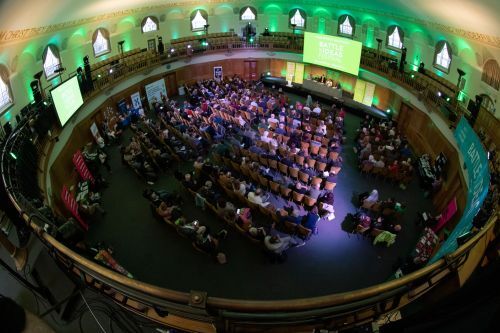
Battle of Ideas festival archive
This project brings together audio recordings of the Battle of Ideas festival, organised by the Academy of Ideas, which has been running since 2005. We aim to publish thousands of recordings of debates on an enormous range of issues, producing a unique of political debate in the UK in the twenty-first century.