Battle of Ideas Festival Audio Archive
The Battle of Ideas festival has been running since 2005, offering a space for high-level, thought-provoking public debate. The festival’s motto is FREE SPEECH ALLOWED. This archive is an opportunity to bring together recordings of debates from across the festival’s history, offering a wealth of ideas to enjoyed. The archive also acts as a historical record that will be invaluable in understanding both the issues and concerns of earlier years and the ways in which debates have evolved over time.
Listen on:

Episodes
May 20, 2024
May 20, 2024
1hr 15 min
Recorded at the Battle of Ideas festival 2023 on Sunday 29 October at Church House, London.
ORIGINAL INTRODUCTION
Open debate has been suffocated by today’s censorious climate and there is little cultural support for freedom as a foundational value. What we need is rowdy, good-natured disagreement and people prepared to experiment with what freedom might mean today. Faced with this challenge, the Academy of Ideas decided to launch Letters on Liberty – a radical public pamphleteering campaign aimed at reimagining arguments for freedom in the twenty-first century.
In his Letter – Freedom: up in smoke? – writer and director of smokers’ rights group FOREST Simon Clark looks at the radical history of lighting up. From David Hockney to Syrian women smoking cigarettes in defiance of religious extremism, smoking can be an expression of personal and political freedom. Unfortunately, Simon writes, such freedoms are increasingly undermined by public-health measures, designed to control and regulate our behaviour beyond what he says ought to be reasonable.
Join Simon and respondents to examine the past, present and future of smoking – and whether or not the freedom to smoke is worth defending. Despite knowing the consequences of cigarettes – addiction, poor health and even death – why do so many still enjoy it? Does the glamorisation of smoking in the arts from James Dean to Phoebe Waller-Bridge’s Fleabag pose a problem for public health? Or should we accept that smoking – like drinking or sky-diving – is a risk we should be allowed to take?
SPEAKERSDr Piers Bennphilosopher, author and lecturer
Simon Clarkdirector, FOREST; author, Hands Off Our Packs: diary of a political campaign and Freedom: Up in Smoke?
Rick Moorebusiness owner, InControl; electronic engineer; deputy chair political, Blackburn Conservative Association
CHAIRCeri Dingledirector, WORLDwrite and WORLDbytes
May 20, 2024
May 20, 2024
1hr 33 min
Recorded at the Battle of Ideas festival 2023 on Sunday 29 October at Church House, London.
ORIGINAL INTRODUCTION
Open debate has been suffocated by today’s censorious climate and there is little cultural support for freedom as a foundational value. What we need is rowdy, good-natured disagreement and people prepared to experiment with what freedom might mean today. Faced with this challenge, the Academy of Ideas decided to launch Letters on Liberty – a radical public pamphleteering campaign aimed at reimagining arguments for freedom in the twenty-first century.
In her Letter – In defence of drag – cabaret tour-de-force and drag queen Vanity von Glow explores the beauty and power of the drag performance. The true sorcery of drag is the magical way a drag queen can get away with murder on stage, she argues. As well as the pomp and performance of the show, the power of drag has far more to do with who the artists are, and what they say. By showing people that supposed identities, social structures, norms, attire and hierarchies can be shuffled around, Vanity argues, drag queens put people in touch with braver, more creative versions of themselves.
Join Vanity and respondents to delve into the world of drag. Have recent controversies over drag-queen story-hour had a chilling effect on drag artists in pubs, clubs and other adult venues? How do recent discussions about the importance of identity marry with drag – an art form that has long played with the fluidity of gender? What can infamous drag queens – from Ru Paul to the late Lily Savage – tell us about gay history and working-class culture? And with increasing pressure on performers to be role models, should drag resist becoming a moral examplar and stick to its ability to stun and amaze, titillate and inspire?
SPEAKERSCaroline Ffiskeco-founder and spokesperson, Conservatives for Women
Manick Govindaguest co-curator, Culture Tensions, Ujazdowski Castle Centre for Contemporary Art, Warsaw, Poland
Dr Don Milliganwriter and social commentator; author, The Embrace of Capital
Vanity von Glowinternationally ignored superstar; cabaret performer; host, The Vanity Project; host, Drag Queen Wine Tasting and Drag Queen Power Ballads
Cressida Wettoncomedian; panellist, Headliners, GB News
CHAIRElla Whelanco-convenor, Battle of Ideas festival; journalist; author, What Women Want
May 20, 2024
May 20, 2024
1hr 40 min
Recorded at the Battle of Ideas festival 2023 on Saturday 28 October at Church House, London.
ORIGINAL INTRODUCTION
It wasn’t so long ago that the slaughter of over 1,300 Jews – by a Hamas assault on southern Israel – would have been unthinkable. If that’s not bad enough, a significant number of individuals worldwide seem to be justifying Hamas’s attacks. These are, in the words of one commentator, regarded as ‘excusable pogroms’. The once popular cry of ‘never again’ is sounding increasingly hollow.
Hamas, the Islamist terrorist group based in Gaza, has never made its intention to slaughter Jews secret. On the contrary, it is openly stated in its 1988 charter. Yet all too many in the West, particularly among the left and anti-Israel activists, seem blind to this fact. Either they do not care or they find it acceptable.
Meanwhile, members of the Jewish community live in fear of attacks. Some Jewish schools have decided to close temporarily or have advised pupils not to wear blazers with school badges while travelling to and from school.
What is to be made of the return of what some call the ‘oldest hatred’? Anti-Semitism seemed to be a marginal force after the horrors of the Second World War. Now, at least in some sections of society, it seems to be an acceptable form of ‘progressive’ criticism of Israel as a uniquely evil apartheid state, colonialist, imperialist and racist. And when some Muslims living in the West express such views, the identitarian left looks the other way. In fact, many on the left nowadays increasingly present Jews as bastions of white privilege, only prosperous by exploitation. Does this outlook rehabilitate old notions of Jewish conspiratorial power?
How can we explain the open expression of anti-Semitism on the streets of London and other Western countries? Should the UK emulate France’s ban of pro-Palestine demos or do such illiberal responses fuel anti-Israel, indeed anti-Jewish sentiment? How do those with genuine criticisms of Israel express their qualms at present or is it unthinkable in the wake of Hamas butchery – an issue for another day? How could anti-Semitism, an ideology that appeared to have been marginalised, come to reassert itself? And why is it those who consider themselves the most enlightened who are often the worst culprits?
SPEAKERSDaniel Ben-Amijournalist; creator, Radicalism of Fools; author, Ferraris for All: in defence of economic progress and Cowardly Capitalism
Professor Frank Furedisociologist and social commentator; executive director, MCC Brussels; author, 100 Years of Identity Crisis: culture war over socialisation
Josh Howiecomedian; writer and star, Josh Howie’s Losing It, BBC Radio 4; actor, Hapless; television critic, Jewish Chronicle
Charlie Petersreporter and presenter, GB News
CHAIRJean Smithmember, Tackling Antisemitism; co-founder and director, NY Salon
May 20, 2024
May 20, 2024
1hr 32 min
Recorded at the Battle of Ideas festival 2023 on Saturday 28 October at Church House, London.
ORIGINAL INTRODUCTION
Open debate has been suffocated by today’s censorious climate and there is little cultural support for freedom as a foundational value. What we need is rowdy, good-natured disagreement and people prepared to experiment with what freedom might mean today. Faced with this challenge, the Academy of Ideas decided to launch Letters on Liberty – a radical public pamphleteering campaign aimed at reimagining arguments for freedom in the 21st century.
In his Letter – Against Reparations – historian and author James Heartfield argues that reparations should not be used as an easy way to buy apologies for past wrongdoings. In many instances, he writes, reparations have worked in favour of the colonisers, rather than the colonised. By looking through the history of reparations, including the Atlantic Slave Trade, James argues that these often represent the interests of the compensating power, not the compensated. No act of reparation will ever satisfy the disappointment that its champions feel, he argues, because the problem they are trying to deal with is their lack of authority in the present, not the injuries done to their forbears in the past.
Join James and respondents to ask whether reparations are necessary when it comes to dealing with past wrongs. Do critics of reparations fail to take seriously the legacy of the slave trade, and the link between the oppression of black people in centuries gone by and the discrimination suffered by some today? Does accepting reparations make the recipient a ‘prisoner of history’, as Frantz Fanon put it? Are reparations a vital leveller? Or just another white saviour project?
SPEAKERSDr Remi Adekoyalecturer of politics, University of York; author It’s Not About Whiteness, It’s About Wealth and Biracial Britain
Dr Pauline Hadawayresearcher; writer; co-founder, The Liverpool Salon; author, Escaping the Panopticon
Rushabh HariaLondon-based policy and project professional; Living Freedom alumnus
James Heartfieldlecturer and author
CHAIRProfessor Kevin Yuillemeritus professor of history, University of Sunderland; author, Assisted Suicide: the liberal, humanist case against legalization and Richard Nixon and the Rise of Affirmative Action
May 20, 2024
May 20, 2024
1hr 7 min
Recorded at the Battle of Ideas festival 2023 on Saturday 28 October at Church House, London.
ORIGINAL INTRODUCTION
Open debate has been suffocated by today’s censorious climate and there is little cultural support for freedom as a foundational value. What we need is rowdy, good-natured disagreement and people prepared to experiment with what freedom might mean today. Faced with this challenge, the Academy of Ideas decided to launch Letters on Liberty – a radical public pamphleteering campaign aimed at reimagining arguments for freedom in the twenty-first century.
In his Letter – Boxing: don’t count it out – writer and boxing enthusiast Chris Akers argues that boxing, more than any sport, has a unique way of tapping into the consciousness of the poor, the disgruntled and the forgotten. For all its flaws, he writes, boxing has been the vehicle by which people in poverty have escaped to better surroundings. From Muhammad Ali to Lovemore N’dou, boxing’s greats have often used the sport to highlight political injustices and social issues.
Join Chris and respondents to look at boxing’s contemporary challenges – with new scientific research around head injuries and ‘punch drunk’ fighters calling for greater safety measures in the ring. From rules on gloves to ever-decreasing limits on bouts, should boxing modernise to protect its heroes? Or will we lose the glory of the knockout by introducing more red tape? Does boxing ‘save lives’ – teaching ex-offenders and troubled teens discipline and strength? Or is the commercialisation of violence producing bad role models for young people? And if grown men and women want to go toe-to-toe, who are we to stop them?
SPEAKERSChris Akerssports writer; ghost writer, King of the Journeymen: the life of Peter Buckley; podcaster, The 286 Project
Max Barragan Segreregional club support officer, England Boxing
Luke Gittoscriminal lawyer; author, Human Rights – Illusory Freedom; director, Freedom Law Clinic
CHAIRGeoff Kidderdirector, membership and events, Academy of Ideas; convenor, AoI Book Club
May 20, 2024
May 20, 2024
1hr 15 min
Recorded at the Battle of Ideas festival 2023 on Sunday 29 October at Church House, London.
ORIGINAL INTRODUCTION
The world of psychotherapy has been, traditionally, a broad church of theories and practices, made possible by the therapeutic principles of empathy, active listening and unconditional positive regard for the other. Historically, therapists have been taught to ‘bracket’ their own personal opinions when it comes to the client sitting opposite to them in the therapy room. However, there are growing concerns that psychotherapy is being used as a vehicle to push social-justice theory on already vulnerable individuals, with practitioners viewing themselves first and foremost as activists.
For example, therapists are being disciplined by regulatory bodies or expelled from training courses for daring to suggest that men cannot become women. Foundational theories of psychotherapy are being disregarded on the basis that they were formulated by a bunch of ‘old, white men’. Clients are being told by their therapists that they are inherently ‘privileged’ based on immutable characteristics, essentially ceasing to exist as a unique individual. Therapists, in the name of ideology, have been accused of offering bad advice – with serious long-term consequences – to children struggling with gender dysphoria.
When therapists view their role as primarily one of social activism and moral re-education, what risk does this pose to the profession as a whole, and the clients they purport to serve?
SPEAKERSDr Jennifer Cunninghamretired community paediatrician
James Essesbarrister; social commentator; co-founder, Thoughtful Therapists
Amy Gallagherpsychiatric nurse and psychotherapist
Dr Carole Sherwoodclinical psychologist; co-director, Critical Therapy Antidote; co-author Cynical Therapies and The Politicisation of Clinical Psychology Training Courses in the UK
CHAIRJason Crowleyintegrative therapist
May 20, 2024
May 20, 2024
1hr 16 min
Recorded at the Battle of Ideas festival 2023 on Sunday 29 October at Church House, London.
ORIGINAL INTRODUCTION
Neurodiversity is increasingly in the public consciousness. Environmental activists and TV presenters have talked about their experiences of autism and footballers describe their difficulties of living with ADHD. According to some estimates, as many as 20 per cent of the global population are neurodivergent, spanning everything from severe autism to dyslexia.
Some argue that increased visibility and destigmatisation of such conditions are a welcome development, both for those who can understand themselves better through a diagnosis and for societal acceptance of natural human difference. Others question the benefits of these developments, arguing that the sharp rise in diagnosis is effectively making such diagnoses meaningless. In turn, this takes away resources and treatment from those for whom their condition is debilitating, in favour of those who may in the past have been described as shy, socially awkward or a bit quirky.
Furthermore, while the prevalence of ADHD or autism obviously does not discriminate along political lines, people on the progressive left seem to be much more likely to talk about – if not proudly proclaim – their diagnoses. As with gender and race, the boundaries of neurodiversity are difficult to police and open to appropriation.
How should neurodiversity be diagnosed and treated in society? Are we over-diagnosing neurodiversity and pathologising normal behaviour, or is it good that we are more aware of these conditions? Can neurodiversity and the way we handle it be saved from becoming a key faultline in the culture wars?
SPEAKERSFelice Basbøllproject assistant, Ideas Matter; student, Trinity College Dublin
Dr Ken McLaughlinformer social worker; academic; author, Surviving Identity: Vulnerability and the psychology of recognition and Stigma, and its discontents
Stella O'Malleypsychotherapist; director, Genspect; author, What Your Teen is Trying to Tell You
David Swifthistorian; author, The Identity Myth and A Left for Itself
CHAIRDr Fiona McEwensurvey and interventions director, King’s College London
May 20, 2024
May 20, 2024
1hr 31 min
Recorded at the Battle of Ideas festival 2023 on Sunday 29 October at Church House, London.
ORIGINAL INTRODUCTION
The campaigning barrister Jolyon Maugham KC recently declared his support for ‘a beautiful idea’: that lawyers should refuse to prosecute climate protesters or to act for the fossil fuel industry. This, he declared in a Guardian article, is because the law is sometimes wrong and ugly.
Maugham’s stance was supported by over 100 lawyers who signed-up to a Declaration of Conscience. But it was also criticised by those who saw it as a form of virtue signalling that challenged the objectivity of law and its ability to serve justice. After all, if lawyers could champion their right to snub those accused of ‘ecocide’ then this would surely be a principle that would impede the ability of those accused of less serious harms to get the lawyers their cases deserved.
Law’s practitioners have traditionally been valued and seen as ‘learned’ because of the service they provide in upholding the rule of law. The ‘beautiful idea’ that still energises many lawyers is their desire to master their craft with knowledge, wisdom and persuasive arguments.
On the other hand, why shouldn’t lawyers decide which clients to act for? For decades, left-wing lawyers have often chosen to defend, rather than prosecute, and to act for tenants, employees and migrants rather than for landlords, employers and the Home Office. With plenty of other lawyers prepared to act for the other side, this hasn’t undermined the rule of law.
Should lawyers be dispassionate or should they be valued for their political beliefs? Could it be true that the passionate lawyer makes the better lawyer?
SPEAKERSJon Holbrookbarrister; writer, spiked, Critic, Conservative Woman
Laurie Laybournresearcher; writer; associate fellow, Institute for Public Policy Research; co-author, Planet on Fire: A manifesto for the age of environmental breakdown
Anna Loutfiequality and human rights barrister; consultant, The Bad Law Project
Lord Ken Macdonald KCbarrister, Matrix Chambers; crossbench peer
CHAIRLuke Gittoscriminal lawyer; author, Human Rights – Illusory Freedom; director, Freedom Law Clinic
May 20, 2024
May 20, 2024
1hr 36 min
Recorded at the Battle of Ideas festival 2023 on Sunday 29 October at Church House, London.
ORIGINAL INTRODUCTION
Having been in government since 2007, the Scottish National Party (SNP) appeared until recently to be firmly in control of politics in Scotland. Even being on the wrong side of the 2014 independence referendum result did not diminish the sense that the SNP was on the right side of history. But, almost out of the blue, First Minister Nicola Sturgeon resigned, and her party’s aura of invincibility began to evaporate.
New leader Humza Yousaf has declared he’ll build on a ‘progressive agenda’ that ‘won election after election and brought so many to our cause’. Supporters point to free prescriptions, free bus travel for under 22s and free university tuition for Scottish students. Gender equality in education, Child Payments and the much cited ‘baby box’, along with progress in renewable energy and a Nature Restoration Fund, are celebrated – despite bemoaning powers reserved to Westminster that allegedly limited progress.
But amidst collapsing standards of schooling, stasis in infrastructure provision, lengthening hospital waiting lists, record-breaking drug-related deaths and even the reappearance of long-gone diseases such as rickets, many are demanding explanations for the state of Scotland today, especially in public-service provision. Whether higher taxes, a chaotically mishandled bottle-recycling scheme or replacement ferries, both business and public seem increasingly alienated.
Some say the SNP has been dragged down by the Scottish Greens. But perhaps the biggest questions revolve around democracy and freedom in a country that supposedly puts people in the driving seat. Critics say schools are more preoccupied with indoctrinating pupils on race and gender than helping them learn, while an administration in thrall to identity politics pushed through gender recognition reform – with support from Scottish Labour – despite popular opposition. Meanwhile ‘progressive Scotland’ is renowned for leading the way in sin taxes on food and drink and attacks on free speech that mean cultural venues, comedy clubs and even one’s own home are now judged fair game for the long arm of the law.
In or out of the UK, Scotland faces profound socio-economic problems. What are the prospects of a political and cultural shake-up capable of providing solutions? To what extent are problems related to too much – or not enough – devolution and sovereignty, or are problems with progressive politics more fundamental? And with the Labour Party singing from the same progressive hymn book and seemingly destined for power in Westminster, are there Scottish portents for the future of the UK?
SPEAKERSMarion Calderco-director, For Women Scotland
David JamiesonScottish socialist, journalist and editor
Leo Kearsecomedian; writer, Breaking The News, Mock The Week and The Mash Report; co-creator, Hate 'n' Live
Dr Stuart Waitonsenior lecturer, sociology and criminology, Abertay University; author, Scared of the Kids: curfews, crime and the regulation of young people; chair, Scottish Union for Education,
CHAIRDr Simon Knightsenior youth-work practitioner
May 20, 2024
May 20, 2024
53 min
Recorded at the Battle of Ideas festival 2023 on Sunday 29 October at Church House, London.
ORIGINAL INTRODUCTION
No longer resigned to fringe festivals or countryside pubs, folk music is enjoying something of a revival. During the Lockdown period, sea shanties became all the rage after former postie Nathan Evans’s performance of ‘The Wellerman’ went viral. The hit singer Lil Nas X – famous for bringing country music and chaps to the world of rap – has also expressed his interest in the genre. ‘Hear me out’, he told press at the premiere of his documentary, ‘I want to do some folk music.’
While folk music has always had political elements – think Joan Baez, Lead Belly, Bob Dylan, Odetta, Ewan MacColl – but discussions about folk music today tend to prioritise its activist potential over the tunes themselves. During this year’s Proms, award-winning cellist Sheku Kanneh-Mason weighed in on the perennial debate over ‘Rule Brittania’, suggesting that it might be ‘a bit different’ to replace the anthem with some ‘older folk tunes’. Perhaps Morris ankle bells could replace flags at next year’s final night.
Across the pond, folk made headlines when ‘Rich Men North of Richmond’, a debut protest song by Oliver Anthony about the working-class of America, became a viral hit – reaching number one on the Billboard Hot 100 chart with tens of millions of views and streams. While Anthony’s song might have been successful with the masses, its lyrics about benefits and the establishment led to a backlash among critics, who labelled it ‘doggerel’ and ‘nasty’.
What is the status of folk in contemporary life? It seems to be more popular than ever – with cèilidhs up and down the country packed with young people content to learn steps to reels, jigs and ballads. Folk is constantly revisited – with stars like Ed Sheeran making millions from folk-inspired songs like ‘Galway Girl’.
Does this mean folk has lost its fuddy-duddy reputation? When asked why his song had struck a chord with so many, Anthony told reporters it was because it was ‘no editing, no agent, no bullshit. Just some idiot and his guitar. The style of music that we should have never gotten away from in the first place.’
Is he right? Is folk the purest genre of music today? And from protest songs to commercial deals, is folk in danger of being co-opted and sanitised just as it seems to be reinvigorated?
SPEAKERSBrian Dennytrade-union journalist, Rebuild Britain; author, Folk and the radical English tradition; curator, Working River: songs and music of the Thames project
Maeve Halliganfounder and musician, The Hooligans; student
Denis Russellbuilding contractor; former trade-union activist and union representative, National Union of Railwaymen
CHAIRElla Whelanco-convenor, Battle of Ideas festival; journalist; author, What Women Want
May 17, 2024
May 17, 2024
1hr 31 min
Recorded at the Battle of Ideas festival 2023 on Saturday 28 October at Church House, London.
ORIGINAL INTRODUCTION
Six participants argue for their choice in a light-hearted debate with a serious intent. Audience participation encourages you to agree, disagree, challenge, assess… and dismiss those arguments and adaptations that you find unworthy to wear the crown.
The panel have a few minutes only to convince you of their choice. Would Jane Austen have seen Colin Firth’s Mr Darcy in a dripping shirt as a suitable heir? Or would she have preferred Alicia Silverstone’s Clueless teen? Did Blade Runner and Apocalypse Now adapt the original material, or simply use them as inspiration? Was A Handmaid’s Tale more or less terrifying when confined to the pages of Margaret Atwood’s novel? And do you agree with the Wall Street Journal, that the latest adaptation of Charles Dickens’ Great Expectations ‘belches out the problems of literary adaptation with the dyspeptic regularity of a coal-fired Victorian ironworks’ ?
The discussion allows just five minutes for each panellist’s defence before the audience takes them to task. The audience then votes to chuck three contenders out of the virtual balloon before the remaining candidates make a final plea for their vote.
SPEAKERSJonathan Grantchartered accountant; arts critic
Ethan Greenresearcher, Ideas Matter; fellow, Common Sense Society; national committee member, Speakeasy Group
Phil Harrisonwriter; author, The First Day; filmmaker, Even Gods
Sibyl Ruthwriter and editor
Dr Maren Thomlecturer; writer; acting and vocal trainer; podcast host, Performance Anxiety
Barry Wallcourse director, Edileaditandliveit.co.uk
CHAIRDavid Bowdenassociate fellow, Academy of Ideas
May 17, 2024
May 17, 2024
1hr 29 min
Recorded at the Battle of Ideas festival 2023 on Saturday 28 October at Church House, London.
ORIGINAL INTRODUCTION
Publishing books has never been such a minefield. Take sensitivity readers, for instance, whose job is to review submitted manuscripts for ‘problematic content’. In a world where biblioclasm in the name of modern tastes is widespread, proponents of sensitivity readers argue that they ensure no literature need ever be revisited in the future and deemed problematic – as it would be shorn of anything that might upset minority groups before it’s even published. More broadly, this means a moratorium on authors creating fiction outside of their lived experience.
It’s not just new authors writing contemporary works that find themselves in trouble. Books by the children’s author Roald Dahl underwent a sweep of edits by sensitivity readers in February 2023 after Puffin Books deemed the old work too offensive. ‘Enormously fat’ was shortened to ‘enormous’ in Charlie and the Chocolate Factory, with the Oompa Loompas now called ‘small people’ instead of ‘small men’.
An immense public backlash led Puffin to revoke the changes, but such revisions continue to be made to other books. In 2011, American academic Alan Gribben republished Mark Twain’s classic, Huckleberry Finn, replacing the use of the ’n’ word with ‘slave’. More recently, plans are afoot to republish Ian Fleming’s James Bond series to remove ‘racial slurs toward black people’.
Publishers justify updating old books as guarding against modern audiences reacting badly to outdated content. What was normal 100 or even 30 years ago might be highly inappropriate today. However, critics argue this is less about protecting readers than the publishing industry defensively accommodating to a small group of self-appointed guardians of political correctness.
There is also concern that these edits undermine the potential of novels – as historical documents – to provide unique insights. Censoring them is an affront to the artistic freedom of the author, but also insinuates that today’s readers can’t take their historical context into account. For modern writers, it’s feared that the likes of sensitivity readers can only mean self-censorship and less freedom for the literary imagination.
Are sensitivity readers merely sensitive editors, attuned to nuanced matters of representation and identity? Do they help today’s writers make their characters true to life and ensure the longevity of old books by making them continually relevant? Or is there something more at stake for literature, if classic and modern texts are subject to the whims of contemporary political debate, forever under threat from the red pen?
SPEAKERSPhil Harrisonwriter; author, The First Day; filmmaker, Even Gods
Masimba Musodzanovelist in ChiShona and English; blogger, The Times of Israel; writer
Tomiwa Owoladewriter and critic; contributing writer, New Statesman; author, This is Not America: Why Black Lives in Britain Matter
Jane Robinsauthor, White Bodies; journalist; co-writer, People Like Us
Sibyl Ruthwriter and editor
CHAIRSheila Lewisretired management consultant; book-club founder
May 17, 2024
May 17, 2024
42 min
Recorded at the Battle of Ideas festival 2023 on Saturday 28 October at Church House, London.
ORIGINAL INTRODUCTION
Performance Anxiety is a podcast that analyses the film, television, theatre and comedy performances that everybody is talking about.
So many contemporary discussions about performance have become politicised – argumentative, overwrought, joyless and indifferent to the art itself. Hosts Alex Dale and film expert Dr Maren Thom love the art of performance, and think the most radical way to understand it is to enjoy it. In previous podcasts, they have discussed Pedro Pascal and lumbersexualism, Immanuel Kant and Guardians of the Galaxy, Barbie and the culture wars and whether it matters if an Irish actor played Oppenheimer.
Listen as they give the art of performance the love and understanding they think it really deserves. In this special live recording at the Battle of Ideas festival, Alex and Maren are joined by writer and broadcaster Timandra Harkness to discuss the thinking behind the podcast, before analysing the performance of the moment.
SPEAKERSAlex Daledesigner and writer; podcast host, Performance Anxiety
Dr Maren Thomlecturer; writer; acting and vocal trainer; podcast host, Performance Anxiety
CHAIRTimandra Harknessjournalist, writer and broadcaster; presenter, Radio 4's FutureProofing and How to Disagree; author, Big Data: does size matter?
May 17, 2024
May 17, 2024
44 min
Recorded at the Battle of Ideas festival 2023 on Saturday 28 October at Church House, London.
ORIGINAL INTRODUCTION
Graham Linehan is one of the most acclaimed comedy writers of his generation. He is the co-creator of Father Ted and Black Books, and also wrote and directed The IT Crowd. During his career, he has won five BAFTAs, including a lifetime achievement award.
In recent years, Linehan has become a campaigner for the rights of women and gay people, and his opposition to gender-identity ideology has seen him effectively blacklisted from the comedy industry. As such, he is one of the most high-profile examples of what has become known as ‘cancel culture’. His recent foray into stand-up saw his performance at the Edinburgh Festival Fringe cancelled by two venues; in the end, he performed on a makeshift platform outside the Scottish Parliament.
Linehan has now written a memoir – Tough Crowd: How I Made and Lost a Career in Comedy – in which he reflects on his successes and the strange turn his life has taken.
SPEAKERSGraham Linehancreator and co-creator, Father Ted, Black Books and The IT Crowd; comedy writer, Count Arthur Strong, Brass Eye and The Fast Show; author, Tough Crowd: How I Made and Lost a Career in Comedy
CHAIRAndrew Doylepresenter, Free Speech Nation, GB News; writer and comedian; author, The New Puritans: how the religion of social justice captured the Western world and Free Speech and Why It Matters
May 17, 2024
May 17, 2024
1hr 15 min
Recorded at the Battle of Ideas festival 2023 on Saturday 28 October at Church House, London.
ORIGINAL INTRODUCTION
When it was announced earlier this year that the BBC Singers were to be axed, there was a huge backlash. Musicians called the move ‘devastating’ and ‘cultural vandalism’. There was a broader public outcry that forced the BBC to suspend the closure proposal while it ‘actively explores’ alternative funding models.
The BBC Singers victory was especially important because many in the classical world feel embattled, as they see the status of the genre increasingly questioned. The BBC has also cut salaried posts in three orchestras; the Arts Council England has controversially introduced cuts to English National Opera and the Britten Sinfonia in the name of ‘levelling up’. There is a perception that school music is in jeopardy, with a significant drop in provision of GCSE Music, and that Brexit has damaged UK’s classical touring internationally.
The backlash against the move to close the BBC Singers no doubt took the Beeb’s bean counters by surprise. After all, in recent years, classical music has borne the brunt of accusations of elitism and inaccessibility. Even voices within the cultural sector have accused classical music of being out of touch with the social mores of the twenty-first century, instead prioritising relevance and inclusion. More recently, classical composers have been dragged into the culture wars, denounced as representative of white supremacy and colonial attitudes.
Many classical music supporters have attempted to defend the tradition by emphasising its utilitarian worth, claiming it is important for improving numeracy, mental health, anti-social behaviour and economic growth. It is rare to hear anyone rigorously defending the intrinsic value of classical music for its aesthetic virtues or the stature of the European music tradition as the epitome of Enlightenment ideals.
Ironically, it seems that it’s Big Tech rather than conservatoires or musicologists which is more optimistic about the genre’s popular potential. Apple made classical music its flagship project of 2023 and its Apple Classical Music project delivers 115,000 works by 20,000 composers in any number of interpretations, touting the size of its library and quality of its sound. Could new technology replace live performance, creating a new normal?
In a period of economic stagflation, is it reasonable for the state to subsidise often expensive orchestras, opera productions and music traditions from eras long gone? What arguments should be used to ensure the long-term sustainability of the classical-music genre? Do we even know how best to argue for the transcendental qualities of high art and the concept of art for art’s sake?
SPEAKERSDolan Cummingsauthor, Taking Conscience Seriously and The Pictish Princess.. and other stories from before there was a Scotland
Jack Huesmusician; member, Wang Chung; creator, Primitif
Professor Ian Pacepianist and professor of music at City, University of London
Dr Lola Salemlecturer in French and music, University of Oxford; author; professional singer, Maîtrise de Radio France; critic
CHAIRElisabetta Gasparonilinguist; teacher; founder, Aesthetic Study Group
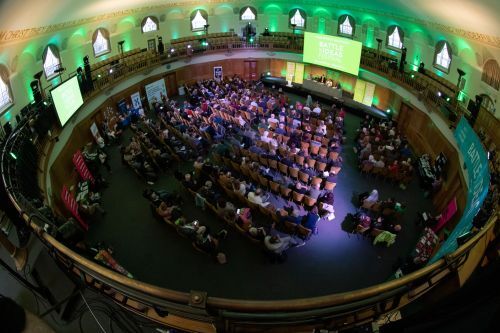
Battle of Ideas festival archive
This project brings together audio recordings of the Battle of Ideas festival, organised by the Academy of Ideas, which has been running since 2005. We aim to publish thousands of recordings of debates on an enormous range of issues, producing a unique of political debate in the UK in the twenty-first century.