Battle of Ideas Festival Audio Archive
The Battle of Ideas festival has been running since 2005, offering a space for high-level, thought-provoking public debate. The festival’s motto is FREE SPEECH ALLOWED. This archive is an opportunity to bring together recordings of debates from across the festival’s history, offering a wealth of ideas to enjoyed. The archive also acts as a historical record that will be invaluable in understanding both the issues and concerns of earlier years and the ways in which debates have evolved over time.
Listen on:

Episodes
Wednesday Apr 24, 2024
Wednesday Apr 24, 2024
Recorded at the Battle of Ideas festival 2018 on Sunday 14 October at Barbican, London.
ORIGINAL INTRODUCTION
Over the past year, debates about democracy and its woes have been ubiquitous. Liberal democracy seems under strain from a wide variety of foes. There are worries that tech giants and algorithms are undermining elections and corrupting democratic discourse. Liberalism itself seems embroiled in a civil war over democratic principles, such as free speech and universalism. Populism is variously claimed to be a threat to democracy or its very embodiment. The Economist’s recent manifesto for liberalism concedes that ‘Europe and America are in the throes of a popular rebellion against liberal elites, who are seen as self-serving… political philosophies cannot live by their past glories; they must also promise a better future. And here liberal democracy faces a looming challenge.’
Few are willing to come out in public and argue against democracy explicitly. We’re all democrats, it would seem, but there are very different ideas of how much involvement the general population should have in running the affairs of state. In the UK, both sides of the Brexit divide claim to be the true democrats. Those arguing for a ‘People’s Vote’ claim that those who instructed the government to negotiate Brexit must have the final say and suggest this is ‘a demand for continued democracy. Or, to borrow a phrase, for voters to “take control”.’ Leavers see such campaigns as yet more evidence of attempts at undermining the greatest democratic vote in British history and shows that many are unwilling to accept the result of a democratic vote.
Ironically, while many voted to leave the EU because they see it as an undemocratic barrier to popular sovereignty, the EU sees itself as policing the democratic values of its member states. In September, the European Parliament voted by 448 to 197 to initiate Article 7 proceedings against Hungary. The same procedure had already been commenced against Poland in January. The European Commission has accused the governments of both countries of being in breach of the EU’s ‘core values’. Meanwhile Barack Obama recently mounted an uncompromising attack on Donald Trump, saying his administration has ‘violated’ a host of ‘basic’ democratic principles of American democracy, including the rule of law and freedom of the press. Trump’s supporters in turn seem to view him as renewing democracy by ‘draining the swamp’ of undemocratic technocrats such as Hillary Clinton.
Arguably, the present populist surge is a rejection of a managerial style of rule, at odds with popular sovereignty. Removing government action from democratic influence has been a trend in liberal democracies, as more and more policy is outsourced to unelected quangos at arm’s length from our elected representatives. For example, very few countries allow politicians to set interest rates, a decision that is left to unelected central bankers. Given the complexity of political issues today, it is argued, perhaps there is a case for leaving more and more decisions to the experts. Surely we can’t trust the electorate to be informed enough to know what’s best for society in a globalised world?
Such is the suspicion of the demos, it has even become fashionable to admire the ability of autocratic and one-party regimes, from China to Singapore, to ‘get things done’ and to prefer manipulating big data sets to convincing people. Indeed, part of the outrage against both the Brexit and Trump votes seems to be a response to the rejection of ‘right thinking’ experts. For many critics, the views of better-educated people should carry more clout than the rest of the electorate. The idea of an educational test for voters has been floated, too. The economist Dambisa Moyo has asked if ‘migrants are required to pass government-sanctioned civic tests in order to gain citizenship… why not give all voters a test of their knowledge?’
All this begs the question, what is democracy and what threatens it today? Is it time to give more power to The People? Or is this just a populist ‘dog-whistle’? Can liberalism renew itself sufficiently to save democracy? Do we need a new philosophy to win the hearts and minds of new generations to the virtues of democracy?
SPEAKERSZanny Minton Beddoeseditor-in-chief, The Economist
Daniel Moylanformer deputy chairman, Transport for London; co-chairman, Urban Design London
Steve Richardsbroadcaster; political commentator; presenter, BBC Radio 4’s Week in Westminster; author, The Rise of the Outsiders
Bruno WaterfieldBrussels correspondent, The Times; co-author, No Means No
CHAIRClaire Foxdirector, Academy of Ideas; author, I STILL Find That Offensive!
Wednesday Apr 24, 2024
Wednesday Apr 24, 2024
Recorded at the Battle of Ideas festival 2018 on Sunday 14 October at Barbican, London.
ORIGINAL INTRODUCTION
Internationally renowned author Lionel Shriver isn’t afraid of speaking her mind. At the 2016 Brisbane Writers Festival, she gave a speech which called into question the contemporary focus on identity politics. ‘I hope the concept of cultural appropriation is a passing fad’, she said, infamously causing a young woman to walk out in protest. Since then, Shriver has been the go-to critic of identity politics in the arts.
More recently, Shriver was accused of racism for writing a column in the Spectator arguing that diversity quotas in publishing would mean ‘literary excellence will be secondary to ticking all those ethnicity, gender, disability, sexual preference and crap-education boxes’. Hanif Kureishi and other authors were outraged, arguing that Shriver’s article had brought out all the ‘knuckle-dragging, semi-blind suspects’. She was even dropped as a judge for a a writing competition run by magazine Mslexia, who said that Shriver’s comments ‘alienate the very women we are trying to support’.
Despite sometimes vicious reactions to her views, Shriver continues to argue that the concept of cultural ‘appropriation’ is creative poison, whereas cultural cross-fertilisation is fruitful for both artist and audience. In an interview with the spiked review, Shriver insisted that ‘fiction writing is a form of pillaging, happy pillaging, theft that doesn’t hurt anybody or take anything away from people’. Rather than joining the ranks of other authors who have hired ‘sensitivity readers’ to prevent offensive portrayals of characters, or who avoid going outside their own experience in fiction, Shriver consistently defends a writer’s freedom to use their imagination in their work.
As well as a staunch defender of intellectual freedom, Shriver is perhaps better known as a multiple award-winning author. Her most famous book, We Need to Talk About Kevin, won the Orange Prize for Fiction in 2005 and caused rows over dinner tables worldwide about the difference between nurture and nature in parenting. After 13 books, including Property, published this year, what does Shriver think the future holds for fiction writers? How hard has it been to criticise identity politics in today’s oversensitive climate? Is diversity in the arts something to aspire to or do we need to focus on the content of what’s being published, rather than the writer?
SPEAKERLionel Shriveraward-winning novelist; novels include, We Need to Talk About Kevin (2005 Orange prize winner), The Mandibles: a family, 2029 – 2047 and The Post-Birthday World; her first short story collection, Property, was published this year
CHAIRClaire Foxdirector, Academy of Ideas; author, I STILL Find That Offensive!
Wednesday Apr 24, 2024
Wednesday Apr 24, 2024
Recorded at the Battle of Ideas festival 2018 on Saturday 13 October at Barbican, London.
ORIGINAL INTRODUCTION
Politics has often comprised a battle over, and a battle using, language. For example, the distinction between ‘terrorist’ and ‘freedom fighter’ is as much an exercise in political mudslinging as it is a philosophical difference. However, with knee-jerk denunciations of President Trump and his supporters as ‘literal Nazis’, and Brexit voters as racist xenophobes, have the normal battles over political language morphed into something else?
Today, we seem to see not just the utilisation of existing terms to delegitimise opposition, but a proliferation of completely new terms as well. Old white men become ‘gammons’, women critical of feminism have ‘internalised misogyny’, students are ‘snowflakes’, and society is under siege from ‘whiteness’, ‘neoliberalism’, or ‘transphobia’. To even question the reality of such concepts is seen to be ‘erasing’ the marginalised. Meanwhile, new insults like TERF, SJW and ‘normie’ proliferate, with the aim of maligning the motives or deriding the views of those so labelled.
Aside from the nastiness of some contemporary political vocabulary, it is the sheer effort required to stay conversant in contemporary political terminology that attracts attention. It is not uncommon to find oneself completely lost – or completely unwelcome – in a political conversation if you don’t know how to speak the new political language. While this can prompt the demand to ‘get with it granddad’, it also marks a worrying evolution in the restriction of public discourse: an inability or unwillingness to speak the new code effectively rules one out of polite society.
However, campaigners are quick to point out the usefulness of new terms such as ‘gaslighting’ or ‘mansplaining’: they highlight imbalances in power and other injustices. But does such a discourse prove helpful to political progress, or further estrange ordinary people from an increasingly jargon-obsessed political and cultural elite? Is the proliferation of new political and cultural terms a good way to address serious political challenges, or an example of the weaponisation of language? Fundamentally, what’s the line between the natural evolution of political language, and the degeneration of political language into trendy slurs?
SPEAKERSProfessor Frank Furedisociologist and social commentator; author, How Fear Works: culture of fear in the 21st century and Populism and the European Culture Wars
Sophia Gastondirector, Centre for Social and Political Risk, Henry Jackson Society; visiting research fellow, London School of Economics
Simon Lancasterspeechwriter; author, Winning Minds: secrets from the language of leadership and You Are Not Human: how words kill; TEDx speaker
Professor Dr Robert Pfallerphilosopher, University of Art and Industrial Design, Linz, Austria; author, (in German) Adult language: about its disappearance from politics and culture
CHAIRClaire Foxdirector, Academy of Ideas; author, I STILL Find That Offensive!
Wednesday Apr 24, 2024
Wednesday Apr 24, 2024
Recorded at the Battle of Ideas festival 2018 on Sunday 14 October at Barbican, London.
ORIGINAL INTRODUCTION
Identity politics is the dominant force in Western public life today. It is the subject of much debate and something of a backlash, as many fear it threatens democracy, liberalism and free speech. US commentator Francis Fukuyama’s latest book, Identity: The Demand for Dignity and the Politics of Resentment is just the latest high-profile intellectual take on the issue. Fukuyama worries that that the universal recognition on which liberal democracy is based has been increasingly challenged by ‘narrower forms of recognition based on nation, religion, sect, race, ethnicity, or gender, which have resulted in anti-immigrant populism, the upsurge of politicised Islam, the fractious “identity liberalism” of college campuses, and the emergence of white nationalism’. Quite a charge list. Fukuyama concludes that ‘identity cannot be transcended; we must begin to shape identity in a way that supports rather than undermines democracy’.
Mark Lilla, a professor of humanities at Columbia University, published a stinging New York Times op-ed, ‘The end of identity liberalism’, blaming identity politics for facilitating Donald Trump’s accession to the White House, writing: ‘American liberalism… has slipped into a kind of moral panic about racial, gender and sexual identity that has distorted liberalism’s message and prevented it from becoming a unifying force capable of governing.’
But are these critiques an overreaction to what might be better understood as the self-empowerment of those previously marginalised, and a demand from historically excluded groups for recognition and inclusion? Remi Adekoya suggests in Quillette that the ‘fundamental objective of left-wing identitarians is to strengthen the weaker groups while simultaneously weakening the strongest (whites, especially cis, hetero, white males) to achieve a more “equitable’ distribution of power’. Many of its supporters suggest that the twenty-first-century identitarian is simply the latest version of those activists who demanded women’s or black liberation in the 1960s.
But might this be misleading, ignoring the extent to which the drivers and concerns of identity politics have changed over the decades? At a time when identity is the focus of constant discussion and attention, it can be easy to overlook its complex history, either to see it as a seamless development of previous liberation movements or a totally new phenomenon. So, if one is to grasp what is unique about contemporary identity politics, it is essential to explore its history.
Professor Frank Furedi will deliver a lecture looking at the history of society’s concern with identity and its rapid politicisation in the twenty-first century and attempt to explain its main drivers. He will explore how the term ‘identity crisis’ was invented in the 1940s and – until it began to capture the public imagination from the 1960s – how commentators and researchers paid little attention to the social, cultural and political role of identity. He will explore how the politicisation of identity began to acquire its current dominant form in the 1990s, acquiring new characteristics as it became entangled with the emerging politics of victimhood and therapy culture.
Respondents will discuss issues such as: How has identity politics come to be less focused on political and social issues of overcoming discrimination than its 1960s and 1970s versions were? Is it a form of collectivism or is it better understood as a kind of fragmentation? What is the impact of identity on free speech when advocates of identity politics assert that there are matters on which only specific cultural groups can speak? Can the politics of solidarity and the ideal of universalism survive an era where society is divided into often competing identity groups? Is identitarianism really a threat to democracy and liberalism as its critics suggest?
SPEAKERSRemi AdekoyaPhD researcher on identity politics, Sheffield University; columnist; member, Editorial Working Group, Review of African Political Economy
Professor Frank Furedisociologist and social commentator; author, How Fear Works: culture of fear in the 21st century and Populism and the European Culture Wars
Rachel Halliburtonassociate editor, Avaunt Magazine; author, The Optickal Illusion: a very eighteenth century scandal
Eric Kaufmannprofessor of politics, Birkbeck College, University of London; author, Whiteshift: immigration, populism and the future of white majorities
CHAIRClaire Foxdirector, Academy of Ideas; author, I STILL Find That Offensive!
Wednesday Apr 24, 2024
Wednesday Apr 24, 2024
Recorded at the Battle of Ideas festival 2018 on Saturday 13 October at Barbican, London.
ORIGINAL INTRODUCTION
Whatever way we read today’s political disruptions, change is in the air. Mainstream political parties internationally, from Italy to Sweden, are being thrown into disarray by new challengers. Democratic votes, from Brexit to Trump, are seemingly giving two fingers to establishment norms. Postwar, rules-based economic and diplomatic arrangements are being torn up. Traditional gatekeepers to information, truth and expertise are now no longer the last word; the floodgates are open. The so-called ‘MSM’, the mainstream media, are under pressure from the technological effects of ‘democratisation’, with everyone from tech giant platforms to opinionated bloggers and social-media warriors challenging a monopoly on what we read and having their say.
This turbulent atmosphere is undoubtedly unsettling. It is understandable that we can be tempted to resist change because of the risks associated with it. As Arnold Bennett put it: ‘Any change, even a change for the better, is always accompanied by drawbacks and discomforts.’ Indeed, we seem to lack the imagination to see this in any way except negatively. Commentators reach to history to scaremonger about contemporary challenges to the status quo as though they must lead inevitably to everything from a repeat of Weimar Germany to another world war. The increasingly shrill alarmism about everything from the leaving the EU to changing lifestyle habits, such as young people’s ‘dependence’ on mobile phones, indicates a free-floating, existential anxiety that implies that a changing world will lead to incalculable threats on all sides.
However, is there a danger that when society cultivates such fears it is promoting a climate of passive helplessness? And interestingly, perhaps what drives these much repeated concerns are risk-averse elites, fearful that millions of citizens are no longer listening to them about the virtues of how we do things now. After all, the majority in the UK voted in defiance of ‘Project Fear’ in 2016. Moreover, is the ‘genie out of the bottle’ now when it comes to political change? For example, if the UK were to end up staying in the EU, the rejection of such a large democratic vote would have consequences for years to come, undermining the legitimacy of the major political parties. We may have no choice but to embrace change and work to shape the future as best we can.
Perhaps we need to reboot our approach to entering a new historic period? Does the unpredictable future need to be experienced as out of our control and scary? After all, change can be full of opportunity. And the alternative to change can be moribund stagnation, as noted by Harold Wilson: ‘He who rejects change is the architect of decay. The only human institution which rejects progress is the cemetery.’ George Bernard Shaw summed up the choices we face: ‘When people shake their heads because we are living in a restless age, ask them how they would like to life in a stationary one, and do without change.’
Can we transform today’s turbulence as an opportunity to shape the future, grasp the moment with hope, be inspired by a period that is resonant with possibilities? Can we create a climate in which people will embrace new experiences and exhibit a willingness to take risks?
SPEAKERSProfessor Frank Furedisociologist and social commentator; author, How Fear Works: culture of fear in the 21st century and Populism and the European Culture Wars
Dr Eliane Glaserwriter; radio producer; senior lecturer, Bath Spa University; author, Anti-Politics: on the demonization of ideology, authority, and the state
Matthew Goodwinprofessor of political science, University of Kent; senior fellow, Chatham House; author, National Populism: the revolt against liberal democracy and Revolt on the Right
Stephen Kinnock MPLabour MP for Aberavon; member, Exiting the EU Select Committee and EU Scrutiny Committee; co-editor Spirit of Britain, Purpose of Labour: building a whole nation politics to reunite our divided country
CHAIRClaire Foxdirector, Academy of Ideas; author, I STILL Find That Offensive!
Wednesday Apr 24, 2024
Wednesday Apr 24, 2024
Recorded at the Battle of Ideas festival 2018 on Saturday 13 October at Barbican, London.
ORIGINAL INTRODUCTION
In a period of spending cuts, the case for increased funding for cultural projects can be greeted with scepticism. But should cultural projects be viewed as ‘extras’ or ‘frills’ that should be scaled back in a time of fiscal crisis?
The recent opening of the V&A museum in Dundee, at a cost of £80million, has been lauded worldwide and welcomed by the city’s council leader, John Alexander, as putting ‘fire in the belly’ of the city’s people, boosting their confidence after decades of economic decline. But not everyone agrees it is money well spent. The museum’s final bill was nearly double the original budget and it will require continual public subsidies of more than £1.7million a year to help meet its running costs. In response, anti-austerity campaigners have organised protests in the city’s poorest neighbourhoods. One councillor has asked that in the face of public service cuts and school closure, how can this cost can be justified?
Meanwhile, corporate sponsorship often raises ethical dilemmas. Recently, BAE Systems, which employs 18,000 people in the north of England, was lined up to sponsor the Great Exhibition of the North for an estimated £500,000, but pulled out after an online petition calling for the event to sever ties with the arms manufacturer garnered more than 2,000 signatures.
Many have argued that when the cohesion of society is threatened by visible inequalities in wealth, housing, health and education, there is an even more vital role for culture to play within Britain’s society.
However, despite such socially worthy claims, the funding of these projects remains contentious. As we approach The National Lottery’s 25th anniversary, what is the role of culture in today’s Britain, who should fund it? Is culture itself is a luxury or a necessity in a modern-day society?
SPEAKERSAlexander Adamsartist, writer and art critic; author, Culture War: art, identity politics and cultural entryism (forthcoming)
Sean Gregorydirector of learning and engagement, Barbican Centre and Guildhall School of Music and Drama
Dr Tiffany Jenkinswriter and broadcaster; author, Keeping Their Marbles: how treasures of the past ended up in museums and why they should stay there
Barb Jungraward-winning singer, songwriter, composer and writer
CHAIRClaire Foxdirector, Academy of Ideas; author, I STILL Find That Offensive!
Wednesday Apr 24, 2024
Wednesday Apr 24, 2024
Recorded at the Battle of Ideas festival 2017 on Sunday 29 October at Barbican, London.
ORIGINAL INTRODUCTION
Whether or not Martin Luther actually nailed his 95 theses to the door of the castle church in Wittenberg on 31 October 1517, as a disputed tradition claims, he certainly started a process that would change Europe and the world. It is an oft-noted irony that the Reformation initiated by this devout monk paved the way for secular modernity and a progressive belief in freedom of conscience.
What we now call the Protestant Reformation began as a series of disputes within the Catholic church, at first about corruption, but increasingly about the true source of religious authority. These disputes ultimately led to schism and to the founding of Protestant denominations, including Lutheranism itself and, in England, Anglicanism, the so-called Reformed traditions that survive to this day. But Luther’s subversive doctrines had wider implications. Having presented Europe with the fact of religious differences that could not be resolved, the Reformation led many thinkers to conclude that toleration was the only hope for peace. Luther would not compromise on matters of conscience, but since neither he nor his opponents could persuade everyone, in time it became clear that everyone would have to be allowed a conscience of his or her own. Implacable religious conviction gave birth to individual conscience.
Does the Reformation still matter? Roman Catholicism remains by far the biggest Christian denomination in the world, and while attendance at churches of all varieties is falling throughout Europe, less-traditional Protestant denominations like Pentecostalism are growing globally. But there is little debate among Christians about the questions that were at the heart of the Reformation. If anything, Christians are more likely to find common cause with one another on social issues than argue over their differences. Conservative Christians, in particular, appear to have more in common with orthodox Muslims than with mainstream secular culture, at least when it comes to issues such as abortion and homosexuality.
In another contemporary irony, the question of freedom of conscience has once again become controversial. Whereas in the past it was the church that clamped down on heretics, today it seems that Christians find themselves on the defensive against a secular clerisy. Devout Christians have found themselves in court over their refusal to remove religious emblems at work, to bake cakes in support of gay marriage or to conduct same-sex civil partnership ceremonies. Is the progressive belief in freedom of conscience, a perhaps unintended consequence of the Reformation, losing its force?
Is the Reformation better understood as a stepping stone to modernity, as a precursor to the Enlightenment, rather than as a movement for reform within the Catholic church? Should we remember it as a moment of intense religious revival, a rebellion against the decadence of the medieval church? Indeed, does today’s Catholic church have more in common with the radicals of the Reformation than with the prevailing ideology of the modern West, or even its earlier self? Would Martin Luther himself recognise those Protestants who claim his legacy today?
SPEAKERSProfessor Aaqil Ahmedmedia consultant; former head of religion and ethics at both BBC and Channel 4; columnist, The Arab Weekly
Dolan Cummingsauthor, That Existential Leap: a crime story; associate fellow, Academy of Ideas; co-founder, Manifesto Club
Kate Maltbycritic and columnist; associate fellow, Bright Blue; trustee, Index on Censorship
Jon O’Brienpresident, Catholics for Choice
CHAIRAngus Kennedyconvenor, The Academy; author, Being Cultured: in defence of discrimination
Wednesday Apr 24, 2024
Wednesday Apr 24, 2024
Recorded at the Battle of Ideas festival 2017 on Sunday 29 October at Barbican, London.
ORIGINAL INTRODUCTION
‘Fake news’ and ‘alternative facts’ have become major preoccupations in a society that worries that Truth is under siege. Whereas in the past, certain truths were accepted as – in the words of the US Declaration of Independence – ‘self-evident’, now there appear to be many different ‘truths’ and few consider that they are self-evident.
In 2016, when the Oxford English Dictionary chose ‘post-truth’ as its ‘Word of the Year’, it defined it as relating to situations where ‘objective facts are less influential in shaping public opinion than appeals to emotion and personal belief’. Many worry that a combination of demagoguery and populist myth-making has propelled the modern West into a ‘post-truth’ era. While accepting that propaganda, spin and downright lies have always been part of political discourse, it is argued that in the past we worried about whether political statements were true or not. Now, it seems, we don’t care and truth is not the gold standard we even aspire to.
But the problem goes well beyond the current debate about ‘post-truth’. For example, in public discussion, personal experience of a problem is often regarded as more important than expert knowledge of statistics or causes. Subjective experience becomes ‘truth’ in these situations rather than truth being the product of argument based on facts or analysis. Equally, many people accept that their sense of themselves in terms of cultural identity transcends any concept of universal or even national citizenship.
Some are pushing back against these trends and there is now an open campaign in support of truth, often appealing to ‘the facts’ and ‘the science’, for authority. The Economist has issued a rallying cry: ‘If, like this newspaper, you believe that politics should be based on evidence’, you should sign up to the pro-truth campaign. But when we resort to describing truths as evidence, empirical data and scientific truth, this often implies they are beyond contestation – and even that they are beyond the comprehension of the general public. Is there an element of elitism in this way of understanding the truth? While anybody concerned with deepening humanity’s understanding of itself will be committed to the deployment of reason, does it follow that if you challenge the empirical data or fail to defer to experts, you should be written off as irrational, superstitious or indifferent to truth? Many would argue that truths are not simply reducible to scientific reasoning, but have a moral element, too.
Current attempts to cleanse the public sphere of post-truth seem to run counter to the historical tradition of liberal thought, in which open debate, contested facts and moral judgement go far beyond statistics and fact-checking. Are those claiming we have entered a post-truth era really lamenting the end of an era when their version of the truth, their authority to dictate true values, was rarely challenged? Is the rejection of the values and outlook of the holders of cultural power in Western societies, as seen in the Brexit vote or the rejection of assumed US presidential shoo-in and fact checker, Hillary Clinton, a rejection of truth itself?
And in the context of new culture wars marked by a diminishing sense of a shared consensus, whether disputes over defining biological truths such as babies’ gender at birth to relativist rows over whose accounts of historical ‘facts’ are true, can the pursuit of truth mean anything beyond conflict and distrust? If this rejection of Western truths continues to unravel, can we expect ever more disputes over the truths claimed exclusively by competing identity and victim groups and more anti-establishment conspiracy theories disputing official truths? Will society ever be able to agree on self-evident truths ever again?
SPEAKERSSohrab Ahmarisenior writer, Commentary Magazine; author, The New Philistines: How Identity Politics Disfigure the Arts
Andrew BernsteinPhD in philosophy; author, The Capitalist Manifesto: The Historic, Economic, and Philosophic Case for Laissez-Faire; affiliated with Ayn Rand Institute
Dr Tim Blackeditor, spiked review; columnist, spiked
Professor Steve FullerAuguste Comte chair in social epistemology, University of Warwick
Professor Barbara Jacquelyn SahakianUniversity of Cambridge, School of Clinical Medicine; co-author, Sex, Lies, & Brain Scans; fellow, British Academy; fellow, Academy of Medical Sciences
CHAIRAlastair Donaldassociate director, IoI; co-director, Future Cities Project
Wednesday Apr 24, 2024
Wednesday Apr 24, 2024
Recorded at the Battle of Ideas festival 2017 on Saturday 28 October at Barbican, London.
ORIGINAL INTRODUCTION
Safety has become one of the fundamental values of Western society. Sometimes this is reflected in trivial, if annoying, regulations, summed up in the cliché ‘health and safety gone mad’. More seriously, the preoccupation with safety may lead to draconian legislation, claiming to increase security by curtailing cherished liberties. The quest for greater safety has become a driving force in both the outlook of individuals and in the governance of society.
It is understandable that, in response to a catastrophe like the Grenfell Tower fire or jihadi terrorist incidents, there should be a public concern to identify those responsible and to take appropriate steps to prevent such incidents. Whenever there is a tragic disaster involving loss of life, whether natural or man-made, the public debate is framed by the narrative of ‘never again’ and there is a desire to point the finger of blame at anyone who may have jeopardised people’s safety. There is also a tendency to demand ever higher levels of security, from surveillance to internet censorship, leading to further restrictions on civil liberties.
But shit happens. There are many situations in which risks cannot be foreseen or controlled. The British Medical Journal may ban the use of the word ‘accident’, but hurricanes, earthquakes and avalanches still occur randomly and threaten human life, even in relatively prosperous societies. Is there a danger that safety becomes an end in itself, distorting how we deal with risks by constantly demanding that something – anything – must be done to keep us safe?
Some commentators warn that following the dictum ‘better safe than sorry’ merely heightens perceptions of risk and reinforces cultural assumptions about human vulnerability. For example, many parents now go to extreme lengths to keep their children safe. But as young people’s freedom to travel and play is increasingly limited, over-protected ‘cotton wool’ kids may be prevented from developing a sense of independence. Safeguarding has become the top priority in every educational and welfare, religious and cultural, leisure and sporting institution. A network of professionals and campaigns encourages children to see potential danger everywhere, undermining any possibility of relations of trust between children and adults. With children growing up in such an environment, could the rise of demands for ‘safe spaces’ in universities be, in part, a product of growing up under constant protection?
The ‘safety first’ outlook, intending to keep us safe by imagining the worst, risks increasing our sense of existential insecurity. Always anticipating catastrophe may mean over-reacting, especially in the fields of science, health and technology. We have become the victims of scaremongering over theoretical risks – from mobile phone radiation or the latest strain of flu, even from familiar foods such as sugar and salt.
Has safety become an aim in itself, divorced from a common-sense assessment of risk? Does the desire to eliminate all danger undermine individual freedom? Is it time to confront the dangers of our ‘safety first’ society?
SPEAKERSRichard Angelldirector, Progress
Terry Barnesprincipal, Cormorant Policy Advice; fellow, Institute of Economic Affairs; former special adviser to two Australian health ministers
Professor Bill Durodiéchair of international relations, former head of department, University of Bath
Dr Clare Geradamedical director, NHS Practitioner Health Programme; former chair, Royal College of General Practitioners
Lenore Skenazy'America’s Worst Mom'; president, Let Grow; founder, Free-Range Kids book, blog and movement
CHAIRClaire Foxdirector, Academy of Ideas; panelist, BBC Radio 4's Moral Maze; author, I Find That Offensive
Wednesday Apr 24, 2024
Wednesday Apr 24, 2024
Recorded at the Battle of Ideas festival 2017 on Saturday 28 October at Barbican, London.
ORIGINAL INTRODUCTION
The unexpected triumphs of the Brexit campaign and Donald Trump have been widely interpreted as signs of a new ‘populism’ across the Western world. In contemporary political discussions, the concept is generally used in a negative way, associated implicitly or otherwise with notions of racism and xenophobia. Trump, Marine Le Pen in France, Geert Wilders in the Netherlands and Hungarian Prime Minister Viktor Orbán seem to form a rogues’ gallery of demagogic politicians, criticised for promoting and benefiting from rising anti-immigrant and anti-Islamic sentiment throughout Europe and the US.
But populism has come in more left-wing forms, too, like Syriza in Greece, Podemos in Spain, the Five Star Movement in Italy, Bernie Sanders in the USA and Jeremy Corbyn in the UK. What unites populist movements on both the left and right is their rejection of elite culture and values. Despite the attempt to represent different movements labelled as populist as a distinct political form, they seem to have little in common other than their hostility to the ideals and the political practices of technocratic governance.
However, more recently, there have been attempts to dig deeper, recognising that these movements are not simply a hostile reaction to political institutions such as the EU or the decay of the old politics, but also to the cultural values of out-of-touch elites. Beyond electoral politics, some commentators are noting deeper fault lines in society, suggesting that populist revolts are symptomatic of a conflict over values and identity that is beginning to eclipse the traditional divide over economic redistribution that used to define left and right.
David Goodhart’s recent book, The Road to Somewhere: The Populist Revolt and the Future of Politics, describes two different groups increasingly pitted against each other. On one side are the marginalised ‘people from Somewhere’ – rooted in a specific place or community, socially conservative, often less educated, with a roots-based conception of national identity and cherishing ways of life that have been lost or are under threat. Those who could come from ‘Anywhere’ are more likely to subscribe to a cosmopolitan identity and are well-travelled, footloose, often urban, metropolitan, liberal, socially mobile and university-educated. In Goodhart’s view, populism expresses the rebellion by those ‘Somewhere’ social groups, whose ‘decent’ concerns have been ignored and routinely pushed aside by a media and political elite that has become a ‘cheerleader for restless change’.
In his new book, Populism and the European Culture Wars, Frank Furedi explains that the hostility of the elites towards populism largely reflects the tension between values deemed acceptable by the political and cultural establishment and values that influence people’s everyday lives. In the wake of the exhaustion of the postwar political order, ideology and political principles have been displaced by expert-led, technocratic governance, that justifies itself on the basis of expertise and process rather than vision. For years, Furedi argues, these ‘experts’ have ridiculed ordinary people’s habits, customs and traditions, as if they had a right to dictate how people should lead their lives and behave towards each other. Consequently, many people, feeling patronised and demoralised about their capacity to conduct their everyday affairs in accordance with their own inclinations or belief systems, and are drawn towards movements that promise to take them more seriously.
Should we understand the rise of populism as a challenge to the elites’ top-down values or a desperate fight to cling on to traditional, backward attachments? Are populist movements merely ‘morbid symptoms’ of a dying political order, or the first signs of a democratic renewal? Is populism worth celebrating even if it unleashes uncomfortable sentiments?
This debate is part of the Time to Talk series ‘Understanding the Populist Turn: the Ex-Debates’, supported by The Open Society Initiative for Europe
SPEAKERSProfessor Frank Furedisociologist and social commentator; author, Populism and the European Culture Wars; previous books include: What's Happened to the University? and Invitation To Terror and On Tolerance
David Goodhartauthor, The Road to Somewhere; head of Demography, Policy Exchange
Elif Shafakpolitical commentator; award winning novelist; most widely read author in Turkey; most recent novel Three Daughters of Eve
CHAIRClaire Foxdirector, Academy of Ideas; panelist, BBC Radio 4's Moral Maze; author, I Find That Offensive
Wednesday Apr 24, 2024
Wednesday Apr 24, 2024
Recorded at the Battle of Ideas festival 2017 on Saturday 28 October at Barbican, London.
ORIGINAL INTRODUCTION
Throughout history, the most successful societies have been the ones that were open to cultural exchange and borrowing. The development of religion, philosophy, science, the arts and technology is the cumulative outcome of communities borrowing, assimilating and copying aspects of each other’s cultural achievements. Today, however, such mingling and remaking is viewed with suspicion if not hostility, denounced by some as ‘racist theft’. Critics of ‘cultural appropriation’ insist that cultural engagement is one thing, but the taking up ‘without permission’ of another culture’s practices, symbols and ideas is another.
Denunciations of usually white celebrities for appropriation are now a regular part of the entertainment and fashion landscape. Singer Selena Gomez has been slammed for wearing an Indian bindi; fashion designer Marc Jacobs was attacked for styling models in colourful dreadlocks; fashion house Valentino and high street brand Mango were both slammed for failing to use African models to promote Africa-inspired clothes. Even eating has become a political minefield, with college cafeterias denounced for serving samosas, kebabs or burritos. In the US, one of the highest profile cultural furore has centred on white girls in Oregon selling tacos; there is even a ‘Feminist Guide to Being a Foodie Without Being Culturally Appropriative’.
Last year, American novelist Lionel Shriver controversially denounced the whole concept as a passing fad, but it still seems to resonate well beyond celebrity call-out culture. When New York’s Whitney Museum displayed white painter Dana Schutz’s painting of Emmett Till, the victim of a 1955 racist murder in Mississippi, black British artist Hannah Black wrote to the curators, calling not only for the artwork to be removed, but also destroyed. Hal Niedzviecki was hounded out of his job at the Canadian Writers’ Union for proposing an Appropriation Prize for the ‘best book by an author who writes about people who aren’t even remotely like her or him’. Jonathan Kay of The Walrus magazine and Steve Ladurantaye of flagship news programme The National were also forced to resign after tweeting in support of Niedzviecki. And bestselling British children’s author Anthony Horowitz claimed he was ‘upset and disturbed’ to be told by his editor that it was wrong for him to create a leading black character. US academic James Anaya is even spearheading an international campaign for the UN to: ‘obligate states to create effective criminal and civil enforcement procedures to recognize and prevent the non-consensual taking and illegitimate possession, sale and export of traditional cultural expressions’; expressions, not just artefacts.
Are there unbridgeable differences in experience and understanding between different groups of people and do particular cultures have distinct, unique and irreducible essences? Is cultural appropriation a zero-sum game analogous to the seizure of land or theft of artefacts, especially if some cultures are marginalised and at risk of being forgotten or misunderstood? Are Enlightenment and universalist ideas about shared humanity now relics of the past? Or were they never any more than a cloak for imperialism? Why is cultural appropriation such a key focus for anti-racist campaigners today? And what does this mean for challenging racism, historically a struggle based on solidarity and overcoming difference rather than preserving difference?
SPEAKERSDr Sarah Cheangsenior tutor, History of Design, Royal College of Art; co-editor, Hair: Styling, Culture and Fashion; author, Sinophilia (forthcoming) on role of Chinese material culture within histories of Western fashion
Dr Tiffany Jenkinswriter and broadcaster; author, Keeping Their Marbles: how treasures of the past ended up in museums and why they should stay there
Kunle Olulodedirector, Voice4Change England; creative director, Rebop Productions
Bijan Omranihistorian and classicist; editor, Asian Affairs Journal; author, Caesar’s Footprints: Journeys to Roman Gaul
Sameer Rahimmanaging editor, Prospect Magazine
CHAIRClaire Foxdirector, Academy of Ideas; panelist, BBC Radio 4's Moral Maze; author, I Find That Offensive
Wednesday Apr 24, 2024
Wednesday Apr 24, 2024
Recorded at the Battle of Ideas festival 2017 on Sunday 29 October at Barbican, London.
ORIGINAL INTRODUCTION
Productivity growth is widely regarded as key to economic growth and rising living standards. For too long, economists and politicians across the Western economies have been puzzling over why productivity growth has been so lacklustre. Nowhere more so than in Britain, where productivity has flatlined since before the financial crash. In response, a familiar wish list of more research, easier funding for startups, a modernised infrastructure, and more relevant skills training is easy to state. However, efforts in these directions have so far appeared to have had little effect. As a result, some draw the conclusion that we have entered an era of low growth, or ‘secular stagnation’, and that we need to get used to it.
In his new book, Creative Destruction: How to start an economic renaissance, Phil Mullan argues that there is a way to ensure a better economic future: by creating one. What is needed is comprehensive economic restructuring brought about through political and cultural change. For too long, state intervention has been about ‘stabilising’ the economy, creating a corporate dependency that has entrenched economic stagnation.
Recasting economic and industrial strategy to enable creative destruction to operate again will not be painless. In the short term, businesses would close and jobs would be lost. A return to higher levels of business dynamism will need to go hand in hand with comprehensive measures to assist people during their transition into the better jobs in new sectors and new industries.
So how do we create an economic renaissance? Do we need a bout of creative destruction, or does that risk generating more hardship? How could a state which has reinforced the zombie economy change to lead in laying the foundations for the next industrial revolution?
SPEAKERSPhil Mullaneconomist and business manager; author, Creative Destruction: How to start an economic renaissance
CHAIRAngus Kennedyconvenor, The Academy; author, Being Cultured: in defence of discrimination
Wednesday Apr 24, 2024
Wednesday Apr 24, 2024
Recorded at the Battle of Ideas festival 2017 on Saturday 28 October at Barbican, London.
ORIGINAL INTRODUCTION
‘Philosophically, I don’t think we should do arbitrary social engineering of tech just to make it appealing to equal portions of both men and women’. So argued a Google engineer, James Damore, in a now infamous 10-page document entitled ‘Google’s Ideological Echo Chamber’. The memo caused international outrage and Damore was sacked for asking if we should uncritically accept diversity as an incontestable good that should trump all other values. Regardless of whether one agreed with any or all of the author’s arguments – such as the idea that women are underrepresented in Silicon Valley not because of bias and discrimination, but possibly because of psychological differences between the sexes – his appeal for more debate is worth exploring.
Damore certainly took on a sacred cow when he challenged the orthodoxy on diversity, one of the most ubiquitous values in modern society. There is now a growing multi-billion pound ‘diversity industry’, populated by myriad consultants and facilitated by government policies, legislation and funding. All organisations – whether public or private – now have elaborate strategies to both recruit more diverse workforces and accommodate the supposedly different needs of diverse users. Damore is not alone in querying whether enforced hiring targets, quotas and the like are divisive. There are worries about whether the overall effect of treating people differently may fuel a sense of exclusion rather than cohesion and also concerns about tokenism.
For example, despite the recent fuss about the BBC’s gender pay gap amongst its most best-paid presenters, diversity is presented as a core BBC aim. In its Diversity and Inclusion Strategy 2016-2020, BBC director-general Tony Hall promises 50 per cent women, 15 per cent black, Asian and other ethnic minorities, and eight per cent each of LGBT and the disabled will be prominent in the areas of staff, leadership and on-screen portrayals. Should organisations be engaged in such demographic number-crunching or employing the best, regardless of ethnicity, gender or sexual orientation?
Others fear that while diversity training inside organisations is supposed to ‘promote inclusive good relations’, it can be used to police employees’ ‘wrong’ attitudes and their informal interactions with workmates. ‘Unconscious bias’ training, using pseudo-therapeutic techniques, is widely practised, but also said to exacerbate tensions between different identity groups, encouraging people to view innocent interactions through the prism of prejudice.
Beyond the workplace, representing diversity in depictions of the past has become politicised and contentious, with accusations of rewriting history. Christopher Nolan’s widely acclaimed film, Dunkirk, has been criticised for a lack of gender and racial diversity. A review from USA Today’s Brian Tuitt notes ‘the fact that there are only a couple of women and no lead actors of color may rub some the wrong way’. Meanwhile, there has been a spat between Professors Mary Beard and Nassim Nicholas Taleb about the evidence (or not) for ethnic diversity in Roman Britain, in response to a BBC animated film featuring a ‘typical’ Roman family with a black father.
On the world stage, diversity is seen as a standalone medium for change, an antidote to what are seen as backward forces clinging on to outdated national cultures and institutions. Britain’s decision to leave the EU (motto: ‘United in diversity’) is regularly posited as representing an attack on plurality and a retreat from a progressive, diverse Europe, an antidote to national monoculture. When Joe Biden was US vice-president, he received international accolades for arguing that ‘greater diversity, including more women and openly gay soldiers, will strengthen the country’s armed forces’. Diversity was not only seen as the saviour of American militarism, but of the nation itself. Biden stated that ‘tolerance and diversity make America great…The secret that people don’t know is our diversity is the reason for our incredible strength’ with no mention of values usually associated with that nation’s values such its Constitution, liberalism, individual freedom and civil rights. Inevitably, one of the most serious critiques of President Trump is that he is not a champion of diversity.
How far should we go as a society in the pursuit of diversity? Can diversity, with its elevation of particular identities and rights over universal political freedom, create a sense of common loyalty within everything from corporations to counties? Do diversity policies invite a permanent war of cultures, with society increasingly segmented along the lines of identity? How should we strive for fair treatment for all members of society and equal access to jobs without creating discriminatory hiring practices or treating people as members of a group rather than as individuals? If there is discrimination, how can we solve the issue without allowing diversity of political viewpoints and honest debate? Once diversity becomes institutionalised as a political weapon, might it lose its positive potential for opening society up to new ideas?
SPEAKERSJosie Appletondirector, civil liberties group, Manifesto Club; author, Officious: Rise of the Busybody State, blogs at notesonfreedom.com
Amali De AlwisCEO, Code First: Girls; chair, BIMA Diversity panel; fellow, RSA
Dreda Say Mitchellauthor, journalist, broadcaster & campaigner; winner of CWA's John Creasey Dagger for debut novel, Running Hot; latest novel, Blood Daughter
Cathy YoungUS journalist and commentator; weekly columnist, Newsday; author, Ceasefire!: Why Women and Men Must Join Forces to Achieve True Equality
CHAIRClaire Foxdirector, Academy of Ideas; panelist, BBC Radio 4's Moral Maze; author, I Find That Offensive
Wednesday Apr 24, 2024
Wednesday Apr 24, 2024
Recorded at the Battle of Ideas festival 2016 on Sunday 23 October at Barbican, London.
ORIGINAL INTRODUCTION
Even in the most secular societies like the UK, where religion has long been in decline, God remains a ghostly presence in many social and political debates. Issues like same-sex marriage and assisted dying often divide avowed secularists from those who hold traditional religious views, while the question of the relationship between the Muslim religion and violent Islamism remains as thorny as it is inflammatory. Much seems to hinge on whether religion is a valuable source of wisdom, or an embarrassing hangover from less enlightened times. For many conservatives, it is the decline of belief that accounts for such problems as a breakdown of social solidarity or the loss of parental authority. For many critics, it is the persistence of belief that is holding society back from embracing positive change like greater equality. But perhaps both sides attribute too much significance to belief or otherwise in God?
After all, there are few religious values that are not also shared by significant numbers of non-believers. And conversely, few of the values held dear by secular liberals can be wholly derived from scientifically verifiable facts. Would we not be better simply arguing out our differences on the merits of the arguments, including subjective beliefs, preferences and desires? Is this not in fact how we do argue most of the time? Yet for many, both religious and otherwise, this is not enough: there must be some absolute source of authority. Of course, the desire to root our beliefs and values in something beyond the hurly burly of secular interests is understandable. And appeals to authority are not limited to God. In some contexts, science and other forms of academic knowledge are used to support claims that arguably reach beyond their purview; for example, the claim that children need particular styles of parenting in order to thrive. So does this desire for absolute authority drive even atheists to ‘play God’?
There is a strain in conservative thought that values religion less because it is true than because it is useful: the idea is that if people believe in God they are more likely to be well-behaved and respect authority. Is this now mirrored by a secular mind-set that replaces holy writ with professional expertise and a set of politically correct, received opinions on social issues? If so, are we in danger not only of closing down debate, but of trivialising difficult social and moral questions by insisting there must be a right answer that somehow exists independently of thinking and feeling human beings? Even if there is a God, is it not up to us to decide how we live in terms that would make sense even if there were not? Is there a conversation to be had that includes everyone, regardless of religion, or are we inevitably separated from one another by our different beliefs about religion? What’s God got to do with it?
SPEAKERSProfessor Tim CraneKnightbridge Professor of Philosophy, University of Cambridge; author The Meaning of Belief (Harvard UP 2017)
Dolan Cummingsassociate fellow, Academy of Ideas; author, That Existential Leap: a crime story (forthcoming from Zero Books)
Ken MacLeodaward-winning science fiction writer; author, 16 novels, from The Star Fraction (1995) to The Corporation Wars: Dissidence (2016)
Professor Mona Siddiquiprofessor of Islamic and inter-religious studies, School of Divinity, University of Edinburgh
John WatersIrish newspaper columnist; author, Jiving at the Crossroads and Was It For This? Why Ireland Lost the Plot
CHAIRDr Michael Fitzpatrickwriter on medicine and politics; author, The Tyranny of Health
Wednesday Apr 24, 2024
Wednesday Apr 24, 2024
Recorded at the Battle of Ideas festival 2016 on Saturday 22 October at Barbican, London.
ORIGINAL INTRODUCTION
The US presidential campaign and the Brexit referendum result both fuelled concerns about the rise of ‘post-truth politics’, with many painting 2016 as the dawn of a post-factual era’. After all, Donald Trump has called fact-checking an ‘out-of-touch, elitist media-type thing’ and his seemingly cavalier relationship with truth seems to stretch far beyond even the most cynical spin-doctoring of mainstream politicians. Brexit leader Michael Gove’s now infamous claim that ‘people in this country have had enough of experts’ continues to provoke outrage. Many asked pointedly if he would dismiss the expertise of doctors when ill. Many in the science world have taken his remarks as a rejection of empirical research and a challenge to the efficacy of evidence.
But never mind ‘populist politicians’; what to do with ‘ill-informed voters’? Almost the whole global economic, scientific and financial establishment lined up to warn of the consequences of Brexit, but 52% of the country ignored them. Why, when data and quantitative information is everywhere are, did people seemingly ‘vote with their hearts’? Some blame the media for running attention-grabbing half-truths in their headlines. Others argue it is up to the experts to go on the offensive in order to get their insights across. But when one expert advocates using ‘our skills not only as subject specific experts, but as teachers, to try to nudge society towards a democratic process based on true critical thinking,’ is an important point being missed? This appears to assume that if only the public understood expert advice they would follow it; that there is no room for legitimate disagreement or debate. In fact, those who see experts as a new ‘priestly’ class argue that far too much of political life is being outsourced to experts - whether at the Bank of England or the government’s ‘Nudge Unit’, and that huge swathes of decision-making have been removed from democratic accountability. Some argue this political privileging of expertise is the real threat to expert knowledge, representing an erosion of knowledge as an end in itself. Increasingly, academic and scientific research is expected to serve a social or economic purpose; ‘policy-based evidence’ in support of an implicit political agenda. Indeed, might some of the bemoaning of a ‘post-truth’ politics reflect disbelief that the experts’ own liberal-cosmopolitan worldview has been challenged?
What is the future for experts in an era of ‘post-truth’ politics? Have experts been over-reaching into areas where what is needed is not so much facts as political principles? Or if the facts are dismissed, will society sink into the mire of prejudice and superstition, with policy little more than a non-evidence based shot in the dark?
SPEAKERSProfessor Frank Furedisociologist and social commentator; author, What's Happened to the University?, Power of Reading: from Socrates to Twitter, On Tolerance and Authority: a sociological history
Josh LoweEuropean politics reporter, Newsweek
Professor Neena Modiprofessor of neonatal medicine, Imperial College London; consultant in neonatal medicine, Chelsea and Westminster NHS Foundation Trust; president, Royal College of Paediatrics and Child Health
Dr Adam Rutherfordgeneticist, science writer and broadcaster, BBC; author, Creation and A Brief History of Everyone Who Ever Lived: The Story In our Genes; presenter, Inside Science and The Cell
CHAIRClaire Foxdirector, Academy of Ideas; panellist, BBC Radio 4's Moral Maze; author, I Find That Offensive
Battle of Ideas festival archive
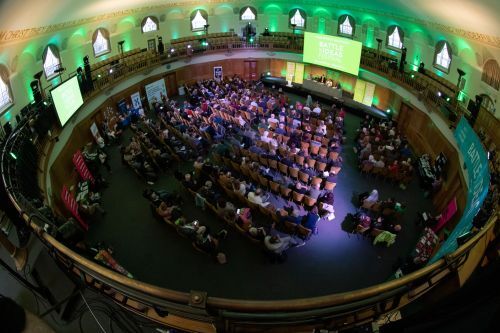
This project brings together audio recordings of the Battle of Ideas festival, organised by the Academy of Ideas, which has been running since 2005. We aim to publish thousands of recordings of debates on an enormous range of issues, producing a unique of political debate in the UK in the twenty-first century.