Battle of Ideas Festival Audio Archive
The Battle of Ideas festival has been running since 2005, offering a space for high-level, thought-provoking public debate. The festival’s motto is FREE SPEECH ALLOWED. This archive is an opportunity to bring together recordings of debates from across the festival’s history, offering a wealth of ideas to enjoyed. The archive also acts as a historical record that will be invaluable in understanding both the issues and concerns of earlier years and the ways in which debates have evolved over time.
Listen on:

Episodes

Jun 23, 2026
Jun 23, 2026
1hr 40 min
Recorded at the Battle of Ideas festival at Church House, Westminster on Saturday 18 October 2025.
ORIGINAL FESTIVAL INTRODUCTION
In recent years, Britain has been rocked by several scandals where the public has been kept in the dark. Politicians and the authorities have indulged in obfuscation, denial, cover-ups and even possible collusion – all to avoid accountability or admit responsibility. As with previous scandals, it’s often been grassroots campaigners, victims’ groups and courageous journalists who have brought these issues to public attention.
What was it like being a key player on the frontline of history in three of these recent scandals: rape gangs, the Post Office miscarriages of justice and gender self-ID in Scotland? Journalists Charlie Peters and Nick Wallis, and Susan Smith from campaign group For Women Scotland, tell their stories of activism, investigation and holding truth to power.
GB News reporter Charlie Peters, presenter of the 2023 documentary, Grooming Gangs: Britain’s Shame, has called it ‘the worst race-hate scandal and abuse scandal since the Second World War’. Meanwhile, Conservative MP Nick Timothy, writing in response to Sir Keir Starmer’s announcement that he would – at last – commission a national inquiry on the back of recommendations in Baroness Casey’s National Audit on Group-based Child Sexual Exploitation and Abuse (2025), stated: ‘Rape gangs are the biggest scandal of our generation.’
The Post Office Horizon IT scandal stands out as another one of the UK’s most significant miscarriages of justice. Faulty accounting software developed by Fujitsu led to the Post Office prosecuting over 900 subpostmasters for theft, fraud or false accounting, resulting in wrongful convictions, bankruptcies, imprisonments and even suicides. Nick Wallis, a freelance journalist, broadcaster and author, has been one of the leading figures in exposing and chronicling the scandal.
For Women Scotland (FWS) is a women’s rights advocacy group that was set up in 2018 to oppose the SNP’s attempts to force gender self-identification through Holyrood. Even when the Gender Recognition Reform Bill was blocked by the Tory UK government, the then first minister of Scotland, Nicola Sturgeon, continued to defend the policy. In a car-crash press conference, she famously refused to say whether double-rapist Adam Graham/Isla Bryson, who was initially sent to a female jail, was a man or a woman. The scandal caused a huge public outcry and has been partially blamed for Sturgeon’s sudden resignation a few months later. The furore also forged For Women Scotland into a formidable campaign group that eventually won a famous victory in clarifying equality law at the Supreme Court.
These scandals are only three of the many that have shocked our nation, alongside the Grenfell Tower fire, the Hillsborough tragedy, the infected-blood scandal and more. Are such scandals simply a feature of modern Britain? Do they, as many argue, implicate the state itself as negligent, incompetent and mired in the tendency to cover-up and collude? What can we learn from these brave journalists and campaigners who have stood at the frontline, challenged politicians and the authorities, and held them to account?
SPEAKERS
Charlie PetersGB News national reporter
Susan Smithco-director, For Women Scotland; director, Beira’s Place; contributor, The Women Who Wouldn’t Wheesht
Nick Wallisjournalist, presenter, BBC Radio 4 series The Great Post Office Trial
CHAIR
Claire Foxdirector, Academy of Ideas; independent peer, House of Lords; author, I STILL Find That Offensive!
Jun 23, 2026
Jun 23, 2026
1hr 36 min
Recorded at the Battle of Ideas festival 2025 on Saturday 18 October at Church House and the Abbey Centre, Westminster.
ORIGINAL INTRODUCTION
In June 2019, the Conservative government amended the Climate Change Act to insert a target of ‘net zero’ emissions by 2050. At the 2024 General Election, all the major political parties, with the exception of Reform, promised to back the goal, with any differences being about when to implement various policies, such as gas-boiler and petrol-car bans. Reform is well ahead in the opinion polls, and calling for the end of Net Zero and the resumption of fracking. Conservative leader Kemi Badenoch has said: ‘We’ve got to stop pretending to the next generation… Net Zero by 2050 is impossible.’ Is Net Zero gradually being ditched?
For proponents of the policy, climate change remains a clear and present danger. The energy and climate change secretary, Ed Miliband declared in May that Keir Starmer and Rachel Reeves are still backing Net Zero: ‘It’s absolutely central to their economic growth and energy security, as well as climate agenda … So as far as I’m concerned, they are 100% committed to this agenda.’ Labour has stopped new licences for gas and oil production in the North Sea and is committed to expanding renewable energy, with Miliband claiming: ‘People recognise that cheap, clean renewables beat expensive, insecure fossil fuels.’
But fuel bills haven’t fallen as the gas-price crisis of 2022 has faded. UK energy prices remain high by international standards, despite (or because of) the expansion of renewables, something highlighted by the need to rescue Scunthorpe steelworks. In June, it was reported that the government was planning to subsidise energy costs for energy-intensive industries. Sky News reported that in 2023, British businesses paid £258 per megawatt-hour for electricity compared to £178 in France and £177 in Germany, according to International Energy Agency data.
Will the Net Zero consensus break down further – and should it? At a time when China’s greenhouse gas emissions dwarf those of the UK and are still rising, does it make economic or environmental sense to decarbonise? Or does the threat of climate change demand that the UK takes a lead and we accept lower living standards to save the planet?
SPEAKERSJonny Ballcontributing editor, UnHerd
Dr Caspar Hewettlecturer, School of Engineering, Newcastle University; co-director, NERC FLOOD-CDT; director, The Great Debate
Ruari McCallionfreelance writer
Ali Mirajbroadcaster; founder, the Contrarian Prize; infrastructure financier; DJ
Kathryn Porterconsultant, Watt-Logic
CHAIRAustin Williamsdirector, Future Cities Project; honorary research fellow, XJTLU, Suzhou, China; author, China’s Urban Revolution
Jun 23, 2026
Jun 23, 2026
1hr 33 min
Recorded at the Battle of Ideas festival 2025 on Saturday 18 October at Church House and the Abbey Centre, Westminster.
ORIGINAL INTRODUCTION
There is no doubt that far too many of our children and young people are not thriving mentally or emotionally in the way that they should be. In 2024, almost 20 per cent of school-aged children in the UK had been diagnosed with a mental-health condition, up from 10 per cent 20 years ago.
Meanwhile, the line between ‘learning disabilities’ and ‘mental-health issues’ has also become increasingly blurred. According to the charity ADHD UK, a diagnosis of ADHD is listed as a ‘mental-health disability’ under the Mental Health Act 1990. Over 1.6million pupils in England have been identified as having special educational needs and disabilities (SEND), up 24.9 per cent since 2016, while the number of children with an education, health and care plan (EHCP) has risen by an astonishing 83.4 per cent – up 11.6 per cent in the past year alone.
The care minister, Stephen Kinnock, has confirmed that the government is committed to its manifesto pledge to put a ‘mental-health practitioner’ into ‘every school in the country’. The idea has widespread support, with the Liberal Democrats and Conservatives offering similar commitments. Already, there have never been so many staff and volunteers working within schools with a specific responsibility for the emotional wellbeing of pupils: senior mental-health leads, educational psychologists, mental-health support teams and more. Access to counselling is available in many schools. Despite this booming school-based ‘mental-health industrial complex’, the wellbeing of pupils continues to deteriorate and rates of ‘mental illness’ continue to rise.
However, a recent Family Education Trust report by Lucy Beney, a qualified counsellor, asks if such interventions are not only ineffective, but perhaps harmful. She discusses everything from ‘diagnostic inflation’ and ‘social contagion’ to definitions of ‘mental health’ and ‘neurodiversity’, from the impact of schools encouraging young people to look at life through the subjective filter of their own feelings to the capture of mental-health professional bodies by critical social justice theory.
If one fifth of children are suffering so much that they are deemed as having a ‘disorder’, should our focus be on where we as parents and teachers are going wrong rather than what’s wrong with children? Is school the best place to address such mental distress, however it’s categorised? And what are the opportunity costs if classroom time and resources are taken away from academic pursuits that could potentially be more conducive to better mental health?
SPEAKERSLucy Beneycounsellor; children's correspondent, Save Mental Health
Baroness Joanne Cashlife peer and radical
Dave Clementswriter and policy advisor; contributing co-editor The Future of Community
Dr Ashley Frawleysociologist; author, Significant Emotions and Semiotics of Happiness
CHAIRProfessor Ellie Leeprofessor of family and parenting research, University of Kent, Canterbury; director, Centre for Parenting Culture Studies
Jun 23, 2026
Jun 23, 2026
1hr 31 min
Recorded at the Battle of Ideas festival 2025 on Saturday 18 October at Church House and the Abbey Centre, Westminster.
ORIGINAL INTRODUCTION
When US Vice President JD Vance warned in a Fox News interview this summer that Europe risked ‘committing civilisational suicide’, he was chiefly concerned with Germany, which he says is in danger of bringing about its own demise.
While Vance’s fire was directed primarily at Germany’s failure to control its borders and the destabilising effects of rising immigration, Europe’s longstanding economic powerhouse faces challenges on many fronts. That famed economy is sputtering, partly reflecting a green agenda that has caused soaring energy costs and created fears of deindustrialisation. Attempts to restructure around defence and infrastructure haven’t allayed fears over the failure to tackle structural problems. Reforms have stalled, such as on welfare, and a managerial overclass has created administrative bloat. Meanwhile, the pivot to foreign policy as a show of international dynamism now collides with rising tensions within the EU, such as over trade, rearmament and energy security.
The refusal or inability to shift course – especially on immigration and environmental policies that are increasingly opposed by the electorate and even parts of the establishment – both reveals and entrenches the political stasis. In February’s elections, right-wing populists AfD emerged the second-strongest force, yet power was retained by a coalition of decaying traditional parties.
Yet the struggle between defenders of the status quo and insurgent challengers is complicated. The surprise electoral success of a revitalised Left Party demonstrated that more challenger parties can emerge, while rifts are growing among the populists – over issues such as Ukraine or Israel. What does stasis allied to fragmentation mean for Germany’s political future?
In response, the coalition government – from day one, the most unpopular in modern German history – is increasingly propped up by state power. These include tightening controls over public discourse and laws that crack down on ‘defamation’ of politicians, which have led to hundreds of prosecutions over social-media posts critical of elected officials. While supporters call these measures necessary to protect democracy, critics see them as authoritarian overreach.
Where is Germany heading? Some observers say this is just the beginning of a new political upheaval. Can a coalition presiding over economic decline and mired in cultural and social conflict find the solutions that help regain voter trust – or is it likely to drive more citizens into the arms of populist challengers? Will Germany regain its economic dynamism and its capacity to act as the engine of European integration or will it become a growing source of instability at the heart of Europe? And is there a danger that Germany is drifting into a new kind of authoritarianism – with ramifications domestically and throughout Europe – and if so, how can that be challenged?
SPEAKERSSabine Beppler-Spahlchair, Freiblickinstitut e.V; CEO, Sprachkunst36; Germany correspondent, spiked
Dr Jochen BittnerUK correspondent, Die Zeit
Professor Ulrike Guérotpublisher; author; director, European Democracy Lab e.V.
Katja Hoyerjournalist; historian, King's College London
CHAIRBruno WaterfieldBrussels correspondent, The Times
Jun 23, 2026
Jun 23, 2026
1hr 31 min
Recorded at the Battle of Ideas festival 2025 on Saturday 18 October at Church House and the Abbey Centre, Westminster.
ORIGINAL INTRODUCTION
Risk is everywhere. Taking the bus, crossing the street, swimming in the ocean, going somewhere alone. Everything is risky – and we are, in many ways, more concerned about life’s riskiness than ever before. In Running the Risk: From Shark Attacks to Nuclear Disaster – understanding life’s biggest risks and how we build a safer future, David Reid aims to help us navigate a world full of risks.
Some risks we accept, like sitting next to a person on the Tube and hoping they don’t have a virus. Some risks we find harder to welcome as a fact of life, like shark attacks and plane crashes. The unknown risk affects people differently. Some still swim in the ocean and fly on planes, while some stick to swimming in lakes and traveling by train.
Some risks are merely par for the course of life, but some are preventable, and have only arisen in the contemporary world due to contemporary problems. Delving into issues like climate change, nuclear instability and AI advancements surpassing human capabilities, Reid illustrates what risk is, and how we can learn to live with and mitigate it.
Running the Risk is more than a grim explanation of modern issues; it is a guide to ‘building resilience’ and navigating the interconnected world. Drawing on historical examples like the aftermath of Hurricane Katrina, the Fukushima nuclear disaster and the Cambridge Analytica scandal, Reid masters the art of risk and elucidates how our world can be made safer, healthier and happier.
Are sentiments like ‘no risk, no reward’ courageous or dangerous? Is mitigating risk crucial to happiness or a barrier to it? Is security necessary for well-being? Will the world ever truly be risk-free? Should it be?
SPEAKERSJon Bryangambling writer and poker player
Timandra Harknessjournalist, writer and broadcaster; author, Technology is Not the Problem and Big Data: does size matter?; presenter, Radio 4's FutureProofing and How to Disagree
David Reidvisiting fellow, Institute for the Public Understanding of Risk, the National University of Singapore; director, Global Advocacy; author, Running The Risk
Sandy Starrdeputy director, Progress Educational Trust; author, AI: Separating Man from Machine
CHAIRDr Dominic Standishwriter and commentator on risk and sport; professor, University of Iowa; author, Venice in Environmental Peril? Myth and reality
Jun 23, 2026
Jun 23, 2026
1hr 30 min
Recorded at the Battle of Ideas festival 2025 on Saturday 18 October at Church House and the Abbey Centre, Westminster.
ORIGINAL INTRODUCTION
Jane Austen turns 250 this year, prompting the question: is one of the world’s greatest female novelists still relevant? With too many BBC and Netflix adaptations to count, Fitzwilliam Darcy, Colonel Brandon, George Knightley and Austen’s other love interests remain staples of romantic fiction that others continue to draw from.
Some argue that Austen’s female characters, while feisty and ‘knowing their own mind’, were not particularly radical. Moving relatively seamlessly into the institutions they so ‘resisted’, her protagonists end up falling into happy marriage – seemingly waiting for a man who can handle them. While Austen may be the pioneer of the love match, is her reverence for society’s patriarchal institutions her downfall in the twenty-first century?
Others point to the fact that Austen’s work changed the landscape of literature completely. She was not a political feminist, nor a political activist, yet her novels developed women as complex individuals with curious minds beyond their physicality and a world beyond their roles as mothers and wives. By making the space for strong and independent women within marriage, she sparked confidence to make matches that suit the individuals, not just the social order.
Some argue that Austen was a victim of her circumstance, most notably to her financial constraints and her dependence on her family. She herself did not marry, perhaps recognising the limitations on time and agency of settling down and running a household. Indeed, she was rather entrepreneurial for a woman of her time. By viewing Austen as the victim spinster, do we risk falling prey to the same shallow stereotypes of women that so many characters in her novels are railing against?
How should we judge Jane Austen, more than two centuries on? Does it matter if she is read by inner-city youth or merely celebrated with Georgian-themed fancy-dress parties? Should we judge her characters by the standards of modern feminism? Are there still lessons for Austen to teach us about relationships and social norms? Or was she simply a brilliant writer, with a turn of phrase and a talent for big finales unmatched for centuries?
SPEAKERSJack Aldanehost and producer, The Booking Club
Emma Gillandevent co-ordinator, Academy of Ideas; convener; Battle Book Club
Matilda Martintrainee English teacher; tutor
Cheryl Robsonwriter, editor and publisher, Aurora Metro Books
Sarah Tuckernovelist; broadcaster; columnist
CHAIRJane Sandemanfounder, AoI Parents Forum; former director of finance
Jun 5, 2026
Jun 5, 2026
1hr 32 min
Lots of people are converting to Christianity and, across the country, church attendance is increasing. While the numbers vary, one survey shows the number of people attending church at least once a month is up from eight per cent in 2018 to 12 per cent in 2024. Perhaps most notably, the survey shows a quadrupling of attendance among Gen Zers, aged 18 to 24, from four per cent to 16 per cent.
The story of modern society has often been told as a rise of secularism and atheism, but after the peak of new atheism in the early 2010s, trends are now reversing. From sold-out events on faith with musician Nick Cave and historian Tom Holland to a swath of new books on the place of god in society, there is public appetite for grappling with religion.
Some argue that this is a ‘quiet revival’ driven mainly by changing perceptions of religion and a collective search for meaning in modern societies that are increasingly individualistic and atomised. Others point to public figures like Jordan Peterson and Ayaan Hirsi Ali, for whom Christianity is part of a larger project to save Western civilisation. Others still argue that there is something distinct and more therapeutic about modern forms of Christian worship – more focused on introspection and personal development than community and morality. Some believers are uneasy about these more pragmatic justifications for faith.
What is the driving force of the resurgence of Christianity? Is this emerging Christianity different from its traditional forms? Is the Christian revival political, or are people searching for meaning? Are we seeing a rise of true faith, or merely cultural Christianity? Is there a difference?
SPEAKERSDolan Cummingswriter and novelist; co-director, Manifesto Club
Pamela Dowchief operating officer, Civic Future
Simon Evanscomedian; GB News and BBC TV and radio regular; presenter, BBC Radio 4's Simon Evans Goes to Market
Abbot Christopher JamisonAbbot President, English Benedictine Congregation; author, Finding the Language of Grace: rediscovering transcendence
Emma Trimblewriter and broadcaster; fellow, New Culture Forum
CHAIRDr James Pantondeputy head welfare, St Edwards School, Oxford; associate lecturer in philosophy, The Open University
Jun 4, 2026
Jun 4, 2026
1hr 31 min
Recorded at the Battle of Ideas festival 2025 on Saturday 18 October at Church House and the Abbey Centre, Westminster.
ORIGINAL INTRODUCTION
Genocide, Holocaust, Never Again. Phrases that once conjured up only one image: the Nazis’ systematic attempt to eliminate the entire Jewish people and eradicate Jewish culture, identity and future generations of Jews from the face of the earth. It was once held that the Holocaust was unique in its horror with no precedent in history. Can we confidently say this view still holds today?
Today, the word ‘holocaust’ is increasingly used as a free-floating catch-all to describe many geopolitical events or even general human evil. Even Auschwitz, a death camp designed for the genocide of the Jews, has been turned into an all-purpose symbol of human cruelty. The proposed Learning Centre to be built as part of the controversial Holocaust Memorial in Victoria Garden, next to Parliament, promises a ‘high-tech immersive experience’, expected to last only 45 minutes, that will reference a wide range of other international atrocities, such as Rwanda and colonial-era massacres, with the aim to promote equality and diversity in general.
More specifically, these terms are being applied to the war in Gaza – particularly since Hamas’s attack on 7 October 2023. Israelis are increasingly likened to Nazis, guilty of war crimes and ethnic cleansing, or settler-colonists aiming at the complete destruction and replacement of Palestinians and their culture. The United Nations, Amnesty International, Médecins Sans Frontières and countless individual governments have proclaimed a genocide in Gaza, a claim strongly denied by Israel and its supporters who condemn the veracity of these accusations and what they refer to as ‘Holocaust relativism’.
In a new book, The World After Gaza, author Pankaj Mishra brings together the narratives of both the Holocaust and slavery-colonialism, arguing Nazism is simply the logical extension of colonialism. The Israeli government, according to Mishra, is guilty of both. Celebrity social-justice activist Naomi Klein wrote in the Guardian last year that we are entering a new intellectual era, one in which people are openly asking if the Holocaust should ‘be seen exclusively as a Jewish catastrophe, or something more universal’. Klein goes on to argue that perhaps the Holocaust was not ‘a unique rupture in European history’ but rather ‘a homecoming of earlier colonial genocides’.
What are the consequences of this ‘dejudification of the Holocaust’, as Brendan O’Neill calls it in his recent book, After the Pogrom? How can the public, especially new generations, understand the true nature of this industrialised act of anti-Semitic barbarism – and to even remember that the Jews were the targets – when the Holocaust is wrenched out of its historical context? Are authors like Mishra and Klein right when they say it is this very sanctifying of the Holocaust in Western history that wilfully ignores crimes of equal magnitude, including what is happening in Gaza today?
SPEAKERSDaniel Ben-Amijournalist; creator, Radicalism of Fools project on rethinking anti-Semitism; author, Ferraris for All: in defence of economic progress
Naomi Grynwriter; filmmaker
Samuel Rubinsteinpostgraduate historian and writer
Dr Jake Wallis Simonsauthor, Never Again? How the West betrayed the Jews and itself
CHAIRSimon McKeonfounder member, Our Fight UK; QPR season ticket holder; archivist
Jun 4, 2026
Jun 4, 2026
1hr 29 min
Recorded at the Battle of Ideas festival 2025 on Saturday 18 October at Church House and the Abbey Centre, Westminster.
ORIGINAL INTRODUCTION
Since 2020, the Academy of Ideas has published Letters on Liberty – a radical pamphlet series aimed at reimagining arguments for freedom today and inspiring rowdy, good-natured disagreement.
In his Letter – The Freedom to Blaspheme – writer and curator Manick Govinda argues that blasphemy law has returned through the back door – with Islam, rather than Christianity, pointing the finger at heretics. From recent cases of attacks on free speech to the self-censorship of everyone from teachers to comedians, Manick argues that blasphemers are being persecuted and prosecuted across the world. While courtesy and kindness are valuable features of a free society, he writes, no religion or religious leader should be above criticism. Kowtowing to the offended, no matter how grievous the insult they may feel, weakens our liberty.
Join Manick and respondents to discuss whether we should be free to criticise and mock religion. Is there a balance to be struck between tolerance of religious freedom and the right to publicly disagree with other people’s faith? Has the UK brought blasphemy law back to the statute books via the notion of ‘hate crime’? And after the stabbing of Salman Rushdie, the Charlie Hebdo massacre and other Islamist attempts to censor discussion of Islam, is the problem we’re dealing with a different idea of blasphemy to the days when the Life of Brian was banned?
SPEAKERSDr Piers Bennphilosopher, author and lecturer
Manick Govindaindependent writer, commentator, mentor/arts adviser and curator
Khadija Khanjournalist and broadcaster; editor, A Further Inquiry; co-host, A Further Inquiry podcast
John O’Brienhead of communications, MCC Brussels
CHAIRRosamund Cuckstonsenior HR professional; co-organiser, Birmingham Salon
Jun 4, 2026
Jun 4, 2026
1hr 32 min
Recorded at the Battle of Ideas festival 2025 on Saturday 18 October at Church House and the Abbey Centre, Westminster.
ORIGINAL INTRODUCTION
The past year has seen a flurry of announcements about military investment in Western countries. Following Trump’s re-election, and his blunt demand that European countries invest more in their militaries, the EU announced €800 million of funds for defence in a package called ReArm Europe (later renamed Readiness 2030 after backlash that the package sounded too militaristic). NATO members then agreed to bump defence spending to five per cent of GDP – although some, like Spain, secured opt-outs, and members will be able to count certain infrastructure spending towards the target.
Aside from Trump, the calalyst has been Russia’s invasion of Ukraine and a more uncertain and dangerous geopolitical situation around the world. From clashes between India and Pakistan to continuing war in Gaza, threats from China about Taiwan, instability in the Balkans and rising tensions in South America – few deny the world is a more unstable place than it was a decade ago.
The question is how Western countries should respond. Many suggest that the new period of rearmament is a necessary corrective to a longstanding vacation from geopolitical realities. In recent decades, weapons stockpiles have shrunk, armed forces have been reduced and industrial capacity has declined – to the point where few Western countries except America or Poland could sustain a serious conflict, or even a minor one. While Western states have let military spending fall down the list of priorities, newly emboldened countries like China, Turkey, the Gulf States and India have grown their armed forces.
But others worry this new talk of militarism risks fanning the embers it is supposed to contain. Some joke that it could be dangerous for Germany, which has spent the postwar years being told to constrain its military, to now be encouraged to spend hundreds of billions of euros on its armed forces. Newly furnished militaries could be like Chekov’s Gun – just waiting to go off. Others point to the loss of progress on arms-reduction treaties, or the dangerous rhetoric of civilisational competition. Burgeoning social-welfare commitments, skyrocketing energy prices, decades of infrastructure decay, and a lack of critical raw materials make rearmament more difficult than simply declaring a new target.
But perhaps the most biting criticism is the gap between these new military ambitions and the reality at home. Western countries cannot defend their borders against illegal migration, let alone foreign adversaries. Young people profess less and less desire to identify with their country, let alone fight for it. And whatever the talk of strategic adversaries, Western countries are still dependent on Russia, China and other competitors for basic and crucial goods, from oil to batteries.
Should the new talk of military rearmament be welcomed, feared or perhaps even ridiculed? When the countries comprising the West seems to be in constant tension over Ukraine, free speech or attitudes to Chinese investment, is there even a West to speak of? Is it high time to get serious about the military and prepare for war? Or do we need to cool off?
SPEAKERSDr Tim Blackbooks and essays editor, spiked
Mary Dejevskyformer foreign correspondent in Moscow, Paris and Washington; special correspondent in China; writer and broadcaster
Virginie JoronFrench member of the European Parliament, Patriots for Europe Group
Tim Scottexecutive director, The Freedom Association
Charlie Winstanleyauthor, Bricking it: The UK Housing Crisis and the Failure of Policy; public affairs & social policy development professional
CHAIRJacob Reynoldshead of policy, MCC Brussels; associate fellow, Academy of Ideas
Jun 4, 2026
Jun 4, 2026
1hr 34 min
Recorded at the Battle of Ideas festival 2025 on Saturday 18 October at Church House and the Abbey Centre, Westminster.
ORIGINAL INTRODUCTION
From Yes Minister to The Thick of It, the political class has always been a go-to topic for comedians and satirists. But in a world in which political developments have become so extreme and self-satirising, is it still so easy to find laughs in the corridors of power?
Regardless, politics seems to impact on how we assess comedy too. When British comedian Sam Nicoresti became the first transgender person to win the £10,000 award for Best Comedy Show at the Edinburgh Fringe, some questioned if this was more political virtue-signalling than an assessment of comedic brilliance. Nicoresti’s statement added fuel to this disquiet: ‘I did this for the queers making weird art, and it’s a privilege to share this moment with the first all-female line-up of award winners.’
Mixing comedy and politics can be a double-edged sword. In an era of identity politics and offence culture, irreverence about political orthodoxies often collides with everything from hate-speech laws to cultural taboos, leading to cancelled shows, boycotts or social media storms. Ricky Gervais’s infamous monologues mocking ‘woke’ culture regularly draw ire from celebrities and media, even if loved by millions.
While humour can critique politicians effectively, be an edgy way of holding power to account and even spark public debate by saying the unsayable in an engaging way, what happens if comedy itself becomes politically partisan? After all, alternative comedy’s embrace of progressive, right-on, liberal orthodoxies has arguably become a ubiquitous way of squeezing out dissenting comic voices. What happens if anti-woke comedians stop making good jokes and simply ‘sing to the choir’?
With the stakes seemingly higher than ever, and comedians taking robust political stances of their own, does comedy risk become simply another form of propaganda?
SPEAKERSSteve N Allenbroadcaster and comedian
Nicholas De Santocomedian; TV journalist and commentator
Leo Kearsecomedian; writer, Breaking The News, Mock The Week and The Mash Report; co-creator, Hate 'n' Live
Intel Ladysatirist, performer
CHAIRAndrew Doylewriter and comedian; author, The End of Woke: How the Culture War Went Too Far and What to Expect from the Counter-Revolution and The New Puritans
Jun 4, 2026
Jun 4, 2026
1hr 33 min
Recorded at the Battle of Ideas festival 2025 on Saturday 18 October at Church House and the Abbey Centre, Westminster.
ORIGINAL INTRODUCTION
The UK’s infrastructure is at a crossroads. Decades of underinvestment and misdirected investment have left transport networks congested, energy systems under strain, digital connectivity patchy, sewers clogged, towns flooded, bridges crumbling and housing targets seemingly unattainable.
The government promises £1.5million new homes and yet we are faced with a major slowdown in the construction industry, a situation not helped by local resistance and bureaucratic inertia. The situation is further restrained by a lack of adequate support systems like schools, colleges, hospitals, and even courts and prisons.
Cost overruns on projects like HS2 erode public trust, but day-to-day staff shortages, engineering works, train cancellations and leaves on the line are what really frustrate commuters. Grenfell Tower was a national tragedy, but spending billions on recladding buildings and funding bureaucratic regulators – instead of training builders to construct sufficient, affordable homes for those in need – seems inexplicable. Planning laws, environmental concerns, over-regulation, risk aversion, litigiousness and insurance liabilities have exacerbated the problem.
But what is the actual problem?
To be fair, this year, Keir Starmer announced that the government would ‘push past nimbyism’ to get things done. Although tangible evidence has yet to materialise, recent ministerial pledges have included the desire to streamline planning, kickstart New Towns and boost energy provision. In August, the government announced a £130million package to help create 40,000 jobs in the construction sector
So maybe we are not giving credit where it’s due. This government has pledged to build nine new reservoirs, expand Heathrow, construct new nuclear and small nuclear reactors, and it has recently announced a £63million investment package to supercharge Britain’s electric-vehicle infrastructure. In June 2025, it laid out its ‘10 Year Strategy’ for UK infrastructure, whereby the government pledges to deliver growth in roads, railways, airports, water networks, energy grids, digital and housing infrastructure in order to deliver a more productive economy. Maybe we shouldn’t grumble.
How believable are the government’s plans? How do we balance local concerns with national housing and infrastructure needs? If we can’t maintain existing networks, how can we possibly create the next generation of infrastructure, like AI networks, smart systems, modular homes, autonomous vehicles, 3D printing, drone deliveries and low-carbon energy systems?
SPEAKERSPaul Finch OBEprogramme director, World Architecture Festival
Ben Flatmanarchitectural editor, Building Design and Building; author, Birmingham: Shaping the City
Shelagh McNerneyhead of regeneration, Manchester City Council
Christopher Worrallindustry fellow, Onward; commentator on housing, planning, and political realignment
Jun 4, 2026
Jun 4, 2026
1hr 35 min
Recorded at the Battle of Ideas festival 2025 on Saturday 18 October at Church House and the Abbey Centre, Westminster.
ORIGINAL INTRODUCTION
Labour MP Kim Leadbeater’s Terminally Ill Adults (End of Life) Bill is still being discussed in parliament. But beyond proposals for a law change, how should we tackle one of the great debates of our time: should we set up a system of assisted death and profound questions it raises about everything from whether adults have a right to assistance to end their own life to what safeguards and protections should exist between individuals and the state when death is offered as a medical option by health professionals.
Philosopher and bestselling author of Material Girls Kathleen Stock will lead a discussion raising themes in her forthcoming book Do Not Go Gentle, arguing that we should reaffirm life, rather than death and collectively, we should rage against the dying of the light.
The issue throws up many moral dilemmas worth discussing: Is the status quo a ‘cruel mess,’ to quote campaigner Dame Esther Rantzen? Is assisted death for those with a terminal illness, or suffering chronic pain or extreme mental distress, a progressive and compassionate choice as its supporters argue? Does it give a person more “freedom” or “control” over their lives, allow dignity in dying as it were? How should we square a patient’s freedom of choice with existing frameworks of medical ethics? Will having the right to take control of your death by asking a doctor to kill you, really have broader sinister outcomes for the vulnerable, the elderly, the disabled, the suicidally depressed as its opponents warn? Is it ever possible to guard effectively against situations in which people are coerced to die, either by family members or by a state that is too often incapable of providing adequate palliative care? Or are such slippery slope arguments just a form of emotive scaremongering? How should we all approach our own or loved ones’ terminal illness and death?
SPEAKERSDr Az Hakeemconsultant psychiatrist and medical director, Psyche Clinic; author, Trans and Detrans
Sonia Sodhacolumnist and broadcaster
Dr Kathleen Stockcolumnist, UnHerd; co-director, The Lesbian Project; author, Do Not Go Gentle: The Case Against Assisted Death
Professor Kevin Yuillemeritus professor of history, University of Sunderland; author, Assisted Suicide: the liberal, humanist case against legalization
Apr 14, 2026
Apr 14, 2026
1hr 33 min
Recorded at the Battle of Ideas festival 2025 on Saturday 18 October at Church House and the Abbey Centre, Westminster.
ORIGINAL INTRODUCTION
Successive governments have struggled with Relationships, Sex and Health Education (RSHE). But in July, the Department for Education finally published the long-anticipated guidance to schools to a mixed reception. Some critics argue that crucial safeguards made by the Conservatives have been watered down by Labour.
Giving parents access to classroom materials has dominated the discussion in recent years, both in the news and the courts. The new guidance claims that parents will be able to see what their children are being taught, but concerns remain about how this will work in practice.
Transparency is only one aspect of this emotive and divisive topic. Other conflicts between so-called ‘conservative’ and ‘progressive’ parents include whether these controversial classes are compulsory and, most importantly, what, when and how they are taught, and by whom.
This RSHE guidance is not to be confused with the separate Gender Questioning Children guidance, which will outline how schools should treat kids who say they are trans. The government has announced that this must be published by the time the Children’s Wellbeing and Schools Act passes into law. But with so much debate on the highly contested concept of gender identity, how can we possibly explain it to our kids?
Even among parents, teachers and commentators who are sceptical about transgenderism, there is no consensus on the broader aspects of sex and relationship education. Should we be teaching teenagers about consent and coercion, masturbation and misogyny, spiking and surrogacy – and what, if anything, should teachers and external providers be telling primary school children about sex?
Should we let kids be kids, leave it to Biology teachers to explain the basics and for parents to decide what they discuss in their family about intimacy? Or do we need to ensure that children are educated about all the potential offline and online dangers that young people face?
SPEAKERSFelice Basbøllhistory student, Trinity College Dublin; author, The Tyranny of Campus Wellbeing
Stephanie Davies-Araidirector, Transgender Trend; author, Communicating with Kids
Penny Lewiseditor, Scottish Union for Education
Jo-Anne Nadlerpolitical journalist; campaigner, Don't Divide Us
CHAIRElla Whelanco-convenor, Battle of Ideas festival; journalist; author, What Women Want
Apr 14, 2026
Apr 14, 2026
1hr 37 min
Recorded at the Battle of Ideas festival 2025 on Saturday 18 October at Church House and the Abbey Centre, Westminster.
ORIGINAL INTRODUCTION
Fantasy fiction is dominating bestseller lists, and its popularity is on the rise. A new generation of readers are devouring both traditional novels like Lord of the Rings, while also demonstrating a considerable rise in interest in ‘romantasy’ fiction, a contemporary blend of romance and fantasy that has captivated female readers but is often resented by ‘traditional’ fantasy fans. Fantasy fiction even has its own master’s degree in the UK, and fantasy novels are taught in universities alongside the classics of the canon. Is the influence of fantasy fiction still expanding?
Fantasy has long been dismissed as escapism – providing an ‘easy read’ for those looking for an uncomplicated ‘happily ever after’. Some also dismiss lots of contemporary fantasy – especially that targeted at women like TikTok bestseller A Court of Thorns and Roses – as lazy erotica in disguise. And with the surge in worries about the manosphere, some are concerned that young men are turning to fantasy for toxic tropes of ‘real’ masculinity.
Fantasy stories, with their crafted maps and intricate laws offer a sense of community for the atomised individual – a guide through higher ‘law’ and common cultural references. It allows for the exploration, meditation and individual interpretation of religion and spirituality in the twenty-first century. Often looking back to paganism and medieval religions, fantasy challenges current institutional forms and offers complex emotional relationships and moral choices, asking philosophical questions that may have otherwise been forgotten. Many see fantasy lands and laws as an alternative religion, acting as a guide in the mist of modern moral individualism.
The media and the franchising industry has long been captivated by the fantasy genre, with many books being made into TV series or Hollywood films. The accessibility of these stories in multiple forms is deepening their influence and capturing audiences across realms. But fantasy fiction has gone through many phases and forms, so what has really accelerated this trend?
Should we give fiction writers credit for influencing political and spiritual narratives through their moralised plot lines and alternative rules of law? With the influence of ancient mythologies, religion and historic codes of conduct, are fantasy fiction writers really constructing new worlds, or simply reflecting our own? Should we praise fantasy fiction for the moral dilemmas and controversies it brings to light, or should we question the dependence on alternative realms and contrived plotlines to grapple with these questions?
SPEAKERSLara Browncommissioning editor, the Spectator; former president, Cambridge Union
Dr JJ Charlesworthart critic; editor, ArtReview
Helen Dalesenior writer, Law & Liberty; author, Kingdom of the Wicked
Blair Milosenior fellow, Sagamore Institute
CHAIRSandy Starrdeputy director, Progress Educational Trust; author, AI: Separating Man from Machine
Battle of Ideas festival archive
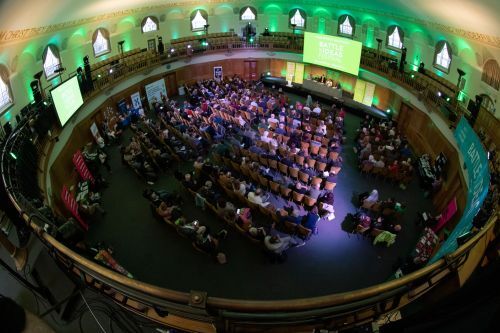
This project brings together audio recordings of the Battle of Ideas festival, organised by the Academy of Ideas, which has been running since 2005. We aim to publish thousands of recordings of debates on an enormous range of issues, producing a unique of political debate in the UK in the twenty-first century.