Battle of Ideas Festival Audio Archive
The Battle of Ideas festival has been running since 2005, offering a space for high-level, thought-provoking public debate. The festival’s motto is FREE SPEECH ALLOWED. This archive is an opportunity to bring together recordings of debates from across the festival’s history, offering a wealth of ideas to enjoyed. The archive also acts as a historical record that will be invaluable in understanding both the issues and concerns of earlier years and the ways in which debates have evolved over time.
Listen on:

Episodes
Thursday Apr 11, 2024
Thursday Apr 11, 2024
Recorded at the Battle of Ideas festival 2021 on Saturday 9 October at Church House, London.
ORIGINAL INTRODUCTION
Identity has become a defining factor in how we understand ourselves in the modern age. But the idea of what identity means hasn’t always been the same. The concept of identity is used by some as a marker of where you’re from, by others as a way of explaining who you are deep inside. For some, identity is a fixed, constant factor from which we shape our lives. Others see identity as something changeable and malleable according to how we want to project ourselves into the world.
What’s certain is that our changing concept of identity and its importance has come to shape much of contemporary political debate. ‘Identity politics’ is praised by supporters as a move to focus political change around the needs of individuals and their different identities. Feminists who coined the term ‘the personal is political’ have long argued that women and men’s private lives, and how these identities present in society, are crucial to understanding why sexism and misogyny exists.
On the other hand, identity politics and its ‘intersectional’ tendency is criticised by those who see it as move away from collective political ideals like universalism and solidarity. For example, many political commentators now seek to draw their authority from links to their own personal identities – such as speaking ‘as a gay man’ – a move which some applaud as a celebration of ‘lived experience’ and others condemn as divisive.
But what happens if we start to lose confidence about our identity? A common complaint among younger people is the worry that they ‘don’t know who they are’, with demands for therapeutic or medical intervention offering solutions to help lost youngsters discover what their true identity really is. On a bigger scale, divisions on political issues from Brexit to Covid-19 call into question the idea of a national identity or shared sense of self among the populace. Recent events in Afghanistan have posed the question of whether the West is sure of its identity on the world stage.
But not everyone is worried about this shift. In fact, many argue that it’s important to stress and celebrate our differences – from race and gender to culture and heritage – in order to resist regressive political identities from coming to the fore. For some, identity has now become a battleground: anti-racists claim that copying cultural identities is ‘appropriation’ and racist, while gender-critical feminists claim that trans women are ‘threatening’ their identity as women.
Two new books examine the way in which identity has moved from a sense of inner meaning to a thing we wear on our sleeve, and the implications of that change. Professor Frank Furedi’s 100 Years of Identity Crisis: culture war over socialisation argues that we must understand our current ‘crisis’ of identity to explain the problems we have with socialisation and the ever-toxic culture wars. Rakib Ehsan’s forthcoming book, Manufactured Grievance: the modern Left and Britain’s ethnic minorities, looks at how a narrow focus on personal identity – particularly when it comes to race – is in danger of impeding a ‘civic nationalism’ based on traditional shared values of ‘faith, family and flag’.
Do we know who we are anymore? And does embracing our sense of identity hinder or help our ability to engage in collective ambitions, like figuring out what society stands for? How has the atomisation of modern life changed our identities – particularly when the online world offers opportunities to curate and manicure our own view of ourselves? Is identity important, or should we be telling young people that it’s what they do in the world, rather than who they are, that matters? And can today’s culture wars be seen as part of this identity crisis – or should we accept that all aspects of life are now up for grabs on the political stage?
SPEAKERSDr Rakib Ehsanauthor, Manufactured Grievance: the modern Left and Britain’s ethnic minorities; research fellow, The Henry Jackson Society
Professor Frank Furedisociologist and social commentator; author, 100 Years of Identity Crisis: culture war over socialisation and Democracy Under Siege: don't let them lock it down!
CHAIRElla Whelanco-convenor, Battle of Ideas festival; journalist; author, What Women Want
Thursday Apr 11, 2024
Thursday Apr 11, 2024
Recorded at the Battle of Ideas festival 2021 on Sunday 10 October at Church House, London.
ORIGINAL INTRODUCTION
The recent abandonment of Afghanistan by the UK and the US is widely seen as a humiliating defeat for the West. Coinciding with the 20th anniversary of 9/11, the hurried exit and its consequences have led to a soul-searching discussion about what the West really means today. Are we prepared to fight for Western values, and do we even agree on what Western values are?
The failure in Afghanistan is not just seen as a blow to foreign policy – many describe a more profound sense of the decline, arguing that an existential crisis threatens the universal influence of Western values like freedom, democracy, civil liberties. The enemy seems less likely to be the Taliban and more a combination of internal self-doubt and domestic hostility. Any time a politician talks about the importance of citizenship classes or socialising a young generation into a particular cultural or social outlook, all hell breaks loose. For many, we seem to have lost not only the ideas about what we stand for, but the confidence to believe in them.
Indeed, within Western societies many seem increasingly uncomfortable with the traditions and ideals of Western civilisation. According to journalist and author Tim Stanley, ‘the West feels lost. Brexit, Trump, the coronavirus: we hurtle from one crisis to another, lacking definition, terrified that our best days are behind us’. Stanley argues that ‘we can only face the future with hope if we have a proper sense of tradition – political, social and religious’. But the notion of tradition itself is contested by some, as elitist, Eurocentric, and a coda for white privilege.
The norms and customs of modern democratic societies, based on the gains of the Enlightenment period, have also been called into question. Populist uprisings and controversial elections have led to a disenchantment with democracy – can voters really be trusted, or does majoritarian rule deny minority rights? Unimpeded individual liberty is castigated as leading to selfish individualism, at odds with social equality or economic fairness. Long before the pandemic, a defence of freedom gave way to concerns around safety, with a focus on the need to protect citizens from terrorism, crime or even dangerous ideas. Unlimited free speech is increasingly portrayed as a breeding ground for hate speech, portrayed as a threat to the wellbeing of minority groups and in need of limitations if deemed offensive. Even the idea of universalism is seen as a cover for power relations. Instead, relativism and identity politics exert increasing influence.
Stanley’s injunction that we ‘ignore our past at our peril’ immediately clashes with the reality of how history has become one of the major battlegrounds in the culture wars. Some have argued that we seem to be embroiled in a war on the past. But what is wrong with creating new norms based on social justice, or new values forged around ‘inclusion’ and ‘diversity’? After all, tradition previously dictated that marriage was confined to people from the opposite sex. This has all changed – and public sentiment more broadly has become more openly welcoming of sexual minorities. We’ve moved on to reject traditional views of women as the weaker sex, no longer confining them to the home, and we’ve also sought to come to terms with history’s dark side – from slavery or militarist colonisation to removing taboos and ‘stigmas’ about everything from mental health to our biology. Surely this is a new enlightenment?
How does all of this help us understand the demoralisation of Western values? Without historic traditions and agreed cultural values, how can individuals become part of a shared community? How can society nurture a bond between generations and a sense of common purpose and solidarity if we’re constantly calling into question our fundamental values? Can we defend crucial principles such as free speech and democracy against nihilistic destruction or well-meaning challenges? Or is it time to consign the West – and Western civilisation – to the dustbin of history, and start again?
SPEAKERSProfessor Aaqil Ahmeddirector, Amplify Consulting Ltd; professor of media, University of Bolton; former head of religion, Channel 4 and BBC
Dr Stephen Blackwoodfounder and president, Ralston College, Savannah; author, The Consolation of Boethius as Poetic Liturgy
Professor Frank Furedisociologist and social commentator; author, 100 Years of Identity Crisis: culture war over socialisation and Democracy Under Siege: don't let them lock it down!
Jodie Ginsbergchief executive, Internews Europe
Tim Stanleycolumnist and leader writer, Daily Telegraph; author, Whatever Happened to Tradition? History, Belonging and the Future of the West
CHAIRClaire Foxdirector, Academy of Ideas; independent peer, House of Lords; author, I STILL Find That Offensive!
Thursday Apr 11, 2024
Thursday Apr 11, 2024
Recorded at the Battle of Ideas festival 2021 on Sunday 10 October at Church House, London.
ORIGINAL INTRODUCTION
‘Why should I be studying for a future that soon may be no more, when no one is doing anything to save that future?’Greta Thunberg COP24 climate talks, Poland, December 2018
‘The eyes of all future generations are upon you. And if you choose to fail us, I say – we will never forgive you.’Greta Thunberg, UN Climate Summit, New York, 2019.
As Greta’s denunciations illustrate, it seems clear that today’s activists face a gloomy dilemma with no apparent way out: historic actions have created this mess and the most we can hope for in the future is survival. This outlook threatens to leave society unmoored and stuck in the present, just as much as drivers have been regularly stuck in protest-created traffic jams on the M25.
In the past, political change was future-orientated and optimistic, full of hope at the possibility of improving lives. Today, the tone seems more pessimistic, even millenarian. There is a widespread assumption that today’s young people and future generations will be worse off than their parents. Young political activists accuse their elders of leaving a rotten legacy of a wrecked planet, institutional bigotry and economic chaos.
In turn, adult society seems haunted by its responsibility for the alleged sins of the past. For example, in the name of future generations, the spectre of ecological catastrophe is now shaping policy and institutional priorities. While the need to reduce CO2 emissions may provide a mission for a world otherwise shorn of moral certainties, it’s underlying message seems debilitating. ‘Code Red’ warnings of a grim future caused by irresponsible human action in the past capture an increasing alienation from both the past and the future.
A driving force of political action today is to disavow what were seen as the gains of the past. For example, environmentalists decry the huge strides made for humanity on the back of the Industrial Revolution, which are now seen as creating today’s problems. Social and economic changes, hard fought for as the by-products of modernity, resulting in decreasing child mortality, extended life expectancy, the wonders of modern sanitation, agriculture, prosperity, energy and transport are now catastrophised as evidence of humanity being inherently destructive. Today’s ‘net zero’ targets are, by implication, necessary reparations for historic wrongdoing.
More broadly, debates rage with unmatched intensity about history. What purports to be a newly enlightened focus on social injustice in the here and now actually seems preoccupied with indicting past wrongs. Holding historical figures and events to contemporary standards has created a toxic battleground over statues, museums, ‘dead white men’ and past injustices. It seems as if every major institution is engaged in examining its past for traces of slavery and racism, and purging such links from its image today.
But where does it leave society if its history is constantly treated as a hostile inheritance? Many are now worried about the fragmentary and demoralising outcomes of stigmatising historical figures as bigots. More than 40 senior UK and ‘Anglosphere’ academics recently launched History Reclaimed, concerned about the way the culture wars have overtaken their field. They claim that recent campaigns to rewrite the histories of Western democracies have undermined ‘their solidarity as communities, their sense of achievement, even their basic legitimacy’.
What are we to base our values on today if a community’s achievements of the past are constantly questioned and humanity’s past achievements are demonised as shameful? Is political change even possible without finding something of value in the actions of our ancestors? Conversely, if the future is characterised as a dark and scary place, how can such a fatalistic pessimism inspire positive political action? If we are alienated from both history and the future, do we risk becoming stuck in the same endless present? Can we save history from nihilism? Can we become active agents once more in shaping the future?
SPEAKERSAaron Bastanico-founder, Novara Media; author, Fully Automated Luxury Communism: a manifesto
Lord Maurice GlasmanLabour life peer; director, the Common Good Foundation; author, Unnecessary Suffering: Managing Market Utopia
Jacob Reynoldspartnerships manager, Academy of Ideas
Baroness StowellConservative peer, House of Lords; former leader of the House of Lords; former head of corporate affairs, BBC
Robert Tombsemeritus professor of French history, Cambridge University; author, This Sovereign Isle: Britain In and Out of Europe
CHAIRClaire Foxdirector, Academy of Ideas; independent peer, House of Lords; author, I STILL Find That Offensive!
Thursday Apr 11, 2024
Thursday Apr 11, 2024
Recorded at the Battle of Ideas festival 2021 on Saturday 9 October at Church House, London.
ORIGINAL INTRODUCTION
At the height of the pandemic lockdowns, much was made of the spirit of solidarity shown by the British public. While comparisons to the ‘Blitz Spirit’ were often made, the reality was more complicated.
For many, the idea of being ‘all in this together’ contrasted with widespread loneliness, a growing sense of frustration and a prolonged period of demoralisation. Throughout history, crises have forged new coalitions and prompted social change. As the threat of the pandemic recedes, many are asking what the legacy of this strange period will be – a period where the mark of a good citizen was to stay away from other people.
Few would deny that there were many inspiring moments. The famous ‘clap for carers’ saw millions on their doorsteps. A call for NHS volunteers was met with an avalanche of applications. Since then, many thousands more have volunteered to help with the vaccine rollout, countless mutual aid societies have been formed and many neighbourhoods have formed tighter bonds.
Yet at the same time, the paradoxes of our age revealed themselves. Mutual aid groups co-existed with curtain-twitchers reporting how many walks their neighbours had taken; local authorities were zealously breaking up gatherings while promoting alfresco dining in town centres. What’s more, no one seemed to know what to do with the ‘army’ of NHS volunteers.
What explains these contradictions? Many argue that the ‘decline of community’ long predates the pandemic: with people getting richer, they tend to pay for services rather than relying on neighbours. Others point to the strangulation of public life through the use of Public Space Protection Orders and ASBOs. Perhaps decades of privatisation have sapped the resources and goodwill from communities.
Yet, despite these deeper trends, lockdowns themselves have certainly had an effect. Perhaps fundamentally, there seemed an irresolvable contradiction: lockdowns, which isolated people in their homes, seems at odd with solidarity, which brings people together. Masks, to take one example, can be seen as both a positive, pro-social attempt to keep others safe or as an isolating, alienating garment that says, ‘stay away’. Similarly, the unprecedently high take-up of the vaccine reflected the desire of people to protect their loved ones and reduce the pressure on the NHS – but many have felt the threat of vaccine passports amounts to little better than blackmail.
Whatever the post-pandemic period is to bring, it is clear that the aspiration towards solidarity remains strong. The scenes of jubilation and exuberance displayed during England’s Euro 2020 run were seen as an expression of a desire to be part of something together. What’s more, however hollow Boris Johnson’s ‘levelling up’ agenda is accused of being, it seems that it represents a widespread desire to restore a sense of civic pride and community engagement.
Are there figures willing and able to define what solidarity means today? After a long period of isolation, what will remain of traditional avenues of solidarity, from pubs to sports? Has the experience of the past two years forged new bonds or entrenched a growing sense of isolation? What, ultimately, does solidarity mean today?
SPEAKERSPaul Emberyfirefighter; trade unionist; columnist; author; broadcaster
Inaya Folarin ImanGB News journalist; political commentator; social campaigner; founder and director, The Equiano Project
Dr Tiffany Jenkinswriter and broadcaster; author, Keeping Their Marbles: how treasures of the past ended up in museums and why they should stay there; presenter, A Narrative History of Secrecy
Lord Moylanconservative peer
CHAIRJacob Reynoldspartnerships manager, Academy of Ideas
Wednesday Apr 10, 2024
Wednesday Apr 10, 2024
Recorded at Open for Debate on Saturday 31 July at Church House, London.
ORIGINAL INTRODUCTION
From corporate boycotts of GB News to cancelling of gender-critical artists within cultural institutions, disputes over freedom of speech are myriad today. But perhaps the litmus test of how society deals with the challenges to freedom comes within universities.
After years of concerns being raised about no-platform polices and cancel culture on campus, the government has declared its intention to ensure that universities and colleges are ‘bastions of free thought and intellectual debate’. The Higher Education (Freedom of Speech) Bill promises to ensure that no higher education providers – including student unions – will be allowed to limit lawful free speech and expression of diverse views.
Slipping quickly into ‘get-tough’ mode, Lord Wharton of Yarm, the new chairman of Office for Students, has served noticed that he’ll not be afraid to use the new powers. These include financial compensation for academics and speakers denied the opportunity to express their views, as well as fining and deregistering institutions and measures such as banning degree courses from recruiting new students.
Opinion is split on how to respond. Academic Eric Kaufmann, one of those who welcome the initiative, says the proposal represents a major advance in the struggle to defend academic freedom against progressive intolerance. He argues that conservatives and ‘gender-critical’ scholars disproportionately face political discrimination and institutional disciplinary threats, which has led to a wider culture of self-censorship.
Others – like the powerful Russell Group of 24 leading universities – are less sure. They say the proposed new measures are unnecessary when there are others already in place that they claim to support and adhere to. In the wake of the pandemic, as many universities fear going bust and hope to benefit from cash support from government, some are concerned that new measures will add an unnecessary bureaucratic cost alongside requirements under the Prevent anti-radicalisation programme, and employment and contract laws protecting staff.
Some argue that the measures are too narrow and technocratic to counter today’s censorious mood. High-profile cases of no-platforming and ‘snowflakery’ make headlines, but more subtle erosions of academic freedom are rooted in an increasingly censorious cultural outlook. A safety-first approach has led to the closing down of controversial areas of research under REF embedded ethics tests, while texts and thinkers have been sidelined in the face of demands to decolonise. A record number of students are reporting problems with their mental health, which some have pointed out correlates with government initiatives focusing on well-being and happiness. Can legally enforced rules and fines counter the culture of trigger warnings and the sidelining of material or speakers in order to protect against ‘psychological harm’?
Others worry that government interference in higher education might further undermine, rather than protect, academic freedom. Having denied that there is a free-speech problem for years, the government’s opponents say appointing a Free Speech Champion or ‘tsar’ to preside over campus represents a ‘land grab’ by a government keen to meddle in institutions that have historically been thought of as independent from political interference. For example, the education secretary, Gavin Williamson, said it was ‘frankly disturbing’ that some universities had not adopted the IHRA definition of antisemitism. Is mandating what is permissible not the opposite of freedom, or perhaps even a cynical move for political gain?
How should we view the latest attempts to push free speech on campus? However well intentioned, could official demands for political ‘balance’ in universities end up leading to measures that further impinge on academic freedom? Or is this simply a welcome start to a larger battle to get campus censorship taken seriously? And as the outlook of the social-justice warrior becomes ever more embedded, with campus concerns over critical race theory, unconscious bias and the war on statues now consuming broader society, how best can universities make the case for academic freedom?
SPEAKERSDr Marie Kawthar Daoudalecturer in French language and literature, Oriel College, University of Oxford; author, L’Anti-Salomé
Dennis Hayesprofessor of education, University of Derby; founder and director, Academics For Academic Freedom (AFAF); author, The Death of Academic Freedom? Free speech and censorship
Eric Kaufmannprofessor of politics, Birkbeck College, University of London; Advisory Council member, Free Speech Union; author, Whiteshift: immigration, populism and the future of white majorities
James Murraylawyer; senior associate, Taylor Vinters; research fellow, University of Buckingham;
CHAIRAlastair Donaldco-convenor, Battle of Ideas festival; convenor, Living Freedom; author, Letter on Liberty: The Scottish Question
Wednesday Apr 10, 2024
Wednesday Apr 10, 2024
Recorded at Open for Debate on Saturday 31 July at Church House, London.
ORIGINAL INTRODUCTION
Whether in debates about Brexit, lockdown, Black Lives Matter or gender issues, today’s political discourse feels more brittle and toxic than ever before. Denunciations replace debate. Caricatures of people’s opinions are deployed to delegitimise those we disagree with. Twitter pile-ons attempt to ‘cancel’ people. Even politicians across all parties encourage Big Tech to censor what some deem to be misinformation about Covid, vaccines or lockdowns in general, labelling a wide range of views as conspiracy theories. On every side of political debate, caricatures of our opponents views’ seem to replace honest engagement. For example, those in favour of lockdowns dismiss sceptics as uncaring, and those against them dismiss advocates as fascists.
Debate in general has been replaced by something sinister. Take the events at Batley Grammar School. A teacher was suspended and forced into hiding for fear of his life after being subject to protests – and threats – for showing a cartoon of the prophet Mohammed in a lesson about blasphemy. Some feel this appears to have brought in a blasphemy law by the back door. Many worry that if what can be said is dictated by non-educational standards – like avoiding offence – then teachers will be hindered in teaching the curriculum.
More broadly, there appears to be a demand for conformity, an enforced consensus on certain issues, and dissent is often demonised. As the slogan ‘silence is violence’ insists, even staying quiet on contentious issues is not enough. It is clear which are the ‘correct’ views, and these appear to becoming increasingly insisted upon by major institutions in society.
Even at the heart of educational institutions, where one might hope to find open-ended inquiry that could usefully counter one-sided intellectual bubbles, we instead find that both schools and universities are widely accused of being hotbeds of groupthink. From the fact that academics overwhelmingly backed Remain in the 2016 EU referendum to the widespread endorsement by teachers of pupils attending climate change ‘school strikes’, many insist that education is suffering from a lack of viewpoint diversity.
In universities, polls show conservative-leaning students and academics feel forced to conceal their views for fear of being demonised or even penalised in terms of marks, research grants and career prospects.
Even if exaggerated by some, the idea of a silent majority (or even minority) who feel nervous about arguing against so-called ‘woke’ opinions rings true for many. No-platforming, safe spaces, trigger warnings – these terms are now part of the public conversation and suggest a lack of tolerance and willingness to debate conflicting ideas. In contrast, others argue that those deploying these terms are indulging in a right-wing moral panic about ‘cultural Marxism’ that boils down to little more than a desire by conservatives to protect the status quo.
Is this chasm unbreachable? How do we open up debate in these circumstances? What happens to dissent and critical thinking? Do one-sided discussions merely encourage us to adopt one tribe’s views and dismiss all others? How can we encourage people, especially the young, to think for themselves and assess ideas on their own merit? Or, as many insist, is debate simply a cover to avoid challenging abhorrent, conspiratorial, bigoted, or ‘dangerous’ opinions? How can all of us learn to argue better?
SPEAKERSArif Ahmedreader in philosophy, University of Cambridge; fellow, Gonville and Caius College; free-speech campaigner
Dr Shahrar Alispokesperson for policing and domestic safety, Green Party; author, Why Vote Green 2015
Claire Foxdirector, Academy of Ideas; independent peer, House of Lords; author, I STILL Find That Offensive!
Reverend Seminarian Calvin Robinsonsenior fellow, Policy Exchange; subject matter expert, National Centre for Computing Education; former assistant principal
CHAIRElla Whelanco-convenor, Battle of Ideas festival; journalist; author, What Women Want
Wednesday Apr 10, 2024
Wednesday Apr 10, 2024
Recorded at the Battle of Ideas festival 2021 on Saturday 9 October at Church House, London.
ORIGINAL INTRODUCTION
The lockdown response to Covid-19 has been a unique period in our social history, and many are now asking whether it will result in a profound change in human attitudes and behaviour. Will habits of fraternity and solidarity have been damaged irreparably by so many months of anti-social measures like stay-at-home isolation, ‘social distancing’, or masks? Will the onslaught of restrictive legislation, from the suspension of the right to protest to the suggestion of vaccine passports, have knocked our faith in a free society? And have the life and death experiences of a global pandemic led to existential questions about what it means to be human?
Profound social changes often lead to such questions. But behind all this, many sense a problem: the so-called ‘new normal’. There is a tendency to depict the future of humanity as at the mercy of events beyond its control – from the threat of viruses to the demand for net zero, from endless public-health emergencies to a mental-health epidemic. Extreme conspiracy theories about a ‘great reset’ seem to capture the sense that many in power see the ‘new normal’ as an opportunity to push for big changes to society. A sense of inevitability hangs in the air – everything will be different, whether we like it or not. At the same time, there seems a widespread acquiescence to the reorganisation of public life around safety and precaution. As Lord Sumption, the former Supreme Court Justice, put it: ‘The British public has not even begun to understand the seriousness of what is happening to our country. Many don’t care and won’t care until it is too late’. Does this view disparage the public, or point to the success of official fearmongering?
On the other hand, many insist there is much to gain from an attempt to create a ‘new normal’. For one, the ‘old normal’ was no utopia – with economic stagnation, flatlining living standards and fraying social bonds. Old moral certainties have been called into question for some time, with populist upheavals representing a widespread sense of alienation from mainstream politics. What’s more, new-normal changes such as working-from-home have left many with more time for friends, family and leisure. Many argue that the pandemic legacy should be used to ‘build back better’; to tackle the inequalities and injustices that defined pre-pandemic life. Perhaps embracing the ‘new normal’ might open new possibilities.
However, critics note that most of these changes seem to have been created and enacted without much input from the public. Concerns that many felt were underlying the Brexit vote of 2016 – a sense of ordinary people being removed from those who make decisions – seem to have resurfaced. Small-business owners are grappling with new coronavirus regulations and city dwellers are waking up to overnight road closures and traffic changes. The 2021 local elections returned a spate of independent candidates, which many argued reflected a widespread feeling that traditional politicians were far removed from the concerns of the public. What was the point of a revolt against technocrats and experts if the ‘new normal’ comprises of subordinating democratic decision-making and following the benevolent guidance of public-health nudges, social justice advocates, or environmentalists?
Has the last 19 months produced a historic chance for society to revisit its priorities and change society for the better? Or are there some things worth keeping from the way we lived in the ‘old normal’? Can we rescue the idea of change from a widespread fatalism? Or is all this change itself the issue? Should we embrace, or resist, the new normal?
SPEAKERSKate Andrewscommentator; economics editor, the Spectator; weekly columnist, Daily Telegraph business pages
James Bloodworthjournalist; author, Hired: six months undercover in low-wage Britain
Tom Slatereditor, spiked; regular commentator on TV and radio; co-host, spiked podcast
Toby Younggeneral secretary, Free Speech Union; author, How to Lose Friends & Alienate People; associate editor, Spectator
CHAIRClaire Foxdirector, Academy of Ideas; independent peer, House of Lords; author, I STILL Find That Offensive!
Wednesday Apr 10, 2024
Wednesday Apr 10, 2024
Recorded at the Battle of Ideas festival 2021 on Saturday 9 October at Church House, London.
ORIGINAL INTRODUCTION
This is ‘a code red for humanity’. So proclaimed the UN secretary general in response to the organisation’s latest climate assessment report in August. The report claims that dangerously rising levels of carbon emissions will lead to more heatwaves, droughts, floods and storms for decades, if not centuries, to come.
This report was closely followed by the discovery of a ‘warming blob’ originating in New Zealand that has contributed to a decade-long drought in parts of South America, while fires were raging through the state of California. In Europe, German and Belgian towns and villages were submerged by floods and UK streets were temporarily turned into rivers. Since then, we’ve seen Hurricane Ida hit Louisiana, the tail-end of which caused a deluge across four north-eastern US states, including New York.
It’s not just floods that are bringing UK streets to a halt. The latest round of protests by Extinction Rebellion (XR) have simultaneously highlighted a cause and frustrated working citizens. XR claim the only way to save the planet is by forcing the agenda through radical action. At recent protests across the streets of central London, a speaker declared that ‘your only salvation is to respect the first peoples of this Earth’.
But while protesters demand ‘radical action’, less acknowledged is the ever-growing domination of green thinking across society. In 1987, Our Common Future, the report of the World Commission on the Environment and Development, made the concept of ‘sustainable development’ mainstream. Since then, governments, public institutions and private corporations alike have embraced environmental imperatives.
After this year’s local election successes, the Green Party is staking a claim to be England’s third party. In Scotland, the Green Party is now entering government alongside the SNP. But in truth, all the major parties have become converts to the environmentalist cause, from Labour’s 2008 Climate Act to its upgrade in 2019 by the blue-green Conservative Party, locking in the UK’s commitment to reduce emissions to ‘net zero’ by 2050. The Conservative government has made great play of hosting the latest round of climate talks, COP26, in Glasgow in November. Further afield, Greens run most major French cities and are seeking to win this year’s German elections.
Yet the political consensus is at odds with the fact that ‘net zero’ policies – like giving up or severely restricting cheap travel, banning gas boilers and eating less meat – aren’t that popular in practice. Worse, environmentalist solutions can exacerbate the problems. The green-inspired switch away from nuclear power in Germany has not only vastly increased energy prices but resulted in increased emissions – ironically, from the renewed use of coal. A lack of wind in September forced National Grid to fire up coal-fired power stations in the UK.
Critics argue that environmentalist policies are causing harm in the less-developed world, too. The demand from greens for an end to funding for fossil-fuelled energy projects in the less-developed world risks leaving those countries mired in ‘maldevelopment’.
With their policies failing to attract broad support, there is open discussion among some green commentators about how to force through reductions in carbon emissions by undemocratic means, if necessary. Environmentalists have certainly found it easier to persuade politicians to impose regulations than to persuade the rest of us to change our lifestyles.
So how can we solve a problem like climate change? Should it be treated as an emergency that should subsume all other priorities? Do green policies even work or do they make matters worse? Is the problem that political and corporate rhetoric about taking action is just superficial ‘greenwash’, being seen to be green rather than making fundamental changes? Has the political consensus around climate change robbed voters of a chance to have our say?
SPEAKERSDr Shahrar Alispokesperson for policing and domestic safety, Green Party; author, Why Vote Green 2015
Sabine Beppler-Spahlchair, Freiblickinstitut e.V; CEO, Sprachkunst36; author, Off-centre: how party consensus undermines our democracy; Germany correspondent, spiked
Heydon Prowsesatirist; writer and actor, The Revolution Will be Televised, The Ministry of Justice and Revolting; columnist, Wokeyleaks, Spectator
Austin Williamssenior lecturer, Dept of Architecture, Kingston University, London; honorary research fellow, XJTLU, Suzhou, China; author, China’s Urban Revolution: understanding Chinese eco-cities
CHAIRAlastair Donaldco-convenor, Battle of Ideas festival; convenor, Living Freedom; author, Letter on Liberty: The Scottish Question
Wednesday Apr 10, 2024
Wednesday Apr 10, 2024
Recorded at the Battle of Ideas festival 2021 on Sunday 10 October at Church House, London.
ORIGINAL INTRODUCTION
From the pandemic to the environment, housing to food supply, politicians and experts often tell us that our choices are limited. When Covid-19 took the world by surprise, governments around the world understandably took a blinkered view – opting to shut down society for fear of the worst. But even before the chaos of the last 19 months, the discussion about how to deal with challenges both political and viral have taken on a fatalistic tone.
The slogan There Is No Alternative might have been coined by Margaret Thatcher to defend the market economy, but a broader reliance on the TINA outlook has come to inform many aspects of modern politics. Politicians and commentators applauded climate activist Greta Thunberg when she accused them of robbing children of their futures. According to climate activists Extinction Rebellion: ‘We are facing an unprecedented global emergency. Life on Earth is in crisis: scientists agree we have entered a period of abrupt climate breakdown, and we are in the midst of a mass extinction of our own making.’ There are some climate activists who shun the idea of any progress at all – believing that it is too late to do anything to stop the damage humans have inflicted on the planet.
This defeatist feeling can be found elsewhere – the Brexit debate descended into banks, industries and politicians telling voters that a rejection of the EU would end in disaster (even world war). Campaigners for fighting racism or sexism argue that life for minorities has gotten worse, despite years of legal and social change. Cynicism among voting populations is common, with scepticism about how much governments do to change politics expressed at every election. Even debate about the end of the pandemic, and how to get back to normal life, has been routinely qualified with assertions that ‘normal’ can never really return. Some people express concerns about this but feel powerless to challenge it in what has become a fatalistic acceptance of the dominant narrative
But despite our penchant for doommongering, some point out that there is proof of what human beings can do when faced with adversity. While global temperatures are rising, this has occurred at a time of rising world population because people are living longer and incomes in most of the world are still expected to rise considerably in coming years. Some commentators point out that, far from a picture of gloom and despair, those of us alive today are the luckiest people in history when it comes to health, wealth, education, culture and more. The success of the vaccine rollout – or the ability for the government to get homeless people off the streets during the pandemic – shows that change can happen when a little bit of pressure is applied.
What happens to politics when we take a fatalistic outlook? Some argue that there is a difference between being doom-laden and telling it like it is – climate activists argue that those who won’t face how bad things have got are simply denying the problem. Where does agency fit into all of this – is action impossible with a modern TINA outlook? Is it right to believe that they are an existential threat to human beings or even life on Earth in general? If not, what explains the popularity of apocalyptic thinking today?
SPEAKERSSherelle Jacobscolumnist, Daily Telegraph
Laurie Laybourn-Langtonresearcher; writer; associate fellow, Institute for Public Policy Research; co-author, Planet on Fire: A manifesto for the age of environmental breakdown
Nikos Sotirakopouloslecturer in sociology, York St John University; author, Identity Politics and Tribalism: The New Culture Wars and The Rise of Lifestyle Activism
Bruno WaterfieldBrussels correspondent, The Times
CHAIRRob Lyonsscience and technology director, Academy of Ideas; convenor, AoI Economy Forum
Wednesday Apr 10, 2024
Wednesday Apr 10, 2024
Recorded at the Battle of Ideas festival 2021 on Sunday 10 October at Church House, London.
ORIGINAL INTRODUCTION
From talk of a ‘great reset’ to the resurgence of conspiracy theories about 9/11 on its 20th anniversary, there seems to be a widespread growth of distrust in officialdom and scepticism towards traditional authorities. Likewise, the Covid-19 pandemic has been a magnet for doubt and disbelief – often labelled denial – about everything from statistics of cases and deaths to the official medical advice about drugs such as ivermectin or hydroxychloroquine. Wider fears and suspicions of big tech and powerful individuals have driven conspiracies about technologies like 5G or billionaires like Bill Gates.
But how do you spot a conspiracy theory when people are labelled conspiracists for asking awkward questions – like the possible escape of the virus from a lab in Wuhan? And how do you make non-conspiratorial sense of government decisions when so many seem irrational or beneficial for powerful interests? As much as conspiracies might represent a flight from reality, do they also reflect sense of powerlessness; an attempt at asserting agency by trying to understand what’s really going on? People often note that it might be a be a relief to imagine that there is a plan – global forces pulling strings – but many commentators also note that politicians today seem to actively distrust the public, preferring openly manipulative techniques such as behavioural psychology and nudges rather than winning arguments. In such a context, is it a surprise that some people think there are manipulative forces at work?
To confuse things, critiques of conspiracies are often themselves riddled with misinformation, often expressed in a fascination with finding evidence of brainwashing or Russian bots. A widespread tactic is to accuse political opponents of being shills in receipt of dark money – as happened to the group behind the Great Barrington Declaration, who were accused of being ‘neoliberals in disguise’ for voicing a criticism of covid policies. Whatever the merit of their position, the speed with which criticisms of the declaration became smears against its authors reflects how widespread conspiratorial thinking has become – both for those on the mainstream and on the margin.
What is to be done about this widespread collapse in trust? Mainstream and social media companies are both awash with fact-checkers. In the UK, Ofcom is called upon to judge the authenticity of the news – a role many want to expand under the Online Harms Bill. But some question whether attempts to regain trust via official attempts to control the news could really work – especially when some fact-checkers seem so nakedly ideological. By narrowing the sphere of public debate to what is officially acceptable, might such measures prove counterproductive?
Why have disinformation and conspiracy theories become such mainstream preoccupations? What is a healthy distrust of officialdom, and when does it start to move away from reality? Have we become afraid of ourselves and our own ability to make judgements, and do we need a new series of official authorities to determine what’s real and what’s not? Or is the collapse in trust – and in each other – a matter for us all to take up?
SPEAKERSDr Tim Blackbooks and essays editor, spiked
William Cloustonparty leader, Social Democratic Party
Dr Sean Langsenior lecturer in History, Anglia Ruskin University; author, First World War for Dummies; fellow, Historical Association
Mo Lovattnational coordinator, Debating Matters; programme coordinator, Academy of Ideas
Allison Pearsoncolumnist, Daily Telegraph; bestselling author, I Don’t Know How She Does It; co-presenter, Planet Normal podcast
CHAIRAlastair Donaldco-convenor, Battle of Ideas festival; convenor, Living Freedom; author, Letter on Liberty: The Scottish Question
Wednesday Apr 10, 2024
Wednesday Apr 10, 2024
Recorded at the Battle of Ideas festival 2021 on Sunday 10 October at Church House, London.
ORIGINAL INTRODUCTION
Readers are ‘easing into extinction as newer and flashier means of grabbing our attention evolve’, declared the US author Steve McEllisten. Compared with 2019, subscribers to streaming services grew by 71 per cent in 2020, yet only half of adults in the UK read at least one book a year. Today, people are more likely to reach for their remote to catch up with the latest blockbuster on Netflix than pick a novel from the bookshelf.
Some argue that using technology has even ‘rewired’ how we read, as we are inclined to read more quickly due to the scrolling action we employ on social-media posts. An English teacher blamed today’s ‘digital culture’ that is ‘all about immediate gratification’ for the decline of reading among teenagers. Others contend that accessing content online has reduced our attention span, and that our hectic modern lifestyle is not conducive to reading something longer like a novel. The acronym ‘tl;dr,’ which stands for ‘too long didn’t read,’ has even started to make an appearance on social-media posts.
Is reading a novel a better experience than watching Netflix? Novelist Diana Wagman argues that ‘the act of physically turning a page creates a momentary pause for understanding to sink in. Our brains work to translate the black squiggles on the page into words and then interpret the meaning and intent of those words…. TV takes all that imagination away’. During the lockdowns of the last 18 months, book clubs flourished as individuals harnessed tech to discuss books via Zoom. Contrasting reading books to watching TV, the Cambridge academic Dr Malachi McIntosh suggests that reading fiction ‘creates a space for us to think about ourselves and our world in novel ways’ as distinct from television or film. He argues that the reader has ‘significant control over the experience and works with the author rather than being worked on by the author’. Others maintain that the act of reading has incidental advantages such as decreasing your heart rate and helping to improve sleep.
If novel readers are becoming an ‘extinct’ species, can we blame Netflix or are there other factors at work? The historian Orlando Figes argues that students are taught to pass exams, but not to ‘read in ways that advance understanding and knowledge’. Some assert that the increasing politicisation of the English literature curriculum in schools has turned students away from a love of literature, as classic texts are routinely seen as problematic. Does the popularity of streaming services and social media signal the end of our love affair with reading novels? Or is there still nothing quite like getting lost in a book?
SPEAKERSElisabetta Gasparoniteacher; founder, Aesthetic Study Group
George Harrisonco-author, Inside Allenwood; writer; journalist
Phil Harrisonwriter; author, The First Day; filmmaker, Even Gods
Michael Nathauthor, The Treatment and La Rochelle; senior lecturer in creative writing and English literature, University of Westminster
Dr Maren Thomlecturer; writer; acting and vocal trainer
CHAIRSimon McKeonarchivist; 20 years experience of working in local authority culture departments; writer
Wednesday Apr 10, 2024
Wednesday Apr 10, 2024
Recorded at the Battle of Ideas festival 2021 on Sunday 10 October at Church House, London.
ORIGINAL INTRODUCTION
Who would be in the books business today? From sensitivity readers to social-media scrutiny, publishing books has become a tricky business.
As well as the quality of the work, publishers now seem to concern themselves with the social-media profiles of their authors. Little, Brown Book Group announced that it was dropping its planned release of Julie Burchill’s book Welcome to the Woke Trials after the author was accused of Islamophobia and involved in a row with fellow commentator Ash Sarkar on Twitter.
More recently, calls to censor certain books have come from inside publishing houses themselves, rather than companies having their arms forced by Twitter mobs. In March 2020, staff at the US publisher Hachette refused to work on Woody Allen’s memoir Apropos of Nothing and JK Rowling’s children’s book The Ickabog because of the former’s alleged sexual abuse of his adopted daughter and the latter’s views on transgender rights. While Rowling’s book survived, Hachette pulped Allen’s work after ‘listening sessions’ with staff members.
Sometimes publishers get into trouble retroactively. Kate Clanchy vowed to re-write her award-winning memoir Some Kids I Taught and What They Taught Me after a handful of comments on Goodreads and Twitter claimed that her descriptions of some students were racist and ableist. When fellow author Phillip Pullman defended Clanchy on social media, the Society of Authors (where he is president) emailed its members to distance the organisation from Pullman, warning authors to ‘be mindful of privilege and of the impact of what they create, do and say’. Journalist and author Monisha Rajesh, who claimed that parts of Clanchy’s book were ‘rooted in eugenics and phrenology’, defended the idea that publishers should think about what books they produce. ‘Cancel culture is a term bounced around by people afraid of accountability’, she wrote in the Guardian.
Publishing houses seem to be getting it in the neck. In response of allegations of a pale, male and stale environment, publishing houses embraced the idea of sensitivity readers to check for racist stereotypes alongside quotas for hiring women and minorities. When Bernardine Evaristo became the first woman of colour to top the UK paperback fiction chart in 2020, many argued that the publishing world was finally changing.
Some argue that ‘cancel culture’ in the world of publishing is little more than an attempt to right the wrongs of years of exclusionary practice. But others worry that organisations feel constrained or limited by worrying about political norms. In a series of essays on censorship, author Chimamanda Ngozi Adichie pointed out the danger in silencing writers for fear of causing offence: ‘We have a generation of young people on social media so terrified of having the wrong opinions that they have robbed themselves of the opportunity to think and to learn and to grow.’
Is it impossible to publish a book without checking it for tropes, stereotypes and anything else that might catch the ire of Twitter activists? Should we welcome a more cautious approach to the kinds of books we put out in the world? Or could a nervous industry make it more difficult for new authors to break through with bold content? Does a more politically conscious approach to writing make for better books? Or have we lost the confidence to publish and be damned?
SPEAKERSTim Abrahamscontributing editor, Architectural Record; publisher, Machine Books
Ben Cobleyauthor, The Tribe: the liberal-left and the system of diversity; public speaker; former Labour Party activist
Masimba Musodzanovelist in ChiShona and English; blogger, The Times of Israel; writer
Emma Webbcommentator; writer; deputy research director, Free Speech Union; co-founder, Save Our Statues
CHAIRPauline Hadawayresearcher; writer; co-founder, The Liverpool Salon; author, Escaping the Panopticon
Wednesday Apr 10, 2024
Wednesday Apr 10, 2024
Recorded at the Battle of Ideas festival 2021 on Sunday 10 October at Church House, London.
ORIGINAL INTRODUCTION
In June last year, Grammy-winning US country band the Dixie Chicks announced they would now simply be The Chicks. Famous for criticising the 2003 invasion of Iraq, the female trio decided to drop ‘Dixie’ from their name because of its ‘controversial’ association with slavery and the American South.
Musicians on this side of the Atlantic are feeling political pressure, too. Earlier this year, indie popsters British Sea Power dropped the ‘British’ from their name, instead now going by the moniker Sea Power. In the past, the six-piece once claimed an apparent obsession with Second World War leader Field Marshal Montgomery, and even appeared on the BBC’s primetime Sunday nature show, Countryfile, to talk about their love of the British countryside. Yet now the combination of ‘British’ and ‘Power’ was too much for the band.
In June this year, banjo player and lead guitarist Winston Marshall felt obliged to quit platinum-selling folk tubthumpers Mumford & Sons after attracting flak for his praise of anti-Antifa journalist Andy Ngo. In a goodbye letter to the band, Marshall wrote: ‘In the mania of the moment I was desperate to protect my bandmates. The hornets’ nest that I had unwittingly hit had unleashed a black-hearted swarm on them and their families.’
But not everyone agrees that popular music should be subject to the political mood of the moment. Aussie legend Nick Cave has argued: ‘Art must be wrestled from the hands of the pious, in whatever form it may come – and they are always coming, knives out, intent on murdering creativity. At this depressing time in rock ‘n’ roll though, perhaps they can serve a purpose, perhaps rock music needs to die for a while, so that something powerful and subversive and truly monumental can rise up out of it.’
Is popular music finally growing up and beginning to acknowledge its hitherto historical amnesia and irresponsibility? Or is this willingness to go along with current political trends the antithesis of convention-defying, free-thinking rock’n’roll?
SPEAKERSDr Philip Kiszelylecturer in performance and cultural histories, University of Leeds; author, Hollywood through Private Eyes
Joel Millssenior music programme manager, British Council
CHAIRDr Carlton Bricklecturer in sociology, The University of the West of Scotland
Wednesday Apr 10, 2024
Wednesday Apr 10, 2024
Recorded at the Battle of Ideas festival 2021 on Saturday 9 October at Church House, London.
ORIGINAL INTRODUCTION
After 30 years of sell-out performances, Roy ‘Chubby’ Brown’s show at Sheffield City Hall, set for next year, was cancelled by Sheffield City Trust in September. According to Trust chief Andrew Snelling, Brown’s material did not reflect its values of being ‘inclusive for all in Sheffield’. In response, Brown said that those running trusts and councils should not ‘use your position to force your own private views/opinions and decide what people can and can’t do or can and can’t watch’.
The cancellation of Brown’s gig was just the latest in a series of actions against comedians for saying the wrong things. After the Euro football championships in July, Andrew Lawrence was accused of racism after posting a short, satirical video on social media. As a result, his national tour was cancelled and he was dropped by his agent. Scottish left-wing comedian Janey Godley was dropped from a Scottish government advertising campaign around Covid and suffered venue cancellations when some historic tweets ‘resurfaced’ and were deemed to be offensive.
Yet many comics state that ‘cancel culture’ is a myth, or at least overplayed. Writer and comedian Robin Ince believes that ‘cancel culture’ is an ‘illusory bandwagon, based on the idea that the most powerful people in the world are all these woke people who, for some reason, aren’t actually in power’. A Guardian columnist, Rachel Aroesti, recently wrote that the ‘concept of cancel culture destroying comedy makes most sense if viewed as part of a much broader political campaign against progressive politics’.
Are public officials and industry gatekeepers increasingly deciding the boundaries of comedy? Are jokes about people’s race, gender and sexuality a laughing matter or should they be condoned, regardless of their intent? Do complaints against cancellations simply play into the hands of those who want to undermine equality and fairness?
SPEAKERSAlex Daledesigner and writer
Andrew Doylewriter and comedian; author, Free Speech and Why It Matters
Simon Evanscomedian; regular panellist, BBC Radio 4's The News Quiz
Josephine Husseyschool teacher; theatre lover
CHAIRAndy Shawco-founder, Comedy Unleashed
Wednesday Apr 10, 2024
Wednesday Apr 10, 2024
Recorded at the Battle of Ideas festival 2021 on Sunday 10 October at Church House, London.
ORIGINAL INTRODUCTION
The shortage of HGV drivers in the UK has made headlines recently, with concern that supply-chain difficulties will get even worse in the lead-up to Christmas. Supermarkets and restaurants are already experiencing delivery delays due to an estimated 90,000 shortfall in HGV drivers. Despite government measures to increase the number of HGV driving tests available, the fear is that haulage companies will be unable to cope with the demands of the busiest shopping time of the year.
According to the DVLA, the impact of the pandemic and the introduction of Covid safety rules over the past 18 months meant that only 25,000 drivers could take their HGV test, down from the usual 70,000 per year. Many have argued that Brexit has led to a skills shortage, not just in HGV drivers, but among nannies, construction workers, NHS staff and hospitality workers. How much of the skills shortage is due to overseas workers returning home, because of new Brexit-related bureaucracy or the pandemic, is unclear. However, there seems little doubt that there are shortages of trained staff in many key sectors.
Despite the headlines, it is clear that the skills shortage in HGV drivers pre-dates both Covid and Brexit. According to Radio 4’s stats show, More or Less, the Road Haulage Association estimated there was a shortfall of 50,000 HGV drivers in 2015, even before the EU referendum. In 2018, when the unemployment rate was at four per cent, and Britain was as close as it has ever been to full employment, the skills shortage was already an issue, particularly in IT, construction, hospitality, healthcare and leisure.
Explanations range from low wages in hospitality and healthcare to an ageing workforce in construction. Indeed, the UK’s skills shortages seem to be a perennial problem. Employers’ organisations have long complained of a mismatch between supply and demand for skills in key areas of the labour market.
Many commentators argue the government must improve education and skills in order to drive economic growth; others bemoan a low-wage/low-skill economy coupled with high levels of income support, which is disincentivising many capable workers from taking up work. For example, last summer, UK fruit farmers lobbied the government to give them special dispensation to hire workers from Eastern Europe to pick their ripening fruit. They argued that the local workless were too lazy to put in the long hours of hard labour required to bring in the harvest. Indeed, another reason given for the shortfall in HGV drivers is that young workers are likely to shun the long, unsocial hours associated with the job.
Does Britain really have an unsolvable skills shortage? And if not, how can we meet the challenge? Can the skills shortage be linked to one-off events like Brexit and Covid, or are there longer-term trends at play? Is the UK workforce simply too work-shy or are poor wages and working conditions to blame? How might we create more meaningful jobs and create an economy where we can close the gap between supply and demand for skilled workers?
SPEAKERSTom Bewickpresenter, Skills World Live; chief executive, Federation of Awarding Bodies
Victoria Hewsonhead of regulatory affairs, Institute of Economic Affairs
Kelvin Hopkinswriter and campaigner, Rebuild Britain
Rick Moorebusiness owner, InControl; electronic engineer; deputy chair political, Blackburn Conservative Association
Linda Murdochcampaigner for rights and democracy in Scotland; director of careers and global opportunities, University of Glasgow
CHAIRJustine Briandirector, Civitas Schools; commentator on food issues
Battle of Ideas festival archive
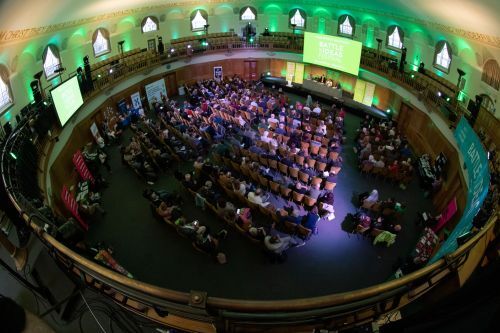
This project brings together audio recordings of the Battle of Ideas festival, organised by the Academy of Ideas, which has been running since 2005. We aim to publish thousands of recordings of debates on an enormous range of issues, producing a unique of political debate in the UK in the twenty-first century.