Battle of Ideas Festival Audio Archive
The Battle of Ideas festival has been running since 2005, offering a space for high-level, thought-provoking public debate. The festival’s motto is FREE SPEECH ALLOWED. This archive is an opportunity to bring together recordings of debates from across the festival’s history, offering a wealth of ideas to enjoyed. The archive also acts as a historical record that will be invaluable in understanding both the issues and concerns of earlier years and the ways in which debates have evolved over time.
Listen on:

Episodes
Mar 20, 2024
Mar 20, 2024
1hr 32 min
Recorded at the Battle of Ideas festival 2023 on Sunday 29 October at Church House, London.
ORIGINAL INTRODUCTION
The recent clamour in Germany for a ban on a right-wing populist party, Alternative für Deutschland (AfD), has once again thrust the question of populism and democracy centre stage. With polls showing support for AfD at an all-time high, President Frank-Walter Steinmeier warned that ‘enemies’ of democracy could soon erode Germans’ freedoms and ‘brutalise’ society. ‘We all have it in our hands to put those who despise our democracy in their place’, he warned, ominously.
However, since Plato argued that excessive freedom leads to mass ignorance, hysteria and, ultimately, tyranny, it has been Western cultural and political elites themselves that have often been driven by a sense of mistrust or even hostility towards democracy and the people. No doubt such fears are accentuated by populist parties being voted into power in Finland, Italy, Hungary, Sweden and more. The latest anxieties centre on Net Zero as the focus of the next big populist revolt. Liberal opinion frets that ‘green policies are the new Brexit’ and suspiciously eyes new rural-metropolitan divides, for example, as expressed by the Dutch Farmer Citizen Movement.
Pragmatically, it can be convenient for mainstream politicians, especially on the left, to use the populist label to discredit grassroots opposition by denouncing the likes of protesters against London’s ultra-low emissions zone (ULEZ) as alt-right conspiracy-mongers. But mainstream free-market conservatives can be equally ill at ease, for example with popular hostility to migration or globalism and can wince at expressions of old-fashioned socially conservative attitudes to family and working-class community norms.
‘Never Trump’ anti-populist Republicans have been as keen as liberal-minded Democrats to distance themselves from the tens of millions of ‘deplorables’ who have helped singing Virginia farmer Oliver Anthony’s song ‘Rich Men North of Richmond’ become an overnight viral success. In the UK, Singapore-On-Thames Vote Leave politicians’ seem to have conflicting priorities with those Red Wall Brexiteers, who demand British jobs for British workers.
Do erstwhile socially conservative populists such as Sohrab Ahmari have a point when they say populism must take a leftwards turn and address economic transformation? Perhaps populism is in fact less of an ally of conservatism, than the force of revenge against nominally conservative parties that bought into a liberal, elitist agenda. But does this reactive aspect to populism limit its ability for forge a new political movement?
If populism is worth embracing as offering a voice for people, how can it provide a genuine alternative to the politics of technocratic governance? With many populists fixated on cultural battles, is there a danger of simply mimicking the narrow identitarian outlook of progressives, in this context transferring a sense of victimhood to the lives of the masses? And how can we move beyond populism being defined in the public eye by its detractors?
SPEAKERSSabine Beppler-Spahlchair, Freiblickinstitut e.V; CEO, Sprachkunst36; author, Off-centre: how party consensus undermines our democracy; Germany correspondent, spiked
Lord David Frostmember of the House of Lords
Tim Montgomerieconservative journalist; founder, ConservativeHome, UnHerd and Centre for Social Justice
Jacob Reynoldshead of policy, MCC Brussels; associate fellow, Academy of Ideas
Freddie Sayerseditor-in-chief, UnHerd; former editor-in-chief, YouGov; founder, PoliticsHome
CHAIRAlastair Donaldco-convenor, Battle of Ideas festival; convenor, Living Freedom; author, Letter on Liberty: The Scottish Question
Mar 20, 2024
Mar 20, 2024
1hr 21 min
Recorded at the Battle of Ideas festival 2023 on Saturday 28 October at Church House, London.
ORIGINAL INTRODUCTION
From intimate selfies to leaking of personal messages, the digital age seems to relentlessly blur the boundaries between private and public. Not only are we encouraged to bare it all for social media, but the idea of private or secret communication is increasingly seen as a cover for all kinds of ‘online harms’. While the UK has backed off (for now) from enforcing Online Safety Bill provisions to remove end-to-end encryption, the widespread suspicion by government of encrypted services remains. What goes on in private group chats or messengers is said to be the site of danger, exploitation and threats to health and security.
But it is not just social media or new laws that seem to threaten privacy. Indeed, official bodies are subject to endless leaks, baring the details of this or that supposedly private meeting or conversation. But perhaps this is no bad thing: debate about crucial issues has been widely informed by the leak of previously private correspondence, such as the over 100,000 messages between former health secretary Matt Hancock and others at the height of the Covid-19 pandemic. The leak revealed important information about the decisions surrounding lockdowns.
But even if much valuable information was gleaned from the leak, should we be worried about the wider implications of removing the assumption of privacy? For example, many worry that recent charges against former police officers for sharing racist messages in a private WhatsApp group chat upend the principle that what we say ‘behind closed doors’ is a private matter. In a similar vein, the Scottish Government’s recent removal of a ‘dwelling defence’ to a landmark hate-crime bill explicitly invites the courts to police what is said in private. Likewise, many campaigners point to the fact that Britain is one of the most surveilled countries in the world, with the previous privacy of walking the street or meeting friends in a pub now subject to the glare of Big Brother.
But what is so valuable about privacy – and what is at risk if we lose too much of it? Should we welcome the tendency to make everything public, especially if it roots out backward attitudes or exposes those who misuse power? What’s the relationship between the public and private, and where does the balance lie?
SPEAKERS
Josie Appletondirector, civil liberties group, Manifesto Club; author, Officious: Rise of the Busybody State; writer, Notes on Freedom
David Davismember of parliament, Conservative Party
Dr Tiffany Jenkinswriter and broadcaster; author, Strangers and Intimates (forthcoming) and Keeping Their Marbles
Tim Stanleycolumnist and leader writer, Daily Telegraph; author, Whatever Happened to Tradition? History, Belonging and the Future of the West
CHAIRElla Whelanco-convenor, Battle of Ideas festival; journalist; author, What Women Want
Mar 20, 2024
Mar 20, 2024
1hr 35 min
Recorded at the Battle of Ideas festival 2023 on Saturday 28 October at Church House, London.
ORIGINAL INTRODUCTION
When Sir Winston Churchill stated that ‘a nation that forgets its past has no future’, he had no idea that decades later we’d have such a problem with history; that we’d problematise anyone daring to defend past achievements and values. Indeed today, even quoting Churchill is enough to get you cancelled in some circles. Meanwhile, historical figures and the intellectual legacy of the past are presented as ‘problematic’. Towering figures such as David Hume and Immanuel Kant are casually dismissed from the curriculum as racists; buildings or streets renamed because scientists such as Thomas Henry Huxley failed to live up to modern values; galleries rearranged or even shuttered because an Athenian figure or Victorian explorer exhibited racist, sexist and ableist behaviour.
If the past is filled with bad people who did bad things, their continued presence is cast as the root cause of problems in the here and now. Hence why correcting the sins of our fathers is the solution – or at least the first step – to dealing with contemporary issues. Racism, sexism and homophobia in old books or historic figures must be removed from our cultural landscape so that there can be no confusion over what values we hold today. Some worry that we have all but adopted Walter Benjamin’s ‘Angel of History’ theory – that the past is merely the rubble of human mistake and misery, piling up as the years go on. Everything that is old was wrong, and, as such, the outdated ideas of yesterday must be cast out from contemporary society.
While some suggest it was ever thus – young generations decrying their parents’ beliefs as outdated and unworkable – today’s cultural war on history seems more an assault on the traditions, the language, the values of today’s public who do not espouse the fashion of disdain for past mores. Modern linguistic updating, school history-books rewritten, places renamed to eradicate historical sinners, self-censorship and internal iconoclasm instigated by cultural institutions can leave the majority of citizens feeling alienated and disorientated. Some argue, the expansion of the present backwards in chronological time serves to detach Western society and its citizens from its legacy, and from the origins and the traditions that underpin conventions, practices and identity – not just an aversion to the people of the past, but a visceral aversion to the people of today who espouse the ‘wrong’, ‘outdated’ values.
Is there anything intrinsically wrong in updating backward attitudes of the past? Before we confront the problems of our time, should we fix the problems of the past? Or by erasing the boundary between our history and our current moment, are we imprisoning ourselves in a timeless vacuum? Is our only hope of looking to the future in regaining some clarity about how to draw the line between the then and the now? Without a knowledge of the past, can we know ourselves?
SPEAKERSDr Ashley Frawleysociologist; author, Significant Emotions and Semiotics of Happiness
Ivan Hewettwriter and broadcaster; chief music critic, Telegraph; professor, Royal College of Music; author, Music: healing the rift
Ivan Krastevpolitical analyst; permanent fellow, Institute for Human Sciences, IWM Vienna; chairman, Centre for Liberal Strategies; author, Is it Tomorrow, Yet? How the Pandemic Changes Europe
Dr Sean Langsenior lecturer in History, Anglia Ruskin University; author, First World War for Dummies and What History Do We Need?; fellow, Historical Association
Professor Robert Tombsemeritus professor of French history, Cambridge University; co-editor, History Reclaimed
CHAIRJacob Reynoldshead of policy, MCC Brussels; associate fellow, Academy of Ideas
Mar 20, 2024
Mar 20, 2024
1hr 35 min
Recorded at the Battle of Ideas festival 2023 on Saturday 28 October at Church House, London.
ORIGINAL INTRODUCTION
‘Take back control’, the central demand from the Leave campaign’s case for Brexit, posed the question: who should rule? However, today, when frontpage headlines frequently ask why nothing works in ‘Broken Britain’ and politicians blame myriad forces for thwarting democratically decided policies, one increasingly debated issue is: who is really in charge of society?
In his recent book, Values, Voice and Virtue, British political scientist Matthew Goodwin argues that the ‘people who really run Britain’ are ‘a new dominant class’, that imposes its ‘radically progressive cultural values’ on the rest of the nation. The Spectator magazine recently devoted its cover to this ‘new elite’ and how ‘the woke aristocracy’ is on a ‘march through the institutions’. Former government equality tsar Trevor Phillips has written that ‘the political and media elite’ have achieved ‘institutional capture’ across swathes of the UK’s governing apparatus.
But is it as simple as a changing of the guard, a new elite grabbing the reins of power? One confusion is a disavowal of responsibility. Goodwin’s thesis has caused international controversy, with many labelled as the ‘new elite’ denying they have any power.
Once upon a time, it would have been easy to see who was in charge: from the Industrial Revolution onwards, barons of the old aristocracy were gradually replaced by ‘business barons’ owning big companies, aided and abetted by the clergy, among others. During the years of the postwar consensus, the ‘trade union barons’ played a major role, too. And, at its core, was a state apparatus presided over by an elite of politicians.
Yet today’s governing classes have increasingly dispersed and outsourced their authority to third parties – such as consultants, the judiciary, international bodies, public inquiries, stakeholder bodies, diversity specialists, scientific experts, NGOs, charities, political advisers and the ‘Whitehall Blob’. When things go wrong, the blame game sees fingers pointed in all directions.
In this context, some voters are increasingly disillusioned with democracy and conspiratorial thinking thrives. Who is pulling the ideological strings of this new generation of impotent, technocratic politicians? When the Labour leader, Keir Starmer, was asked whether he’d prefer to be in Davos or Westminster, he responded, without missing a beat: ‘Davos’. In other words, the likely next prime minister of the UK prefers the networking opportunities of the World Economy Forum to the mother of parliaments. Is it any wonder so many blame globalist forces for seemingly imposing unpopular policies on nation states with no democratic mandate, whether related to ‘net zero’ or gender identity?
So, who is directing society in 2023, and what binds them together? Why do our elected politicians lack authority today, or are they simply unwilling to exercise their authority? Are the ‘new elite’ as powerful as many would argue or are they simply the public face of the changing interests of the wealthy? Is the intellectual conformity at the helm of society proof of coherence or a lack of ideas and vision? Is it possible to reclaim power for The People?
SPEAKERSPamela Dowchief operating officer, Civic Future
Professor Frank Furedisociologist and social commentator; executive director, MCC Brussels; author, 100 Years of Identity Crisis: culture war over socialisation
Matthew Goodwinprofessor of politics, University of Kent; author, Values Voice and Virtue: The New British Politics , National Populism: the revolt against liberal democracy and Revolt on the Right
Harry Lambertstaff writer, New Statesman; editor, New Statesman Saturday Read
Professor Anand Menondirector, UK in a Changing Europe
CHAIRClaire Foxdirector, Academy of Ideas; independent peer, House of Lords; author, I STILL Find That Offensive!
Mar 19, 2024
Mar 19, 2024
1hr 31 min
Recorded at the Battle of Ideas festival 2023 on Saturday 28 October at Church House, London.
ORIGINAL INTRODUCTION
Being ‘diverse’ is no longer simply about shaking things up. Today, diversity is considered a core value of any civilised society and its institutions. Diversity strategies are a must for businesses, small or big – diversity is good for the planet, good for politics, good for social mobility and good for our sense of self. Diversity is no longer a means to a better future, but an end in and of itself.
For many, this is a no brainer – having different people from different backgrounds in your work or social environment can only be a good thing. They argue that cultural melting pots provide border horizons on everything from what food we enjoy to our appreciation of different beliefs and world views. In contrast, homogeneity is a sign of a moribund system. The idea that similar groups of people might apply for the same job – from nursing to plumbing – is a sign of discrimination or closed mindedness, and must be challenged.
But not everyone is so keen on the prioritisation of diversity over all else. The home secretary, Suella Braverman, caused uproar with a speech in Washington in which she described multiculturalism as a failed ‘misguided dogma’, adding that ‘the consequences of that failure are evident on the streets of cities all over Europe’. Some say the scenes of celebrations in Western cities at Hamas’s actions in Israel seem to prove her point. Critics point to the way in which it has been institutionalised via policies in the workplace or education, with contentious political topics on everything from the climate to transgender ideology being repackaged as mandatory ‘diversity training’. They argue that a ‘fetishisation’ of diversity has led to its opposite – atomisation and tribalism. Many argue that the push for multiculturalism as a political policy objective has led to a confusion of social norms. Instead of a utopia of rich cultural fusion, neighbourhoods are often defined by national identities, with hostility between groups commonplace. If we don’t ask for shared values in some key areas of life, critics ask, how will we ever hope to get along?
For some, diversity is a necessary strategy to help break open closed areas of public life for groups previously discriminated against. For others, it is too focused on the things we can’t control – like race or sex – and too disregarding of diversity of thought and feeling. Has the d-word taken over as our new deity? Variety is certainly the spice of life, but is our love of diversity at risk of creating its opposite? And how do we talk about shared social values in a world where difference is king?
SPEAKERSSimon Fanshawe OBEconsultant and writer; author The Power of Difference ; co-founder, Diversity by Design
Maya Forstaterexecutive director, Sex Matters
Mercy Murokipolicy fellow to minister for women and equalities and business and trade secretary
Tomiwa Owoladewriter and critic; contributing writer, New Statesman; author, This is Not America: Why Black Lives in Britain Matter
Dr Joanna Williamsfounder and director, Cieo; author, How Woke Won and Women vs Feminism
CHAIRAlastair Donaldco-convenor, Battle of Ideas festival; convenor, Living Freedom; author, Letter on Liberty: The Scottish Question
Mar 19, 2024
Mar 19, 2024
1hr 20 min
Recorded at the Battle of Ideas festival 2023 on Sunday 29 October at Church House, London.
ORIGINAL INTRODUCTION
‘Dare to know.’ This was the battle cry of the Age of Enlightenment in seventeenth- and eighteenth-century Europe. This spirit remade the world, birthed new sciences and inventions, breathed life into democracy and unleashed economies that lifted millions from obscurity and destitution.
Today, by contrast, daring seems to be in short supply. A strange cloud of both complacency and despondency seems to have settled over the Western world. From climate change to the cost-of-living crisis, we are told both that our problems are enormous, and also that there is not much we can hope to do to fix them – except to lower our expectations. Such a mood strikes a stark contrast with the spirit of the Enlightenment, which assumed that through reason, science, argument and human ingenuity, all the problems that society faced could be dealt with.
Across the political divide, there seems to be a shared assumption that human agency is at best a mirage, at worst a dangerous fairytale. We live in an ‘age of determinisms’ – techno-determinism, neuro-determinism, environmental determinism. Popular historians and philosophers announce that human beings are at the mercy of immovable processes. Research in genetics is used to suggest that government policies and individual effort matter little in accounting for social outcomes. Conspiracists proclaim that we are all pawns of globalists pulling the strings.
Yet this whole mood seems challenged by masses of people across the West who feel their societies are heading fast in the wrong direction. The desire to ‘take back control’ echoes across the globe. This demand could have easily been another Enlightenment slogan: the idea that by turning power over to the people, we might attain mastery over the forces that shape society. Both on left and right, there has been much discussion about how to give voice to the demand for change.
But perhaps what is needed is less a new technocratic innovation – a people’s assembly or a voting reform, a new social media tool or a new form of community service – than a way to give room to a spirit of popular engagement. The Age of Enlightenment, by way of comparison, was clearly founded on a ‘republic of letters’ that extended from the most prestigious journals and universities to the humblest of coffee houses.
Where, then, are we to find the successor to the Enlightenment coffee house? How do we recapture the spirit of an age that insisted human beings could remake the world? Do we need a new Enlightenment, and how do we ‘dare to know’ today?
SPEAKERSProfessor Frank Furedisociologist and social commentator; executive director, MCC Brussels; author, 100 Years of Identity Crisis: culture war over socialisation
Professor Jonathan Israelprofessor emeritus, School of Historical Studies, Institute for Advanced Study, Princeton; author, Spinoza, Life and Legacy and Radical Enlightenment
Munira Mirzachief executive, Civic Future
CHAIRClaire Foxdirector, Academy of Ideas; independent peer, House of Lords; author, I STILL Find That Offensive!
Mar 19, 2024
Mar 19, 2024
1hr 32 min
Recorded at the Battle of Ideas festival 2023 on Sunday 29 October at Church House, London
ORIGINAL INTRODUCTION
Many teachers think gaining academic knowledge on its own is not enough for young people to avoid inequality, discrimination and marginalisation today. Instead, schools need to go beyond narrow academic goals and teach our children how to combat racism, sexism, homophobia, transphobia, poverty and promote environmentalism. Others think academic knowledge is valuable for its own sake and should be defended, and worry it is being consistently diluted to make room for social-justice concerns.
But hasn’t the education system always been political? Some argue that social justice is a natural extension of a liberal, democratic education, and that it is essential for becoming a well-rounded adult. Furthermore, ‘British values’, in one way or another, have always informed school curricula. Are concerns about social justice more of the same, or is this a unique problem of too many teachers bringing their personal political agendas into the classroom?
Is social justice morphing into advocacy education and undermining impartiality? Should we accept social justice in schools as a natural reflection of discussions in wider society, or is it time to insist on a clear distinction between the political and educational domains? Is there a place for social justice in the classroom?
SPEAKERSDr Debbie Haytonteacher; trade unionist; columnist, Spectator and UnHerd; author, Transsexual Apostate: my journey back to reality
Eric Kaufmannprofessor of politics, University of Buckingham, author, Taboo: how making race sacred produced a cultural revolution
Michael Merrickdirector of schools, Diocese of Lancaster; former teacher; education and social commentator
Dr Alka Sehgal Cuthbertdirector, Don't Divide Us; author, What Should Schools Teach? Disciplines, subjects and the pursuit of truth
CHAIR
Kevin Rooneyhistory and politics teacher; editor, irishborderpoll.com; convenor, AoI Education Forum; co-author, The Blood Stained Poppy
Mar 19, 2024
Mar 19, 2024
1hr 15 min
Recorded at the Battle of Ideas festival 2022 on Sunday 16 October at Church House, London.
ORIGINAL INTRODUCTION
After Covid, a wave of undiagnosed and late treated cancers has arisen in the UK and other countries – a consequence of delayed treatments, cancelled screening and operations, and ever-expanding waiting lists. At the same time, Covid vaccine development has shown how medical progress can be accelerated when the right resources and political will are brought to bear.
But a side effect of the pandemic has been a growing scepticism about scientific and medical authority. Half a century after President Richard Nixon signed the National Cancer Act, firing the starting gun on the War on Cancer, is this a battle we can no longer win – not because of a lack of scientific progress but because of growing distrust of science and medicine?
‘Cancer’ is an umbrella term for hundreds of different conditions, each with its own particular form and potential treatment and much has been achieved. For most cancer patients today, treatment can extend their lives or eradicate cancer altogether, especially when diagnosed and treated early. A vaccine against human papillomavirus virus (HPV) looks likely to slash the incidence of cervical cancers, while the innovative developments in transoral robotic surgery (Tors) offer significant hope to patients with head and neck cancers.
Alongside increasingly effective chemotherapy, radiotherapy and newer proton therapy, immunotherapy has transformed the survival rate across many cancers. Cell-based treatments are ‘curing’ some types of blood cancer and gene therapies offer hope in rare and hard-to-treat cancers. Furthermore, public-health interventions have reduced some major causes of cancer, like smoking and air pollution.
But the number of cancer cases has been rising inexorably and threatens to kill more people in the UK than all of the waves of Covid so far. Many argue that we will be faced with tough choices if we want to beat cancer, for example tackling ‘lifestyle’ factors like smoking, drinking and eating. Yet public health campaigns are sometimes met with doubt or anger in social media. In addition, anonymised personal health data could be an invaluable research tool, but will patients and the public be willing to share it?
Will we ever be able to say we’ve cured cancer? Can we afford to treat everyone? Is prevention as important as treatment – and how willing are the public to follow public-health advice about risk factors for cancer, like obesity and alcohol consumption? Can trust between medics, researchers and the public be restored?
SPEAKERS
Nicky Drurygenomic counsellor, Nottingham Regional Genomics Service; former member, United Kingdom Human Genetics Commission
Professor Eliot Forsterchief executive officer, F-star Therapeutics; non-executive chairman, Avacta plc; honorary visiting professor of molecular and clinical cancer medicine, University of Liverpool
Miranda Greenjournalist; commentator; deputy opinion editor, Financial Times; co-founder, The Day; former Liberal Democrat advisor
Professor Karol Sikoramedical director, Cancer Partners International; founder, Cancer Partners UK; author, Treatment of Cancer; honorary consultant oncologist, Hammersmith Hospital
CHAIR
Ellie Leeprofessor of family and parenting research, University of Kent, Canterbury; director, Centre for Parenting Culture Studies
Mar 19, 2024
Mar 19, 2024
1hr 19 min
Recorded at the Battle of Ideas festival 2022 on Sunday 16 October at Church House, London.
ORIGINAL INTRODUCTION
The vision of a property-owning democracy has fallen flat as the prospect of owning a home increasingly becomes a pipe dream for many.
Millennials needing homes with gardens are cramped within shared flats. Those already on the property ladder struggle with historically high ratios of mortgage payments to incomes. After the Grenfell Tower fire, many leaseholders face escalating costs for cladding and fire-safety measures, as well as impossible terms to re-mortgage. On top of all that, those trying to rent face long waits for social housing or rocketing rents in the private sector. Some universities are withdrawing places due to lack of student accommodation, while some seeking resettlement from Ukraine or Hong Kong are confined to churches or boats.
The moral imperative to build is clear. But where and how can we build the homes that we need?
There is widespread frustration at the stop-start policies of those in charge. Initially spooked by the prospect of permanently alienating younger voters, the government’s planning reform has itself been ditched lest greenbelt development antagonises NIMBYist ‘blue wall’ voters. Tory leadership hopeful Liz Truss sees the problem as one of quotas and over-regulation and promises to remove housebuilding targets – not surprisingly viewed by many as a retreat from a commitment to build.
Does this crisis require a renewed commitment to mass housebuilding? Or do past problems of building at scale suggest it is right that developers work within new parameters? With postwar modernising zeal to urban transformation long since gone, what role should the state have today in building our way out of the crisis? Given the UK has twice as much land tied up in protected greenbelt compared to that already developed, is it time to use it to build new towns or even entire new cities? How can ambitious but high-quality development be realised amidst environmental/energy targets, labour shortages, planning restrictions and restraints on innovation?
SPEAKERS
Simon Cookeurbanist; former regeneration portfolio holder and leader of the Conservative group, Bradford City Council
Ike Ijehwriter; architect; head of housing, architecture and urban space, Policy Exchange; founder, London Architecture Walks
Rabina Khanwriter and commentator; former councillor and special advisor; author, My Hair Is Pink Under This Veil
Austin Williamssenior lecturer, Dept of Architecture, Kingston University, London; honorary research fellow, XJTLU, Suzhou, China; author, China’s Urban Revolution: understanding Chinese eco-cities
Charlie WinstanleyNorth West co-ordinator, Enough is Enough; political advisor to the Mayor of Salford
Mar 13, 2024
Mar 13, 2024
1hr 8 min
Recorded at the Battle of Ideas festival 2014 on Saturday 18 October at Barbican, London.
ORIGINAL INTRODUCTIONThese are said to be unprecedentedly uncertain times for business, but one area where there seems to be much certainty is that businesses need to do more than be profitable providers of good and services: they must also do the ‘responsible’ thing, do the ‘right’ thing, for the rest of society. Even businesses themselves feel they need to do more than simply make money. Today, the presumption is that businesses cannot be trusted – one element of the broader decline in levels of trust in society – and that this is bad for business and for society.
According to the 2014 Edelman Trust Barometer, only one in two people in the UK have trust in business. A continuing stream of media stories about corporates behaving badly - over a range of issues including excessive boardroom pay and poor working conditions in developing countries - maintains distrust about business motives and actions. It has become received wisdom that in order to restore trust, business needs to reorientate its culture and values.
Yet even the widespread adoption of corporate social responsibility (CSR) policies seems to do little to assuage concerns. To some people, promoting your ‘ethical’ CSR credentials can reek of hypocrisy. Sincere CSR projects can be dismissed as ‘greenwash’. When there is so little trust, can big companies ever satisfy their critics that they are doing enough? As the well-publicised travails of the Co-operative in Britain seem to confirm, there may be pitfalls of being a business that has always had ‘doing good’ high in its values at the expense of the bottom line.
But perhaps we should not expect businesses to ‘do good’. The urge to be socially responsible through initiatives beyond the central, profit-making purpose of a company may be missing the point about what really constitutes ‘doing the right thing’. As Adam Smith wrote in The Wealth of Nations almost 250 years ago: ‘It is not from the benevolence of the butcher, the brewer, or the baker that we expect our dinner, but from their regard to their own interest.’ In turn, the drive to create new wealth provides the resources for many other social goods, from healthcare and education to funding the arts and museums.
Is maximising profit really at odds with social good? Could the CSR agenda conflict with the social benefits of profit-making business? How important is trust for profitability? When government is trusted even less than business, who should decide what ‘the right thing’ means?
SPEAKERSRosalind Searleco-founder, Centre for Trust, Peace and Social Relations and Head of Trust Research, Coventry University
Marc Sidwellexecutive editor, City A.M.
Stefan Sterndirector, High Pay Centre
CHAIRPhil Mullaneconomist and business manager; author, Creative Destruction: How to start an economic renaissance
Mar 13, 2024
Mar 13, 2024
34 min
Recorded at the Battle of Ideas festival 2015 on Saturday 17 October at Barbican, London.
ORIGINAL INTRODUCTION
Due to the growing appeal of gaming and comics through the enormous success of once-niche genres such as fantasy and sci-fi, geek culture is now fully mainstream. Yet its success seems to have been accompanied with vicious infighting amongst fans that surprises even culture wars veterans. ‘Gamergate’ seemed to move quickly from a dispute between game developers and journalists to a heated political row over gamers’ attitudes towards women and minorities; a similar dispute gave the Hugo Awards 2015 for science fiction a previously warranted level of cultural notoriety. Many found echoes of these debates in the fracas surrounding space scientist Dr Matt Taylor, where many online commentators felt the choice of a bawdy, sexist shirt overshadowed his achievement in landing the Philae lander on a comet (and moved Taylor himself to a tearful apology).
A number of new developments underpin these battles. The rise of social media has led to a tendency to ‘call people out’, harnessing the power of public shaming to challenge perceived more problematic elements of our culture. The arguments have taken on a fresh intensity with a new wave of cultural critics, such as Anita Sarkeesian. Drawing on feminist critiques of ‘rape culture’, new concerns are being articulated about the harmful effects of violently sexist media and its failure to adequately represent women and minorities in these virtual worlds. In turn, these so-called ‘Social Justice Warriors’ have provoked their own dizzying reactive sub-cultures from Sad Puppies to ‘Gamergaters’ who pride themselves on rejecting perceived politically correct orthodoxies.
How are the frontlines of the culture wars changing? Why have debates over representation and media effects theory – once considered relatively minor academic fields – now become so intensely fraught and high profile? Are these traditional battles between youth culture tribes recast for the digital era, or is there something new in the highly politicised attitude towards lifestyle? What motivates the various factions in the new battles over culture, and where did they come from? And can genuine freedom of expression survive in such a politicised environment?
LISTEN TO THE DEBATE
SPEAKERS
Allum Bokharicolumnist, Breitbart
Serena Kutchinskydigital editor, Prospect
Dr Maren Thomresearcher in film, Queen Mary University of London; education advisor
Jason Walshjournalist; foreign correspondent, CS Monitor
Milo Yiannopoulostechnology editor, Breitbart
CHAIRDavid Bowdenassociate fellow, Academy of Ideas; culture writer
Mar 13, 2024
Mar 13, 2024
30 min
Recorded at the Battle of Ideas festival 2016 at Barbican, London.
In the aftermath of the Brexit vote, it seemed that all four of Britain’s major political parties were falling apart. Similar tendencies towards crisis and disintegration are evident in the old parties in the USA and in Europe. Are we seeing a refreshing departure from the old-style politics of left and right, or simply a process of fragmentation? Are we exaggerating the scale of the crisis facing mainstream parties, and forgetting the often deep and bitter conflicts of the past? Are we really moving towards a new sort of politics? What sort of divisions and alignments are likely to emerge and will we need parties to represent them?
SPEAKERS
Emily Barleychairman, Conservatives for Liberty
James Delingpolejournalist; columnist, Breitbart UK
Dr Michael Fitzpatrickwriter on medicine and politics; author, The Tyranny of Health
Miranda Greenjournalist and former Liberal Democrat advisor, specialising in politics and education
Jhanelle Whitestudent & political activist; former member of Dudley Youth Council; founder and chair of Political Sweep
Mar 12, 2024
Mar 12, 2024
1hr 45 min
Recorded at the Battle of Ideas festival 2017 on Sunday 29 October at Barbican, London.
ORIGINAL INTRODUCTION
Censorship and identity: free speech for me but not for you?Free speech is no longer presumed to be an unquestionable virtue. Until recently, beyond a small number of authoritarian dictators or reactionary cranks, it was unthinkable to openly oppose free expression, even if it was often espoused with endless caveats. But in 2017, after a gradual chipping away – through ‘I find that offensive’ tropes, trigger warnings and no platforming – free speech is now often explicitly queried. When a British TV breakfast show featured a ‘gay cure quack’ recently, the Guardian‘s Owen Jones declared that his views about LGBTQ people were ‘not simply a matter of opinion to be debated’. Free speech is dubbed an outdated absolute, or worse is seen as a ruse to excuse hate speech against minorities.
In this context, the rise of identity politics now means that free speech for all is no longer a given. As one US writer notes sympathetically, ‘political correctness doesn’t hinder free speech – it expands it. But for marginalised groups, rather than the status quo’. It is claimed that those with ‘privilege’ (‘well-heeled, white, straight, male’) historically used their status – under the mantle of free speech – to hog the public square in order to consolidate their domination. Now at last, victims of prejudice and discrimination have special speech rights that can trump and close down those ‘lifelong beneficiaries of odds stacked in their favour’. In such a climate, the increasingly popular tactic of the hecklers’ veto – shouting down, even using violence, to silence opponents – has become a legitimate weapon in the fight for social justice.
Furthermore, it is not just what you say that is proscribed, but who is allowed to say it. A person’s words or ideas are considered secondary to identity, and it can be considered illegitimate to express opinions unless you are part of an identity group subjectively affected by any given issue. Identity groups are similarly afforded the authority to determine what is and is not offensive; those who challenge such judgements are often deemed guilty of ‘unconscious bias’. But as privilege itself is contested and definitions of hate speech notoriously subjective, increasing numbers of people can find their speech curtailed. In the UK, well-known feminists Germaine Greer, Julie Bindel and Linda Bellos have been disinvited as speakers for their allegedly transphobic views (as defined by trans activists). Recently, Edinburgh Action for Trans Health defended a brutal assault at a feminist gathering in London’s Hyde Park, organised to discuss government plans to allow people to legally self-identify their gender, saying it was ‘the same as punching Nazis’.
How should free speech activists respond to such new challenges? It no longer seems sufficient to cite the First Amendment, quote JS Mill, or cry academic freedom in trying to thwart assaults on free expression. There was a powerful illustration of this problem recently when protesters affiliated with Black Lives Matter gatecrashed an event at the College of William & Mary in Williamsburg, Virginia and prevented the invited guest from the American Civil Liberties Union from speaking, chanting ‘the revolution will not uphold the Constitution’ and ‘liberalism is white supremacy’.
Is it time for civil libertarians to adjust their priorities, to ensure that people with ‘protected characteristics’ are given ‘particular respect’, and their views given a veto on what they deem as hate speech? Are those who argue for free speech – no ifs, no buts – too often providing the privileged with a licence to talk over the marginalised, even to incite bigotry? Or is identity politics the new tool of censorship and, if so, how should we respond?
SPEAKERSProfessor Frank Furedisociologist and social commentator; author, Populism and the European Culture Wars; previous books include: What's Happened to the University? and Invitation To Terror and On Tolerance
Nick GillespieUS journalist and commentator; editor in chief, Reason.com and Reason TV, the online and video platforms of Reason magazine
Jodie Ginsbergchief executive, Index on Censorship
Trevor Phillipswriter and television producer; founding chair, Equality and Human Rights Commission
Toby Youngdirector, New Schools Network; associate editor, The Spectator; editor, Spectator Life
CHAIRClaire Foxdirector, Academy of Ideas; panelist, BBC Radio 4's Moral Maze; author, I Find That Offensive
Mar 12, 2024
Mar 12, 2024
1hr 11 min
Recorded at the Battle of Ideas festival 2018 on Sunday 14 October at Barbican, London.
ORIGINAL INTRODUCTION
In Greek mythology, Narcissus famously becomes enraptured with his own reflection in a lake. Today, the archetypal narcissist is obsessed with their reflection in a selfie: 80million photographs are uploaded on Instagram and 1.4 billion people publish personal details on Facebook every day. In the UK in 2017, more than a million selfies were taken each day. In 2013, the Oxford English Dictionary proclaimed that ‘selfie’ was the Word of the Year, recording that its use in the English language had increased 17,000 per cent from the previous year.
In fact, it’s almost a cliché these days to talk about Generation Me, Me, Me. It is argued that millennials are uniquely self-obsessed, preening, full of self-regard and entitlement, yet at the same time ‘suffering’ from a range of psychological issues and problems with self-esteem. But it’s not just the young; we all stand accused, or rather accuse everyone else, of this self-obsession. Christopher Lasch, in his 1979 classic, The Culture of Narcissism, launched the little-used psychological term into the mainstream, but today, according to the New York Times, it has become ‘the go-to diagnosis’ for commentators. Donald Trump is now, apparently, the ‘narcissist in chief’, your boss or co-workers are likely narcissists, everyone on Tinder, and on the telly, and certainly your ex – are narcissists, while Instagram is making narcissists of us all. But don’t worry, because your narcissist parents are to blame for it all anyway.
But in the midst of this labelling, can we untangle any real trends? Certainly, the self and identity seem in flux. Intellectually, the trend is towards a relativistic focus on individual identity. ‘I identify as…’ is a key phrase of contemporary politics. For many, this is a narcissistic demand for recognition; ‘validate my identity’, such demands seem to say. But is identity politics really a narcissistic modern-day attempt at putting oneself centre stage? Was the Enlightenment elevation of the self a narcissistic precursor to today’s body-obsessed, selfie-culture?
More broadly, the seeming obsession with psychological terms to understand social problems arguably highlights further problems. When narcissism – as with depression, or any other psychological phenomenon – is the problem, the only solution seems to be therapy or mindfulness rather than a hope of broader political and collective responses to the pressures and opportunities of the twenty-first century. Moreover, the very nature of ‘self-help’ has undergone a profound shift from the nineteenth-century connotation of a robust individual to the contemporary notion of relying on the therapeutic advice of others to survive.
Are there any positive aspects in constructing Brand Me and a ‘narrative of self’ in terms of reclaiming subjective selfhood? Is narcissism too clichéd a concept to help us understand today’s crisis of identity? When it is used to malign every trend an author doesn’t like, should we abandon it for something more precise? Why has cultural narcissism become so deeply woven into the fabric of contemporary society? Ultimately, are we all self-absorbed narcissists?
SPEAKERS
Dr Graeme Archerwriter; professional statistician; winner, 2011 Orwell Prize for blogging
Dr Beth Guildingacademic, Goldsmiths, University of London; co-editor, Narrating the Passions: new perspectives from modern and contemporary literature
Caroline Macfarlanddirector, Common Vision (CoVi)
Jacob Reynoldspartnerships manager, Academy of Ideas; co-convenor, Living Freedom; organiser, Debating Matters
CHAIRDr Tiffany Jenkinswriter and broadcaster; author, Keeping Their Marbles: how treasures of the past ended up in museums and why they should stay there
Mar 12, 2024
Mar 12, 2024
59 min
Recorded at the Battle of Ideas festival 2019 on Sunday 3 November at Church House, London.
ORIGINAL INTRODUCTIONMany commentators have observed that Britain enjoys, by European standards at least, a uniquely stable party-political system. In many other European countries, collapsing empires, social uprisings or world wars fuelled new parties and shifting popular allegiances. But Britain is notable for the longevity – and adaptability – of its established parties. Since the 1830s, the Conservative Party has navigated Corn Law dilemmas, the Irish Home Rule crisis and the Thatcherite shift to neoliberalism. The 119-year-old Labour Party has survived the splits over the ‘national government’ in 1931 and even jettisoning the socialist principles in Clause IV of its constitution in 1995. From the mid-1920s to the end of the century, combined support for the two established parties never dipped below seven in 10 voters.
But amid rising volatility, fragmentation and polarisation in the early twenty-first century, are we reaching a historic moment of change?
The 2019 European Elections saw support for the two main parties plummet to 23 per cent. In part, this reflected a surge of support for the pro-Remain Liberal Democrats and Greens in younger, metropolitan areas, but it also showed the evisceration of traditional parties in the regions where the SNP and even Plaid Cymru are filling the gap. Most notable is a trend towards setting up new parties. The Brexit Party was the big winner in the Euro elections, attracting voters disillusioned by the failure to deliver Brexit, while Change UK showed a willingness for leading figures in existing parties to try something new.
Have we reached the point where the two big parties can no longer adapt to shifting political realities? Or are the results in keeping with past Euro elections, where smaller parties have often done well, only to fail to break through at Westminster?
These shifts go beyond the political parties themselves. Experimental initiatives like ‘Flatpack Democracy’, which aims to create independent local politics, have achieved a degree of popularity, while a notable feature of the 2019 local council elections was the rise of ‘independent’ councillors. With longstanding voter allegiances – and even rank-and-file affiliations – either broken or more tenuous, is this the moment for new parties and forms of organisation to make longer-term breakthroughs? And if so, what is needed to realise new opportunities?
Clearly, Brexit has brought some long-term trends to the surface, exposing the void between the electorate and the established parties, and suggesting that political loyalties are reflected in new ways. For example, opinion polls suggest that only nine per cent of people now identify ‘very strongly’ with a political party while 44 per cent say that they are a ‘very strong’ Remainer or Leaver. And while survey evidence is mixed, some polls indicate two-thirds of people recognise there’s a climate emergency, with 76 per cent saying they would cast their vote differently to protect the planet. Add in that age, education and geographical location are all regularly talked-up as influencing how we vote, are the old left-and-right divisions reflected in long-established parties now outdated? If so, how can new aspirations and shifting social and cultural outlooks find a productive political expression?
Is it all over for the traditional parties, and if not, then what should be the priorities to revitalise their futures? Are new parties viable, or is the fate of Change UK a warning that new initiatives face almost insurmountable challenges to succeed? Are new-style political ‘movements’ such as the Brexit Party or independent, local initiatives a promising way forward? Could we be on the brink of a new political landscape and, if so, how should we seek to shape it?
SPEAKERSJonny Ballspecial projects writer, New Statesman
Miranda Greenjournalist; commentator; deputy editor of opinion pages, Financial Times; former Liberal Democrat advisor
Sherelle Jacobscolumnist and commissioning editor of comments, Daily Telegraph
John Millseconomist and entrepreneur; author, Left Behind: why voters deserted social democracy - and how to win them back
Tom Slaterdeputy editor, spiked; regular commentator on TV and radio; editor, Unsafe Space: the crisis of free speech on campus; presenter, Last Orders podcast
CHAIRJoel Cohenassociate fellow, Academy of Ideas
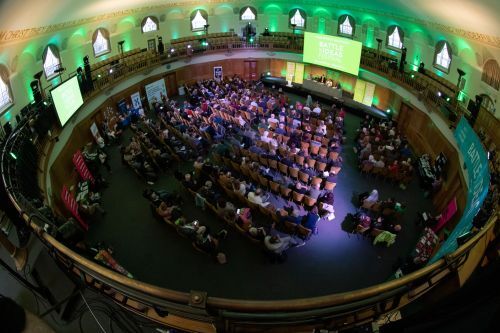
Battle of Ideas festival archive
This project brings together audio recordings of the Battle of Ideas festival, organised by the Academy of Ideas, which has been running since 2005. We aim to publish thousands of recordings of debates on an enormous range of issues, producing a unique of political debate in the UK in the twenty-first century.