Battle of Ideas Festival Audio Archive
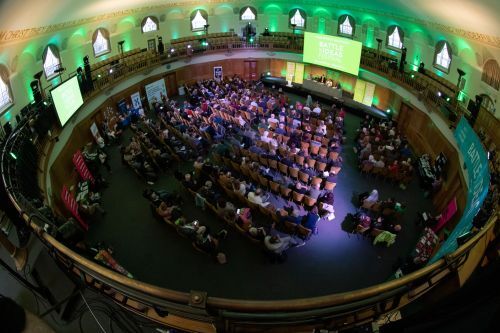
The Battle of Ideas festival has been running since 2005, offering a space for high-level, thought-provoking public debate. The festival’s motto is FREE SPEECH ALLOWED. This archive is an opportunity to bring together recordings of debates from across the festival’s history, offering a wealth of ideas to enjoyed. The archive also acts as a historical record that will be invaluable in understanding both the issues and concerns of earlier years and the ways in which debates have evolved over time.
Listen on:

Episodes
Tuesday Apr 01, 2025
Tuesday Apr 01, 2025
Recorded at the Battle of Ideas festival 2024 on Sunday 20 October at Church House, Westminster.
ORIGINAL INTRODUCTION
George Orwell’s Nineteen Eighty-Four was a prescient warning about how a small group could use technology, manipulate language and rewrite history to impose a totalitarian regime on society. It feels like the novel for 2024. Regularly quoted, turned into endless memes, sometimes so ubiquitous it feels clichéd, what more is there to say?
To celebrate the 75th anniversary of the UK publication of Orwell’s classic dystopia, the Institute of Economic Affairs has republished the novel with a new introduction by Christopher Snowdon.
Snowdon’s You Do Not Exist: An Introduction to Nineteen Eighty-Four is not an introduction in the classic sense, more a companion. Nor is this a biography of Eric Arthur Blair. Instead, Snowdon delves into the Orwell archives to show that the seeds of the roots, inspiration, economics of the novel were sown many years before it was written and to present a fresh political perspective on the masterpiece.
Snowdon argues – contentiously – that Orwell had misconceptions about economics that made him too gloomy about the postwar world, believing in the inevitable demise of liberal capitalism and making him pessimistic about the rise of totalitarianism. Why did he believe all this and – as liberalism and capitalism seemed to thrive after the war – was he wrong? However, as liberalism is now – in 2024 – under huge strain, capitalism on the defensive to the point of eating itself, and totalitarian policies embraced by liberal democracies, perhaps his pessimism was merited? Or is it too easy to draw definitive political conclusions from Orwell’s work?
Over the years since his death, conservatives, socialists and libertarians have all been keen to claim Orwell as one of their own. Perhaps he speaks for all of us. Does he speak for you?
Free copies of You Do Not Exist: An Introduction to Nineteen Eighty-Four will be available on the day, or it can be downloaded as a PDF here.
SPEAKERSChristopher Snowdonhead of lifestyle economics, Institute of Economic Affairs; author, You Do Not Exist: An Introduction to Nineteen Eighty-Four, co-host, Last Orders
CHAIRBruno WaterfieldBrussels correspondent, The Times
Tuesday Apr 01, 2025
Tuesday Apr 01, 2025
Recorded at the Battle of Ideas festival 2024 on Saturday 19 October at Church House, Westminster.
ORIGINAL INTRODUCTION
‘Don’t believe a word!’ ‘Biased!’ ‘Fake news!’ How many of us shout at the TV, have stopped reading newspapers and get our news from social media? The news as presented by the major broadcasters and national newspapers – historically a bedrock of any functioning democracy and a symbol of vibrant civic engagement – has rarely been so despised. General distrust in the mainstream media (MSM) seems more intense than ever. There are even disputes over the very terminology with which reporting is done – who gets dubbed a terrorist, far-right, extremist, even a woman.
Such deep ideological battles obstruct any meaningful examination of reporting on what is happening in the world. Suspicion of partisan reporting, what is reported and what is not, mean deeply cynical attitudes are commonplace. Whether it’s stories about the Israel / Gaza conflict, the grooming scandal, the fallout from the riots, or gender ideology – there’s a plethora of accusatory finger-pointing. Whether it is social-justice activists on one side or populist forces on the other, there seems agreement that much mainstream news output must be taken with a pinch of salt.
In reaction to the mistrust of what is sneeringly dismissed as the MSM, we have seen a growing alternative media ecosystem: online TV channels, e-magazines, podcasts, live-streamed discussions, often with huge audiences. But rather than being welcomed as proof of an appetite for current affairs, mainstream journalists and editors accuse such outlets of irresponsible, unsourced rumourmongering, one-sided propaganda and even issue calls to close down new insurgent media players like GB News. The rows about which media to trust are almost as polarised as the toxic disputes they are reporting on. Similarly, while MSM outlets are awash with fact-checkers and a plethora of unofficial bodies seeking to eradicate misinformation, in now-classic ‘post-truth’ style, these supposed impartial fact-checkers get dragged into politics, too.
So, who should we trust to find out about what’s happening in the world? Can we afford to dispense with regulated, reputable journalism that at least aspires to impartiality? Or does widespread distrust in the media indicate a healthily sceptical public, reluctant to make do with a narrow range of elite narratives? With distrust in any single news source prevalent, should we encourage the use of multiple sources, even if it risks some individuals going down disinformation rabbit holes? Or do we need to be careful of those who urge us to believe outlandish conspiracies and unverified tall tales? Can we build a new media landscape that – regardless of our political opinions – we can call upon for facts and reasoned analysis? Is the media an important democratic corrective or partially the cause of our polarised responses to the news events it reports and comments on?
SPEAKERSTessa Clarkejournalist; author; documentary reporter; board member, Academics for Academic Freedom (AFAF)
Jonny GouldTV and radio presenter; journalist; host, Jonny Gould's Jewish State
Darren Grimespresenter, The Saturday Five, GB News
Jenny Hollandwriter and critic; former assistant, New York Times; author, Saving Culture (from itself) Substack
Jo Phillipsjournalist; co-author, Why Vote? and Why Join a Trade Union?; former political advisor; fellow, Radix
CHAIRTom Collyerexecutive, Pagefield; writer; alumnus, Debating Matters
Tuesday Apr 01, 2025
Tuesday Apr 01, 2025
Recorded at the Battle of Ideas festival 2024 on Sunday 20 October at Church House, Westminster.
ORIGINAL INTRODUCTION
Few areas of society are as riven with free-speech battles as the arts – particularly the world of literature. From sensitivity readers to trigger warnings, banned books and banished authors, censorship has long been an issue for writers and readers alike.
But in the aftermath of the brutal assault on author Salman Rushdie – who was stabbed on stage in 2022 by an Islamist attacker – the literary wars took a vicious turn. While many deemed solidarity with Rushdie in the face of attempted murder to be the bare minimum, some officials in the world of literature disagreed. Penguin, Rushdie’s publisher, was alone in its statement of support: ‘Standing up for the rights of free expression, particularly in the face of threats to one’s life, requires immense – and unimaginable – commitment and courage.’ In contrast, the president of the Royal Society of Literature, Bernadine Evaristo, penned an article stating that the institution ‘cannot take sides in writers’ controversies and issues, but must remain impartial’. Rushdie duly replied on X, ‘just wondering if the Royal Society of Literature is “impartial” about attempted murder’.
The lack of solidarity for Rushdie is symbolic of what many feel is a growing cowardice in literary circles. But he is in no way the only author facing hostility for daring to write what they want. Kate Clanchy was depublished by Picador after accusations of racism in her award-winning book went viral. Such is the cliquey attitude of the literature world that Philip Pullman was forced to resign as president of the Society of Authors after his comments in support of Clanchy’s artistic freedom caused a backlash from the institution.
Even when books do survive the publishing process unscathed by rewrites against the author’s will, the challenges don’t stop there. A recent row broke out in Waterstones, which fired one of its employees for threatening to ‘throw away’ the books of an author she disagreed with on X. A recent report by Index on Censorship revealed that ‘53 per cent of school librarians had been asked to remove books from their shelves… largely around LGBT+ content’. While some have pointed out that censorship in school libraries is not an LGBT+ issue – having affected classics from To Kill a Mockingbird to Huckleberry Finn – the point remains that a defence of the freedom to read seems sorely lacking.
Defenders of literature’s new culture war say that protective measures are needed to shield minority or vulnerable authors and readers from content that might harm. For a long time, the charge against the literary world was that it was too elitist – a fact that doesn’t seem to have changed with a new penchant for finding ‘problems’ with authors’ work.
Is it possible to argue for artistic freedom in literature in a world where authors are literally stabbed for daring to write the ‘wrong thing’? Do we as readers need to argue for a more open and hands-off approach from publishers and printers? And in all the rowing about who and what is allowed to be published, is anything good getting through?
SPEAKERSRalph Leonardauthor, Unshackling Intimacy: Letters on Liberty; contributor, UnHerd, Quillette, New Statesman and Sublation Magazine
Jenny Lindsaywriter; award-winning performance poet; essayist; contributor, The Women Who Wouldn’t Wheesht; author, Hounded: Women, harms and the gender wars
Joe Nutteducational consultant; author, including John Donne: The Poems and An Introduction to Shakespeare’s Late Plays
Gillian Philipwriter and haulage worker
Martin Robinsondirector, Trivium 21c Ltd; education consultancy; author, Trivium 21c, Curriculum Revolutions and Curriculum: Athena versus the machine
CHAIRElla Whelanco-convenor, Battle of Ideas festival; journalist; author, What Women Want
Tuesday Apr 01, 2025
Tuesday Apr 01, 2025
Recorded at the Battle of Ideas festival 2024 on Sunday 20 October at Church House, Westminster.
ORIGINAL INTRODUCTION
Open debate has been suffocated by today’s censorious climate and there is little cultural support for freedom as a foundational value. What we need is rowdy, good-natured disagreement and people prepared to experiment with what freedom might mean today. Faced with this challenge, the Academy of Ideas decided to launch Letters on Liberty – a radical public pamphleteering campaign aimed at reimagining arguments for freedom in the twenty-first century.
In his Letter – Why Cash Keeps Us Free – author and comedian Dominic Frisby writes in defence of notes and change. In an economy propped up by tracked transactions, you’re always at risk from the whims of financial institutions and governments, he argues, where banks are free to confiscate your funds to save their own heads. The price for free speech becomes more severe when governments are able to identify and cut dissenters out of the financial system. He writes that Big Tech companies are within their rights to keep an eye on what you buy and sell, making a profit on any data they retain. Cash, Dominic argues, is a pro-liberty, pro-privacy solution to the growing problem of authoritarian intervention.
Join Dominic and respondents to discuss the potential pitfalls and triumphs of a cash economy. Does a younger generation simply view cash as outdated, savouring the ease of plastic and online transactions? Does a cash-in-hand focus leave the economy vulnerable to tax evasion? How can those who depend on cash preserve their ability to rent property, or to invest in the stock market? Are cash savings really the best way to protect yourself in the event of a market crash? And is there something cultural to a love of cash – friend of the market-stall trader, scorned by the city slicker?
SPEAKERSDavid Axecareer in financial services; political campaigner; democracy chair, Together
Dominic Frisbywriter; comedian; author, Bitcoin: the future of money?
Nico Macdonaldadjunct professor of entrepreneurship and innovation, University of California Education Abroad Program; co-author, BIG POTATOES: The London Manifesto for Innovation
Simon Nashenvironmentalist; speaker; activist and founder, Green Oil bicycle lubes; chair, Green Drinks London
CHAIRJustine Briandirector, Civitas Schools; commentator on food issues
Tuesday Apr 01, 2025
Tuesday Apr 01, 2025
Recorded at the Battle of Ideas festival 2024 on Sunday 20 October at Church House, Westminster.
ORIGINAL INTRODUCTION
Open debate has been suffocated by today’s censorious climate and there is little cultural support for freedom as a foundational value. What we need is rowdy, good-natured disagreement and people prepared to experiment with what freedom might mean today. Faced with this challenge, the Academy of Ideas decided to launch Letters on Liberty – a radical public pamphleteering campaign aimed at reimagining arguments for freedom in the twenty-first century.
In her Letter – The Dangers of the New Anti-Racism – Dr Alka Sehgal Cuthbert argues that we need to break free of the new ideology of anti-racism, which differs dramatically from the anti-racism of the past. Contemporary anti-racist thinkers, such as Ibram X Kendi and Robin DiAngelo, have emerged from niches of academic critical theory into the mainstream. Their work focuses on the historical grievances of colonialism and the slave trade, she argues, with the assumption that white and black people are fundamentally unable to relate to one another. Alka argues that we should shun this ideology, and instead adopt a universalist point of view when discussing race.
Join Alka and respondents as they ask what went wrong with our society’s treatment of race relations? What separates the speeches of Martin Luther King from the modern writing of anti-racist academics? Why did the American BLM resurgence of 2020 have such a visible impact on British institutions? Do schools and workplaces have an obligation to tackle race relations? And are DEI incentives an effective equaliser, or do they contribute to racial division?
SPEAKERSBen Cobleyauthor, The Tribe: the liberal-left and the system of diversity and The Progress Trap (forthcoming); former Labour Party activist
Dr Alka Sehgal Cuthbertdirector, Don't Divide Us; author, What Should Schools Teach? Disciplines, subjects and the pursuit of truth
Sunil Sharmafounder and CEO, Global Conservative Coalition
CHAIRJosephine Husseyschool teacher, AoI Education Forum
Tuesday Apr 01, 2025
Tuesday Apr 01, 2025
Recorded at the Battle of Ideas festival 2024 on Saturday 19 October at Church House, Westminster.
ORIGINAL INTRODUCTION
Open debate has been suffocated by today’s censorious climate and there is little cultural support for freedom as a foundational value. What we need is rowdy, good-natured disagreement and people prepared to experiment with what freedom might mean today. Faced with this challenge, the Academy of Ideas decided to launch Letters on Liberty – a radical public pamphleteering campaign aimed at reimagining arguments for freedom in the twenty-first century.
In her Letter – In Defence of Parental Authority – author and campaigner Nancy McDermott argues that Western society has started to put the state before the family – and this is a problem. From US pro-trans policies that allow teachers to withhold information from parents, to television shows depicting Mum and Dad as malicious, children are starting to get the message that their family won’t always operate in their best interest. Nancy argues that parents should no longer be undermined. The nuclear family, she writes, forms the bedrock of a healthy society, and has been given a bad rap. She argues that children who trust in the hierarchy of parenthood learn to become responsible citizens of a democratic country. Governments, instead of interfering, should leave parents alone.
Join Nancy and respondents to discuss the status of parents in contemporary society. Is our current ‘therapeutic’ focus on childrearing linked to a growing lack of confidence in parents? How can pro-family ideals filter back into our popular culture while embracing the progressive changes in many social norms – particularly women’s freedom? What happens when a family’s system of morals counteract those of the mainstream – do Mum and Dad know best? And how can we protect children from real abuse while preserving the rights of their families?
SPEAKERSDr Kate Colemancampaigner on safeguarding, single-sex provision, accurate data collection and medical ethics
Nancy McDermottauthor, The Problem with Parenting: how raising children is changing across America; US editor, Inspecting Gender
Lottie Moorewriter and thinktanker, author; Boys and the burden of labels
Dr Stuart Waitonsenior lecturer, sociology and criminology, Abertay University; author, Scared of the Kids: curfews, crime and the regulation of young people; chair, Scottish Union for Education,
CHAIRAnn Furediauthor, The Moral Case for Abortion; former chief executive, BPAS
Tuesday Mar 25, 2025
Tuesday Mar 25, 2025
Recorded at the Battle of Ideas festival 2024 on Saturday 19 October at Church House, Westminster.
ORIGINAL INTRODUCTION
Open debate has been suffocated by today’s censorious climate and there is little cultural support for freedom as a foundational value. What we need is rowdy, good-natured disagreement and people prepared to experiment with what freedom might mean today. Faced with this challenge, the Academy of Ideas decided to launch Letters on Liberty – a radical public pamphleteering campaign aimed at reimagining arguments for freedom in the twenty-first century.
In his Letter – In Defence of a New Suburbia – retired councillor and housing expert Simon Cooke writes a defence of suburbia, challenging the sneering elitism of NIMBYs and city dwellers alike. Suburbia represented the triumph of the middle-class, he argues – a place built in their image, containing the things that made their lives good. A good suburb has soft edges – it provides for community and allows space for football, dog walks and throwing frisbees. If we are to sort out our housing crisis and provide the homes people want, he writes, we need to win the argument for why suburbia isn’t simply second best to city living, but the sought-after ideal for most families in search of freedom.
Join Simon and respondents to discuss the future potential of a new suburbia. Does the discussion about housing neglect a consideration for what kind of community people seek when looking for a home? Do the ULEZ or low-traffic neighbourhoods pose a new threat to the car-dependent suburb? Is it better to raise families in the quiet of suburbia, or does the hubbub of the city offer opportunities that are absent further out? And should we overcome our snobbery towards suburbia, if we’re to build decent homes for the millions of people who need them?
SPEAKERSSimon Cookeurbanist; former regeneration portfolio holder and leader of the Conservative group, Bradford City Council; author, In Defence of a New Suburbia
Helen MacNeilconsultant architect, shedkm; founder, Honest Architecture (HA!) free-speech dinners
Shelagh McNerneyhead of regeneration, Manchester City Council
Lord Kulveer Rangermember, House of Lords; former director for transport policy, Mayor of London
CHAIRDr Michael Owensurban planning consultant and lecturer; author, Play the Game
Tuesday Mar 25, 2025
Tuesday Mar 25, 2025
Recorded at the Battle of Ideas festival 2024 on Saturday 19 October at Church House, Westminster.
ORIGINAL INTRODUCTION
Open debate has been suffocated by today’s censorious climate and there is little cultural support for freedom as a foundational value. What we need is rowdy, good-natured disagreement and people prepared to experiment with what freedom might mean today. Faced with this challenge, the Academy of Ideas decided to launch Letters on Liberty – a radical public pamphleteering campaign aimed at reimagining arguments for freedom in the twenty-first century.
In her Letter – Freeing Sex From Libertines and Puritans – journalist and speechwriter Jenny Holland argues that the liberal adjustments of the Sexual Revolution might no longer be fit for purpose. The internet, with its small group of ‘sexual radicals’, regularly exposes the masses to new, desensitising levels of exposure to explicit acts. Meanwhile, she argues, young people are having less sex than ever, and chasms are widening between men and women. Sexual freedom is not without its consequences, Jenny writes, and while excessive promiscuity can be physically and mentally harmful, extreme reactions from modern-day puritans don’t help, either. Instead, Jenny urges us to restore healthy levels of sexual inhibition, freeing the sexual landscape from either extreme.
Join Jenny and respondents to discuss whether modern society has a sex problem. Has our explicit online culture forced us into a sterile social scene, or are people simply redirecting desires that would never have been fulfilled? Could we make material change – should pornography be protected under the banner of free speech, or regulated to prevent real-world harm? What separates the Victorian libertine from the modern sex-positive activist? And with all this adult material floating about, do we all need to grow up?
SPEAKERSJenny Hollandwriter and critic; former assistant, New York Times; author, Saving Culture (from itself) Substack
Fraser Myersdeputy editor, spiked; host, the spiked podcast
Nina Powerwriter and philosopher; author, What Do Men Want? Masculinity and its Discontents
CHAIREve Kayaward-winning factual TV producer
Tuesday Mar 25, 2025
Tuesday Mar 25, 2025
Recorded at the Battle of Ideas festival 2024 on Sunday 20 October at Church House, Westminster.
ORIGINAL INTRODUCTION
Open debate has been suffocated by today’s censorious climate and there is little cultural support for freedom as a foundational value. What we need is rowdy, good-natured disagreement and people prepared to experiment with what freedom might mean today. Faced with this challenge, the Academy of Ideas decided to launch Letters on Liberty – a radical public pamphleteering campaign aimed at reimagining arguments for freedom in the twenty-first century.
In his Letter – Escaping the Straitjacket of Mental Health – lecturer and mental-health professional Dr Ken McLaughlin argues that failing to distinguish between mental distress, which requires serious help, and the more mundane, albeit painful, times when we might feel low or anxious, is a problem. Many within the mental-health industry have inadvertently led more people to view themselves through the prism of mental illness, he argues. Ken writes that if we care about helping those in mental distress, and want to protect our freedoms, we need to ensure that we do not swap the literal straitjacket for its metaphorical equivalent.
Join Ken and respondents to ask whether our current approach to mental health risks failing the people who need it most. Is normalising mental health by talking about it as something everyone shares a good thing? Or does the relativisation of mental stresses as mental illness risk trivialising the more serious cases of mental ill health? Do recent examples, like that of Valdo Calocane, point to wider issues in mental healthcare of neglect or under resourcing? And should lovers of liberty come to terms with the fact that, as JS Mill argued, there are times in which it is necessary to remove someone’s freedom?
SPEAKERSDr Ashley Frawleysociologist; author, Significant Emotions and Semiotics of Happiness
Matilda Goslingsocial researcher; author, Evidence-Based Parenting and Teenagers – The Evidence Base (forthcoming)
Dr Ken McLaughlinformer social worker; academic; author, Surviving Identity: Vulnerability and the psychology of recognition and Stigma, and its discontents
Dr Carole Sherwoodclinical psychologist; co-director, Critical Therapy Antidote; founder, Save Mental Health; co-author Cynical Therapies and The Politicisation of Clinical Psychology Training Courses in the UK
CHAIRBríd Hehirwriter, researcher and blogger; retired nurse and fundraiser
Tuesday Mar 25, 2025
Tuesday Mar 25, 2025
Recorded at the Battle of Ideas festival 2024 on Saturday 19 October at Church House, Westminster.
ORIGINAL INTRODUCTION
The Labour government has launched a new Curriculum and Assessment Review. Some observers are pointing to Scotland as a potential blueprint for the kind of ‘progressive’ curriculum that Labour’s review may want to embrace. But should Scotland be a cautionary tale, rather than a model?
In Scotland, the Curriculum for Excellence (CfE), is a system developed in the early 2000s under a Labour administration in Holyrood, but implemented by the SNP in 2010-11. The philosophy behind it is a challenge to the liberal education system, but it has also arguably embedded the politicisation of the curriculum into the schools system.
The CfE adopted a ‘child centred’ and ‘therapeutic philosophy’, and its ambition was to move away from a focus on imparting knowledge towards creating ‘Successful learners, Confident individuals, Responsible citizens and Effective contributors’. Despite the fact that the CfE has led to a decline in Scotland’s performance in the Programme for International Student Assessment (PISA) and in the annual Scottish Survey of Literacy and Numeracy, all the major political parties in Scotland continue to support it.
The fact that Scotland’s curriculum is not based on a solid and agreed body of knowledge and understanding has made it particularly vulnerable to politicisation. So, for example, following the recent riots, government advisers have demanded that anti-racism should be embedded into all subject areas.
This follows on from initiatives to ‘queer’ many aspects of the curriculum. Across Scotland, parents, grandparents and teachers have become increasingly concerned about a growing trend to use inappropriate and sexually explicit material in the classroom. On investigation, it has become clear that this ’sex education’ is not the outcome of maverick activists, but conforms to government policy and guidance. Similarly, the General Teaching Council for Scotland (GTCS) has set out new professional criteria for teachers, which demands that teachers and schools adopt ‘social justice’ as their central ethos.
The Scottish Union for Education (SUE) was formed last year to mobilise opposition to this increasing politicisation of Scotland’s schools. In this session, campaigners will offer insights into the dangers of any contemporary curriculum reform.
Have standards really fallen in Scotland and, if so, to what extent is the CfE responsible? Should parents get more say in what is taught, or is that best left to education experts? Are fears about the UK government’s review reasonable or is a review a useful exercise for a new administration to undertake?
SPEAKERSKate Deemingparent and supporters coordinator, Scottish Union for Education
Julie Sandilandsteacher; education commentator, Scottish Union for Education
Dr Stuart Waitonsenior lecturer, sociology and criminology, Abertay University; author, Scared of the Kids: curfews, crime and the regulation of young people; chair, Scottish Union for Education,
CHAIRPenny Lewiseditor, Scottish Union for Education
Tuesday Mar 25, 2025
Tuesday Mar 25, 2025
Recorded at the Battle of Ideas festival 2024 on Sunday 20 October at Church House, Westminster.
ORIGINAL INTRODUCTION
Within days of being announced as the Democratic nominee, Kamala Harris went from the most unpopular vice president in 50 years – a figure whose unpopularity reportedly led to the former president, Barack Obama, scrambling to find an alternative – to a viable presidential candidate. After slumping under Biden, polling now indicates that the Democrats have a real chance of retaining the White House.
Kamala has been rebranded – the ‘brat’ candidate memifying what had previously been seen as gaffs as the imperfections of millennial women. Kamala is posed as a cross between Obama and Bridget Jones. Kamala, it seems, has been embraced as a figure of fun.
Harris has made no unscripted appearances since taking up the candidacy. The Harris strategy seems to be is entirely based on Kamala the person – with the least amount of policy focus in her campaign material of any presidential candidate in history by far. It seems the Democrats hope Kamala can be entertaining enough to distract the American public for a hundred days, avoiding any real scrutiny.
At the same time, the Trump campaign seems slightly at odds as to how to counter Kamala the meme. Trump has returned to X/Twitter, but doesn’t seem to have his usual talent for lampooning the opposition. Instead, he has been focused on appearing on a range of podcasts. Trump, too, seems light on policy and big ideas.
Has the election then turned purely into a competition of ‘vibes’? Or are there still substantive differences between the main candidates? What does the memification of politics mean for democracy? Is Kamalamania a sincere phenomenon, an exercise in how people can change their mind out of convenience, or a complete fiction produced by the Democratic Party machine? Has Trump lost his populist touch? What does the election hold for America?
SPEAKERSNick Dixoncomedian; presenter, GB News; host, The Current Thing
Dr Cheryl Hudsonlecturer in US political history, University of Liverpool; author, Citizenship in Chicago: race, culture and the remaking of American identity
Dr Richard Johnsonwriter; senior lecturer in politics, Queen Mary, University of London; co-author, Keeping the Red Flag Flying: The Labour Party in Opposition since 1922
Stan Swimchief program officer, Bill of Rights Institute
CHAIRJacob Reynoldshead of policy, MCC Brussels; associate fellow, Academy of Ideas
Wednesday Feb 26, 2025
Wednesday Feb 26, 2025
Recorded at the Battle of Ideas festival 2024 on Saturday 19 October at Church House, Westminster.
ORIGINAL INTRODUCTION
Despite a broader decline in religious belief across Britain, Islam is the fastest-growing religion, largely due to relatively recent waves of migration from predominantly Muslim countries. Yet, discussions about Islam are often clouded by censorship and taboo, tip-toeing through concerns about criticism of a religion (Islam), a political ideology (Islamism) and anti-Muslim prejudice (Islamophobia).
The debate about Islam in Britain has been significantly shaped by the Salman Rushdie affair in 1988. Rushdie’s The Satanic Verses, seen as blasphemous by some Muslims, led to widespread protests that brought questions about free speech and religious sensitivity to the forefront of public debate.
There have been other controversies since. For example, during the ‘Trojan Horse’ affair in Birmingham in 2014, hardline Islamists were alleged to have tried to take over schools. In 2021, there were protests by local Muslims when a teacher at Batley Grammar School showed a cartoon of the Prophet Muhammad during a lesson, with the teacher forced to go into hiding. Such furores underscore the sensitivity and anxieties over Islamist influence over sections of British life.
This year’s recent general election saw some MPs elected on a pro-Palestine platform, raising fears of sectarianism. Some claim these fears are motivated by Islamophobia and racism. The recent race riots suggest that some are indeed hostile, even to Muslims per se, leading to violence and genuine fear for ordinary Muslims in Northern towns. Meanwhile, scenes of Muslims shouting ‘Allahu Akbar!’ while wielding weapons have also raised alarm at growing divisions.
However, there are still worries that the accusation of Islamophobia is used to blur the line between legitimate criticism of Islam as religion and attacks on Muslims. Concerns also exist that what is perceived as prejudice against Muslims may actually be legitimate criticism of Islamism, which seeks an Islamic state under Sharia law. For instance, during the 2024 general election, the justice secretary, Shabana Mahmood – who is Muslim – described facing intimidation during the campaign and even being called an ‘infidel’, but this did not lead to a broader public debate on Islamist tactics.
The challenge lies in disentangling Islam from discussions about Islamism, which are often labelled as Islamophobic. As Muslims are an integral part of British society, it is essential to have open discussions about all aspects of Muslim life. Some argue that Islam cannot integrate into Western society, but this perspective risks marginalising British Muslims from the liberal democratic project.
If Muslims are citizens, don’t they have the right to influence society, even if that includes Islamist perspectives? Or is this a sign of a worrying trend towards illiberalism within society? How do we combat anti-Muslim bigotry while preserving the freedom to discuss and critique all religions?
SPEAKERSProfessor Aaqil Ahmeddirector, Amplify Consulting Ltd; professor of media, University of Bolton; former head of religion, Channel 4 and BBC
Mohammed Amin MBEco-chair, Muslim Jewish Forum of Greater Manchester
Peymana AssadObama Leader of Europe; councillor, London Borough of Harrow; first person of Afghan origin elected to UK public office; founder, Labour Foreign Policy Group
Dolan Cummingswriter and novelist; co-director, Manifesto Club
Dr Taj Hargeyprovost, Oxford Institute for British Islam
CHAIRInaya Folarin Imanbroadcaster and columnist; founder and director, The Equiano Project
Wednesday Feb 26, 2025
Wednesday Feb 26, 2025
Recorded at the Battle of Ideas festival 2024 on Saturday 19 October at Church House, Westminster.
ORIGINAL INTRODUCTION
We seem to have a new adjective when discussing big social and political problems today: civilisational. Issues as varied as artificial intelligence, immigration, demographic change, wars or even anti-social behaviour are all described as ‘civilisational’ challenges. Emmanuel Macron, describing the war in Ukraine and the challenges facing the European Union, declared in 2024 that ‘our civilisation is under threat’.
But what is the threat to Western civilisation? Some focus on the threat posed by radical Islamism – Hamas or ISIS seem intent on engaging in particularly barbaric attacks on what they see as the ungodliness of Western civilisation. Others point to alternative civilisation states like Russia or China, which position themselves against Western civilisational ideas like tolerance, democracy or free speech.
But sometimes the threat seems much closer to home. A constellation of trends – from seeing the West as tainted by colonialism to an identity politics which prioritises non-Western identities – seem to have coalesced into a powerful mood of hostility to the West within a portion of the West itself. As an anti-Israel student group from Columbia University in the US put it: ‘We are Westerners fighting for the total eradication of Western civilisation.’
Others point to more street-level issues. In the abstract, an easy-going sense of civility is what Western societies pride as their distinctive self-image. But in recent years, anti-social behaviour has seemed to capture a sense of moral panic. Street brawls, phone-snatchings, people relieving themselves in public – all of these are posted to social media with the caption ‘the West has fallen’. Perhaps linked is the fact that the economic picture is hardly rosy, either. A sense of stagnation and complacency defines many Western economies. Extreme Green protesters – often guilty of anti-social behaviour themselves – may want to deindustrialise the West, but high-energy prices and endless regulations might be doing it anyway.
It’s not uncommon to hear people describe things as ‘falling apart’ in Western civilisations. Fundamentally, is this an issue of self-belief? In Kenneth Clark’s famous documentary, Civilisation: A personal view, he suggests that ‘it is lack of confidence, more than anything else, that kills a civilisation’. Amid falling birth-rates or ritual apologies for Western history, has Western society itself lost confidence in its ideals, history and values?
Perhaps the threat of civilisational challenge is what is needed to kickstart a new renaissance in the West. When some mention Russia, China or even Islamism as civilisational competitors, are they pointing to a real threat or displaying their own uneasiness about the West? And does the West need to return to its legacy – Homer, Michelangelo, Shakespeare, Proust, Cézanne or Joyce – to find something to inspire?
SPEAKERSProfessor Bill Durodiéchair of International Relations, department of politics, languages and international studies, University of Bath
Dr Tiffany Jenkinswriter and broadcaster; author, Strangers and Intimates (forthcoming) and Keeping Their Marbles
Dr Sean Langvisiting fellow, Anglia Ruskin University; author, First World War for Dummies and What History Do We Need?; fellow, Historical Association; artistic director, BOATS Theatre
Jacob Phillipsprofessor of systematic theology, St Mary’s University, Twickenham; author, Obedience is Freedom
Peter Whittlefounder and director, New Culture Forum; host, NCF YouTube channel
CHAIRJacob Reynoldshead of policy, MCC Brussels; associate fellow, Academy of Ideas
Wednesday Feb 26, 2025
Wednesday Feb 26, 2025
Recorded at the Battle of Ideas festival 2024 on Sunday 20 October at Church House, Westminster.
ORIGINAL INTRODUCTION
The Fukushima nuclear incident of 2011 drew a decade-long shadow over the future use of nuclear energy. In Germany, then chancellor Angela Merkel agreed to phase out nuclear power, under pressure from the Green Party and large public demonstrations. The final reactor closed in April 2023, with decommissioning recently symbolised by the demolition of the cooling towers at Grafenrheinfeld. Ironically, Japan itself has actually restarted many of its reactors and has two plants under construction.
For the rest of the world, the use of nuclear fission – the only commercially available form of nuclear power generation – has seen a slight renaissance in its planned use after flat-lining for years. In the USA and Europe, the lifetime of reactors has mostly just been extended to meet Net Zero targets while keeping the lights on, but new plants have been built or are under construction in the UK, France and Finland. Meanwhile, China is racing ahead with nuclear and India has ambitious plans, using both existing technology and developing new technology based on thorium, which India has in abundance.
The UK is among a group of countries working on the commercial development of so-called small modular reactors (SMRs) which promise to be safe, with simpler designs that can be produced off site, in the hope that they can avoid many of the cost overruns of the large-scale designs. Nuclear fusion, the alternative to nuclear fission, has yet to reach commercial levels of electricity production, although several commercial companies with alternative approaches have found investment.
Many leading environmentalists have accepted that nuclear must be part of the drive to Net Zero. But there are often confusing claims made over the economics of nuclear versus renewables such as wind and solar.
Is nuclear power the grand solution to our problems or just one part of the energy mix? Is nuclear just too slow and too expensive to build – or are the costs of renewables being understated? How will we cope with all the extra demands for electricity in the future, from heating to transport? Is the aim of generating unlimited energy that is ‘too cheap to meter’ – as we were promised in the Fifties – now off the agenda completely?
SPEAKERSEmma Batemanenvironmental campaigner; founding member, Together Against Sizewell C; organiser, Green Women's Declaration for Sex Based Rights
Robert Reidpolicy development officer, ALBA Party
Dr Dominic Standishwriter and commentator on energy; professor, University of Iowa; author, Venice in Environmental Peril? Myth and reality
CHAIRDr Paul Reevesdeveloper of manufacturing simulation technology
Wednesday Feb 26, 2025
Wednesday Feb 26, 2025
Recorded at the Battle of Ideas festival 2024 on Sunday 20 October at Church House, Westminster.
ORIGINAL INTRODUCTION
In 2018, the Video Assistant Referee (VAR) was introduced at the World Cup in Russia – and the arguments about it haven’t stopped since, with complaints that decisions are still often wrong while lengthy reviews cause confusion and frustration.
Using technology to help referees get important decisions right seemed like such a good idea. For example, in 2010, England midfielder Frank Lampard famously had a goal against Germany in the World Cup disallowed, despite the ball clearly crossing the goal line. One result was the introduction of technology that can tell the referee instantly if the ball has crossed the goal-line. However, goal-line technology can only assist with one source of refereeing error. VAR enables a wider range of decisions to be reviewed.
One criticism is that VAR is still subject to human subjectivity and fallibility, as it depends on how referees view and apply the rules, with incorrect decisions still being made and with inconsistency between matches. The most high-profile VAR error occurred last autumn, when confused communication between the on-pitch referee and the VAR meant a goal by Liverpool against Tottenham Hotspur was erroneously disallowed – despite the VAR making the correct decision. Representatives of one Premier League club, Wolves, were so incensed by a string of bad decisions that they put forward a motion to scrap VAR altogether.
Secondly, VAR slows down the game as goals or penalty decisions are subject to laborious reviews, playing havoc with the emotions of players and spectators. One former England player, Paul Scholes, has complained that the ‘VAR experience is poor, the in-stadium experience for the supporter. It’s nowhere near good enough.’
However, the football authorities believe that VAR has made the game fairer by improving both decision accuracy and transparency as fans can see the video replays. Responding to the Wolves motion, the Premier League pointed out that VAR has substantially improved decision making overall, while acknowledging that decisions currently take too long.
Has VAR ruined football? Why has video technology been so controversial in football when it has been much more successful in other sports, like cricket and tennis? How can we remove human error, or is human error an inevitable part of the game? Can VAR be fixed, or should it be given the red card?
SPEAKERSDuleep Allirajahfootball writer; longterm spiked contributor; co-founder, Libero! network; season-ticket holder, Crystal Palace
Jonny GouldTV and radio presenter; journalist; host, Jonny Gould's Jewish State
Omar Mohamedstudent, Royal Holloway University
Sally Taplinbusiness consultant, Businessfourzero; visiting MBA lecturer, Bayes Business School; former board member, Lewes FC
CHAIRGeoff Kidderdirector, membership and events, Academy of Ideas; convenor, AoI Book Club
Battle of Ideas festival archive
This project brings together audio recordings of the Battle of Ideas festival, organised by the Academy of Ideas, which has been running since 2005. We aim to publish thousands of recordings of debates on an enormous range of issues, producing a unique of political debate in the UK in the twenty-first century.