Battle of Ideas Festival Audio Archive
The Battle of Ideas festival has been running since 2005, offering a space for high-level, thought-provoking public debate. The festival’s motto is FREE SPEECH ALLOWED. This archive is an opportunity to bring together recordings of debates from across the festival’s history, offering a wealth of ideas to enjoyed. The archive also acts as a historical record that will be invaluable in understanding both the issues and concerns of earlier years and the ways in which debates have evolved over time.
Listen on:

Episodes
Feb 25, 2025
Feb 25, 2025
1hr 35 min
Recorded at the Battle of Ideas festival 2024 on Saturday 19 October at Church House, Westminster.
ORIGINAL INTRODUCTION
The government has chosen to use the umbrella phrase ‘far right’ to explain recent civil unrest. Indeed, the orthodox response from Stand Up to Racism supporters implies that increased hostility to different ethnicities is at the heart of social tensions. This, they argue, explains broader concerns, for example, about mass immigration. But how true are these assertions?
It is true that initial false rumours that the Southport killer was a Muslim refugee led to attacks on mosques and ugly violence aimed at migrants. While this may have been aggravated by pre-existing fears – the grooming-gangs scandal, mass-casualty jihadist terrorism and headline stories of crimes committed by asylum seekers – it nonetheless brought to the fore unpleasant divisions in society. In turn, some armed Muslim gangs took to the streets to deal with these ‘far-right’ thugs, a spectacle which prompted speculation that the country was witnessing a new era of race wars and ethnic conflict.
Some blame official policy for these tensions, which, in recent decades, attempted to reshape Britain as ‘a community of communities’. Ethnic and religious minorities have been engaged with as minorities, treated as homogenous identity ‘blocs’ and even pitted against one another in competition for state recognition and support. Combined with contemporary identitarian policy initiatives, this in turn is said to have created new forms of racial thinking – for example, public institutions now seem fixated on amplifying racial differences. While the now dropped ‘BAME’ label grouped various unconnected ethnic groups together solely by virtue of their non-European origin or skin colour, fashionable critical theory now lumps ethnic British and other Europeans together as white.
Perhaps inevitably, there has been a backlash against the unfairness of blame or virtue attached to skin colour. Unhelpfully, too many right-wing commentators – both those responding in good faith as well as more malevolent ethno-nationalist opportunists – now ape the most divisive aspects of identitarian grievance-mongering. It is increasingly common to hear complaints of ‘systemic anti-white racism’ and even displacement of the white majority population. To confuse things further, imported grievances from identity groups have caused conflict, such as when Hindu and Muslim youths fought violent inter-communal street battles in Leicester two years ago.
Some believe that a more full and frank national conversation about difficult topics, such as the impact of mass immigration or the long-standing failure to integrate certain ethnic and faith groups, would help diffuse racial animosities. After all, most British people, of all ethnicities, are concerned about Britain’s fraying social fabric and polling suggests that ethnic-minority Brits also want immigration to be reduced. Others point to the fact that class is rarely mentioned, despite the fact that what often unites identity communities is that they face similar social and economic challenges in dealing with crumbling public services, lack of housing or the cost of living.
Is such a debate feasible today, when diversity dogma often ring-fences identity politics or multiculturalism from any criticism or challenge, dismissing it as far right or racist? Conversely, can we untangle real reactionary racial thinking from what gets lumped in with catch-all claims of ‘abuse’? Is it possible to conceive of a civic conception of Britishness that can transcend divisive ethnic identities?
SPEAKERSDr Rakib Ehsanauthor, Beyond Grievance: what the Left gets wrong about ethnic minorities
James Heartfieldlecturer and author
Khadija Khanjournalist and broadcaster; editor, A Further Inquiry; co-host, A Further Inquiry podcast
Kunle Olulodedirector, Voice4Change England; author, A New Era of Trust: Trust, politics, race and civil society; co-opted commissioner, Commission of Race and Ethnic Disparities
Charlie PetersGB News national reporter
CHAIRElla Whelanco-convenor, Battle of Ideas festival; journalist; author, What Women Want
Feb 4, 2025
Feb 4, 2025
1hr 31 min
Recorded at the Battle of Ideas festival 2024 on Saturday 19 October at Church House, Westminster.
ORIGINAL INTRODUCTION
In many areas of life, an explosion of diagnostic labels seem to have expanded far beyond straightforward medical prognosis. Medicine seems to have become tangled up with fashionable identities, and a zeitgeist that stresses vulnerability and victimhood. How do such trends affect medical ethics, let alone reliable medical interventions?
One such example is the jokey aphorism ‘we’re all neurodiverse now’ – from the lawyer of the QAnon Shaman blaming his client’s behaviour on his autism to rising diagnoses among students. In workplaces and university campuses, neurodiversity awareness is ubiquitous, with more and more people identifying as ‘on the spectrum’. According to some estimates, as many as 20 per cent of the global population are neurodivergent, spanning everything from severe autism to dyslexia and ADHD. Particularly among women, there has been a sharp increase in ADHD diagnoses in the last year, with record numbers of prescriptions for ADHD medicine in 2024 – the UK is in fact suffering from an ADHD medicine shortage because of increased demand.
Elsewhere, there is contention over the explosion of young people who self-identity as gender dysphoric. A readiness to accept social transitioning in what has been described as social contagion amongst teenage girls has led to the conclusion that anyone declaring themselves gender-confused is in need of medical intervention, whether psychotherapeutic, biomedical or surgical. Advocates of transgender medicine argue against medical ‘gatekeeping’, demanding access to hormones and surgery as part of a patient’s bodily autonomy. However, some mental-health practitioners in the UK and US have testified that they face ideological pressure to put dysphoric patients on a medical pathway. In a 2021 study, 55 detransitioners of a group of 100 stated that they were not given an adequate professional evaluation before receiving clearance for medical transition. What’s more, some gender-critical commentators suggest that there is pressure to misdiagnose the confusions of puberty, same-sex attraction and broader mental-health issues as simply gender dysphoria.
Central to the debate is the premise that doctors, nurses and therapists are obliged to act in a patient’s best interests. But is it always clear what these interests are? Should individuals and their families get the final say? Is the rise in diagnoses due to an actual rise in numbers, expanding definitions, or clinicians and therapists getting better at identifying symptoms? Or are we over-diagnosing the likes of neurodiversity and gender-dysphoria, even pathologising behaviour which in the past may have been described as shy, socially awkward or perhaps a bit quirky? Do medical diagnoses help people understand their difficulties in interacting with the world by giving them a vocabulary and practical accommodations that help manage and alleviate debilitating discomforts? And what are the implications for medical ethics and health policy, when diagnoses have become so closely linked to understanding our identities?
SPEAKERSDave Clementswriter and policy advisor; contributing co-editor The Future of Community
Dr Jennifer Cunninghamretired community paediatrician; board member, Scottish Union for Education (SUE)
Dr Az Hakeemconsulting psychiatrist; author, Trans and Detrans
Sophie Spitalspeaker; writer; former editor, Triggernometry
CHAIRSally Millarddirector of finance; co-founder, AoI Parents Forum
Feb 3, 2025
Feb 3, 2025
1hr 34 min
Recorded at the Battle of Ideas festival 2024 on Sunday 20 October at Church House, Westminster.
ORIGINAL INTRODUCTION
Climate-change activists have targeted iconic artistic masterpieces, such as Van Gogh’s ‘Sunflowers’ at the National Gallery, to draw attention to their cause. In 2023, between May and November alone, at least 18 iconic works of art in European galleries were attacked. Earlier this year, two icons of British history, Stonehenge and Magna Carta, were also targeted. Defending their actions, one protester said: ‘Do we want to go extinct like the dinosaurs, or do we want to survive?’
Historically, iconoclasm has been used by artists to challenge artistic conventions and alter the direction of art history. But in recent years, iconoclasm has become a political weapon, turning artistic icons into levers of political change. What risk does this pose for museums?
Sadly, iconoclasm is not limited to militant activists. Curators and caretakers of arts and heritage have engaged in more subtle forms of icon bashing. The National Gallery’s 200th anniversary programme includes a special exhibition centred around John Constable’s iconic masterpiece, ‘The Hay Wain’, painted in 1821. In 2022, it was the focus of a Just Stop Oil stunt. But, perhaps more shocking, the exhibition presents the painting as a ‘contested’ landscape because Constable failed to depict the ravages of poverty and exploitation on the landscape of his time.
Toppling icons seem to have become a commonplace feature of the Culture Wars. In London, Camden People’s Museum has added a QR code to a bust of the iconic novelist Virginia Woolf, exposing her racism and anti-Semitism. They plan to do the same to other statues in the borough. A Royal Parks website blurb has commented on the racist and colonial ideology of the internationally admired Albert Memorial in Hyde Park. Meanwhile, the Museum of London is rebranding itself with a ‘pigeon and splat’ logo, an undignified icon for the supposedly authoritative guardian of London’s heritage.
Is nothing sacred anymore? Are iconic works of art legitimate targets of protest when they draw attention to the potential destruction of our planet? Why do even self-professed art lovers feel it is necessary to denigrate great artworks or undermine the legitimacy of their creators? Should museums defend the traditions underpinning their collections or join the critics in weaponising them for the contemporary Culture Wars?
SPEAKERSAlexander Adamsartist, writer and art critic; author, Culture War and Artivism: the battle for museums in the era of postmodernism
Lara Brownpolicy researcher specialising in culture and identity; former president, Cambridge Union
Dr JJ Charlesworthart critic; editor, ArtReview
Claudia Clareartist; author, Subversive Ceramics
Rosie Kaydancer; choreographer; CEO and artistic director, K2CO LTD; founder, Freedom in the Arts
CHAIRDr Wendy Earleconvenor, Arts and Society Forum; co-host, Arts First podcast
Feb 3, 2025
Feb 3, 2025
1hr 17 min
Recorded at the Battle of Ideas festival 2024 on Sunday 20 October at Church House, Westminster.
ORIGINAL INTRODUCTION
Fewer people now own their own homes; more people now live in less secure, privately rented housing. The average age of first-time buyers has risen to 33 years old – its highest-ever point. Politicians and commentators have often disagreed about whether the roof over our heads should be one that we own. The ‘home-owning democracy’ still matters to some, but millions are just desperate to find a secure place to call home. No wonder the UK’s housing crisis is a top priority for the new Labour government. Sir Keir Starmer has promised to build 1.5million new homes and to help more people become home-owners under his promise to ‘get Britain building.’
While it is widely accepted that more homes are needed, the reality is that building them takes time, lags behind population changes like migration and does not always result in more affordable places to live. Reducing housing to a technical set of building targets can miss broader questions, particularly around the social costs of the housing crisis.
Viral campaigners like Kwajo Tweneboa have highlighted how housing impacts people’s quality of life. Writers like Nick Gallent, a professor at UCL, have argued that housing’s social purpose has been relegated behind its economic function as an asset. Undoubtedly, ‘place’ is an essential part of belonging and social connection. The Belonging Forum and Opinium polled 10,000 people last year, and renters were more likely than the general population to feel lonely (40 per cent vs 29 per cent).
How can short-term renters become more settled and feel they belong within communities? In turn, not knowing if they will ever be able to afford to buy can create a sense of insecurity; dependent on landlords, victims of huge rent increases and insecure tenancies, the young especially can feel rootless rather than fancy-free. Houses become transactional places to stay rather than homes. Many retreat back to their family homes rather than forging their own way; couples defer having families; and why bother trying to belong to a neighbourhood if you might end up being forced to move house?
One message of the previous government’s ‘levelling up’ agenda was the idea that you don’t need to leave an area to get on. Now that levelling up has been abandoned as an idea by Labour, what is the message to the next generation when it comes to finding homes and economic opportunity? How can people settle down and forge relationships in communities in the midst of such flux? Or is there a danger of romanticising permanence at the expense of a more dynamic and optimistic view of changes in one’s housing status? What is the connection between housing and cohesive community that the government needs to keep front of mind as it builds new housing?
SPEAKERSAlex Cameroneditorial designer; design and cultural critic
Liam Halligancolumnist, Sunday Telegraph; author, Home Truths: the UK's chronic housing shortage
Sheila Lewisretired consultant; housing association chair
James Yucelhead of external affairs, PricedOut
CHAIRJoel Cohenassociate fellow, Academy of Ideas
Feb 3, 2025
Feb 3, 2025
1hr 44 min
Recorded at the Battle of Ideas festival 2024 on Saturday 19 October at Church House, Westminster.
ORIGINAL INTRODUCTION
The concept of ‘genocide’ is back in the news after a case in the International Court of Justice (ICJ), brought by the South African government, accusing Israel of genocide in Gaza. But where did the concept come from and what does it mean?
In the shadow of the Second World War, and as the realities of the Holocaust unfolded, a new understanding began to take hold: that the slaughter of millions of people in the industrial death camps organised by the Nazis and their allies was unprecedented. During the war, Polish lawyer Raphael Lemkin created a new word to describe this barbarity: genocide. And in the years that followed, Lemkin pressed for a new international law against genocide to be established at the United Nations. In 1950, the Genocide Convention was adopted.
In the years since, other acts of mass slaughter that seem to lie beyond our comprehension have been recognised as falling under this law – in Rwanda, Srebrenica and Cambodia. Yet there are many other massacres and slaughters that seem of similar scale, and are not covered by the UN definition. Is the Convention defined too narrowly? For example, the scale of the killings in Darfur and Myanmar are deemed by many academics to be genocides. Similarly, the death-marching of Armenians during the First World War, which may have claimed over a million lives, was the very slaughter that first provoked Lemkin to pursue his campaign – yet the claim of genocide remains bitterly controversial in some quarters.
Equally, there is perhaps as much of a case to be made for saying that the definition is too broad, given the uniqueness of the Holocaust. The scale, the industrialisation and the involvement of all levels of society together seem to place the genocide perpetrated by the Nazis on another level. But equally, the idea of uniqueness may risk blinding us to the possibility that there may be yet more genocides in the future.
Is South Africa right to bring its accusation of genocide to the ICJ, particularly as many other nations have supported it? Or are the defenders of Israel’s war in Gaza right to see the use of the word ‘genocide’ against the world’s only Jewish state as a cynical case of ‘Holocaust inversion’? How useful is the idea of ‘genocide’ today?
SPEAKERSNatasha Hausdorffbarrister; commentator; legal director, UK Lawyers for Israel
Lesley Klaffsenior lecturer in Law; editor-in-chief, Journal of Contemporary Antisemitism
Jonathan Sacerdotibroadcaster, writer, commentator
CHAIRMark Birbeckfounder, Our Fight
Feb 3, 2025
Feb 3, 2025
1hr 33 min
Recorded at the Battle of Ideas festival 2024 on Saturday 19 October at Church House, Westminster.
ORIGINAL INTRODUCTION
On entering government in July, the new Labour culture secretary, Lisa Nandy, pledged the ‘era of culture wars’ to be over. And yet, from the BMA challenging the ban on puberty blockers to whispers about changes to the gender-transition process, it seems that culture-war stories aren’t just Tory generated or confected political stunts.
Despite this, on ‘Terf Island’ at least, gender-critical feminists have made serious gains in claiming back sex-based rights in the past year. A number of legal victories have ensured that a sex-realist view is protected, campaigns for the UK government to block Scotland’s Gender Recognition Reform Bill proved successful and Dr Hilary Cass’s groundbreaking assessment of services for gender-distressed children has made the UK a leading example in how to deal with the influx of children presenting as trans. During the General Election campaign, it seemed as though Labour were quietly backtracking on their previous support for gender-identity beliefs. Indeed, Labour has even claimed there are no plans to make misgendering a hate crime. In office as the new health secretary, Wes Streeting has made a point of backing the Cass Review, as well as pledging to uphold a puberty blocker ban for under-16s. Even Trans Activists seem disorientated by the shift in tone – the internal civil war at Pink News is a case in point, with former editor Benjamin Cohen now labelled a transphobe by his own staff.
It seems a little early to break out the champagne, however, with challenges on the horizon. Barely a few weeks into being elected, Labour announced it was introducing a fully trans-inclusive conversion-therapy ban (originally introduced by the previous Conservative government) and dropped the Higher Education (Free Speech) Act, considered an indispensable weapon against the cancel-culture trend for silencing debate on campus by accusations of transphobia. Internationally, in the Tickle versus Giggle case – which essentially asked the Australian law to decide ‘what is a woman?’ – the Federal Court declared that people can literally change sex. Meanwhile, sports bodies continue to get in a mess over protecting women’s sports. Perhaps more prosaically, the broad-church gender critical movement itself seems to be exhibiting political strains, potentially threatening a united-front approach. Is this precisely because the big public fights have essentially been won, revealing the more nuanced tensions between factions?
What to make of the current status quo? And what next for the gender wars? While legal victories are important, will this change a culture of censorship around gender issues in workplaces, schools and public institutions? Has the fight largely been won, or will internal Labour Party tensions and an identitarian base mean even more gender ideology infecting public life, whatever Kier Starmer’s more pragmatic intention?
SPEAKERSSimon Calvertdeputy director, The Christian Institute
Bev Jacksonco-founder and trustee, LGB Alliance
Stephen Knightreporter and podcaster; host, The Knight Tube
Fiona McAnenadirector of campaigns, Sex Matters; former director of sport, Fair Play For Women
Professor Jo Phoenixprofessor of Criminology, and deputy head of the School of Law, University of Reading
CHAIRClaire Foxdirector, Academy of Ideas; independent peer, House of Lords; author, I STILL Find That Offensive!
Feb 3, 2025
Feb 3, 2025
1hr 32 min
Recorded at the Battle of Ideas festival 2024 on Saturday 19 October at Church House, Westminster.
ORIGINAL INTRODUCTION
In times of social, political and cultural malaise, dissenting voices are vital to clarify issues and invigorate public life. Young people, especially, have often been thought of as the source of counter-cultural ideas and been counted upon to express forthright opposition to prevailing opinion.
But has this changed? Some fear that young people are today more likely to follow the zeitgeist and conform to received wisdom. For example, in universities, amidst the rise of campus ‘safe spaces’, oppositional ideas seems less in evidence than intellectual conformity, built around impregnable ‘truths’ of sustainability, critical race theories, wellbeing or gender.
Recent surveys suggest that even dissenting students are often reluctant to speak out, based on a dread of being labelled bigots. It may well be understandable that Jewish students fear speaking out in the face of a real and present danger of anti-Semitic intimidation. But other threats of harm to dissenters seem more nebulous. Never mind Gaza – even when asked in academic seminars to discuss controversial issues such as colonialism, concerned dons bemoan that students either lack confidence to think for themselves or readily self-censor for fear of being ostracised by peers. This hardly inspires confidence they will man the free speech barricades any time soon.
With the government ‘pausing’ implementation of the Higher Education (Freedom of Speech) Act, citing ‘concerns from vulnerable groups’ and impact on ‘student welfare’, is there a danger that institutions and students are utilising concerns on harm and wellbeing as justification for quelling dissent? Where are the boundaries of free speech in such situations? In times when free speech is often thought as harmful, how can we best make the case for dissenting voices – on all sides?
Or are concerns that young dissenters are not making their voices heard perhaps over-egged? Faced by protesting students at the Oxford Union, gender-critical academic Kathleen Stock noted many in the chamber were quite prepared to push back against the tired and hyperbolic clichés wielded to shut them up. Others note an anti-conformist spirit is still alive and kicking, from ‘transgressive’ new subcultures to alternative ways of living. What is the new militant activist group Youth Demand, and the followers of youth champion Greta Thunberg, if not dissenters?
Then there is the claim than many Gen Zers are kicking back against their generation’s reputation for being woke ‘snowflakes’. Such followers of the new ‘online right’ often portray themselves as slayers of progressive liberal shibboleths. Are these groups best labelled dissenters, or contrarians?
What is dissent and why is it important? Is there a danger that what is said to be self-censorship is more accurately understood as a self-imposed opting out of debates? How can Gen Z make their dissenting opinions heard without losing friends, degrees and employment? In a world that craves moral certainty – and where dissenting voices are commonly viewed as upsetting or hurtful and a danger to fostering consensus and solidarity – how best can we make the case for speaking our minds?
SPEAKERSEmma Gillandpolitics student, University of Birmingham; co-author, The Corona Generation: coming of age in a crisis; editor, Redbrick
Vinay Kapoorpolitics student, University of Warwick; president, Warwick Speak Easy; events and Mactaggart assistant, Free Speech Union
Ralph Leonardauthor, Unshackling Intimacy: Letters on Liberty; contributor, UnHerd, Quillette, New Statesman and Sublation Magazine
Tyler Robinsonindependent researcher; alumnus, Living Freedom
Samuel Rubinsteinpostgraduate historian and writer
CHAIRAlastair Donaldco-convenor, Battle of Ideas festival; convenor, Living Freedom; author, Letter on Liberty: The Scottish Question
Jan 31, 2025
Jan 31, 2025
1hr 29 min
Recorded at the Battle of Ideas festival 2024 on Sunday 20 October at Church House, Westminster.
ORIGINAL INTRODUCTION
The long-awaited Cass Review – an independent review of NHS gender-identity services for children and young people – revealed that life-altering medical treatments like puberty blockers had been prescribed to children based on ‘remarkably low-quality evidence’. It also found that there had been inadequate follow-up with patients, with widespread general failures in care. The review was damning, recommending a halt to medicalised gender treatment for children until thorough research had been conducted.
Alongside the Cass Review came the revelation of the ‘WPATH files’ – leaked correspondence from members of the World Professional Association for Transgender Health. The files revealed deeply concerning practices within gender treatment, including professionals admitting that it was hard to get ‘informed consent’ from minors, and that the organisation was aware of patients who ‘regretted’ treatment, having not understood the long-term consequences of medicines like puberty blockers on their sexual life or fertility. For many, this blasé approach to children’s medicine proved that something had gone deeply wrong with medical ethics.
Why has this been allowed to happen? In addition to problems like the breakdown of a system of peer review, some argue that a simple lack of resources is to blame, with doctors forced to see more patients in a shorter amount of time. In the US, staff have bonuses tied to ‘patient experience scores’. Some argue that this has had a negative effect on care. For example, the liberal prescription of addictive painkillers has led to the misuse of both prescription and non-prescription opioids and at least 70,000 deaths from overdose. Competition for ‘excellence’ can also be a contributing factor – the now closed Tavistock Gender Identity Development Service in the UK sought to become the number one clinic for gender services, viewing an increase in treatment as a sign of success. As a result, referrals and prescriptions skyrocketed.
Others argue that a politicisation of healthcare is to blame. The condemnation of a gender-critical view – that biological sex cannot be changed – has imbued medical practices with political controversy. The idea that drugs or surgery can solve questions of identity is a view that many doctors now feel pressured into affirming, ignoring other avenues like mental-health treatment or autism diagnoses. Whistleblowing staff who raised qualms about the number of children being sent down medicalised pathways were often ignored at the Tavistock clinic, one of the reasons why it was shut down earlier this year.
Has a central idea of medicine – ‘first, do no harm’ – been lost in pursuit of what is politically correct? Have we given up on the cool-headed pursuit of medical ethics? And what do we need to do to restore trust in doctors?
SPEAKERSStephanie Davies-Araidirector, Transgender Trend; author, Communicating with Kids
Susan Evanspsychoanalytic psychotherapist; co-author, Gender Dysphoria: A therapeutic model for working with children, adolescents and young adults
Jennifer Lahlfounder, Center for Bioethics and Culture; program director, Genspect USA
Dr Margaret McCartneyGP, writer and broadcaster; academic, University of St Andrews
Stella O'Malleypsychotherapist; director, Genspect; author, What Your Teen is Trying to Tell You
CHAIRNancy McDermottauthor, The Problem with Parenting: how raising children is changing across America; US editor, Inspecting Gender
Jan 31, 2025
Jan 31, 2025
1hr 15 min
Recorded at the Battle of Ideas festival 2024 on Saturday 19 October at Church House, Westminster.
ORIGINAL INTRODUCTION
One of the Labour government’s first big policy announcements was to float the idea of an outdoor smoking ban in pubs, restaurants and children’s play areas. Sir Keir Starmer justified the idea, saying; ‘80,000 people lose their lives every year because of smoking. That’s a preventable death that’s a huge burden on the NHS,’ The idea comes on top of the Conservative government’s plan to ban anyone born after 1 January 2009 from purchasing tobacco products, which Labour has announced it will legislate for. But are such ‘nanny state’ policies justified by the evidence?
No one can be under any illusions that smoking is good for your health. The link between smoking and lung cancer, for example, became known in the mid-1950s and governments have been warning us about the health risks for over 60 years. But while there is some evidence of risks from ‘second-hand smoke’ to justify the indoor smoking bans passed in the Noughties, that doesn’t seem to justify bans outdoors. The justification for bans on smoking and even buying tobacco seems to be to make it ever harder to smoke anywhere, encouraging smokers to quit, and thus protecting the NHS.
Government intervention and even legislation to protect the nation’s health has multiplied in recent decades. Both Scotland and Wales have imposed minimum unit prices on alcohol – with the minimum price increasing in Scotland from 30 September. Prior to the general election, Labour also promised to consider bans of ‘junk food’ advertising, inspired by Transport for London’s network-wide ban. More and more councils are introducing bans on takeaways near schools.
Critics have pointed out that these measures seem to have little impact on health. Smoking has been in decline for decades. Even with minimum pricing, alcohol deaths in Scotland are at a 15-year high. Advertising bans and other restrictions on ‘junk food’ have not seen the nation’s waistlines shrink. If smokers did quit en masse and live longer, opponents point out, the effect would be more pressure on government finances – from extra pension payments, social care and lost taxation – not less.
Where is the evidence for these interventionist measures? Are the risks from heart disease, cancer and obesity so strong that we must do everything possible to change people’s lifestyles? Or should we emphasise providing well-evidence advice and let adults choose for themselves?
SPEAKERSDr Carlton Bricklecturer in sociology, University of the West of Scotland; author, Contesting County Lines: Case studies in drug crime & deviant entrepreneurship
Reem Ibrahimacting director of communications and Linda Whetstone Scholar, Institute of Economic Affairs
Molly Kingsleyco-founder, UsForThem; co-author, The Children’s Inquiry and The Accountability Deficit
Professor David Patonprofessor of Industrial Economics, Nottingham University Business School
CHAIRAlan Millerco-founder and chair, Together Association
Jan 31, 2025
Jan 31, 2025
1hr 29 min
Recorded at the Battle of Ideas festival 2024 on Sunday 20 October at Church House, Westminster.
ORIGINAL INTRODUCTION
‘Lawless Britain is out of control’, screamed a recent headline, capturing the sentiment that the UK has descended into a ‘Wild West’ country where there is a general disregard for the law. That was before the recent riots, which both added to the mood of a lack of respect for authority, but also arguably reflected a general feeling of insecurity in local areas. Where are the police on our streets when daily news is filled with reports of stabbings, anti-social behaviour, drug-related crimes, vehicle theft and more?
This anxiety may reflect a broader societal concern about the erosion of trust in public institutions such as the police and courts. Long predating the summer’s public disorder, and perhaps one of its catalysts, scandals involving police misconduct, two-tier policing and failures in the justice system seemed to undermine public confidence in the very institutions that were created to uphold the law. Last year, half of the phone thefts in London were not investigated by the Met, and 130,000 incidents of criminal damage in 2023 were not attended by the police. Burglary is viewed by many as a virtually unpunishable crime. The state seems unable or unwilling to keep citizens or property safe.
Is the perceived ineffectiveness of the legal system to blame for the seeming rise of lawlessness? One commentator on the criminal justice system complained that even when offenders are brought before the courts, far too much consideration is given to their human rights rather than to the victims of their crimes. Others think that even when criminals are convicted of a crime, they are not adequately punished, leading offenders to think it’s OK to break law. This summer, the Ministry of Justice announced that in an effort to address prison overcrowding, some offenders will be released after completing only 40 per cent of their sentences.
However, other commentators suggest that fear of lawlessness is itself a misdiagnosis, a new moral panic driven by more existential anxieties about the state of society. There are fears that the demands to lock more people up for longer, often in the name of victims, can lead to an atmosphere of punitive, subjective retribution rather than justice. And what of possible drivers towards criminal activity, such as increasing poverty, neglected local communities with decrepit amenities and declining services? And perhaps perceptions of increased crime are amplified by politicians making laws that deem more and more activities as crimes.
Or is there a broader problem of authority shaping individuals’ values and behaviours, such as the seeming lack of respect for teachers and school discipline? Is social media – which amplifies voices that challenge traditional authority – to blame? Are today’s cultural attitudes towards authority and the law influencing levels of lawlessness?
SPEAKERSProfessor Ian Achesonsenior advisor, Counter Extremism Project; visiting professor, school of law, policing and forensics, University of Staffordshire; author, Screwed: Britain’s prison crisis and how to escape it
Shaun BaileyLord Bailey of Paddington; London Assembly member; youth worker; co-founder, My Generation
Richard Garsidedirector, Centre for Crime and Justice Studies; lead author, Criminal Justice Systems in the UK
Lisa McKenzieworking-class academic; author, Getting By: estates class and culture in austerity Britain and Working Class Lockdown Diaries
Alan Millerco-founder and chair, Together Association;
CHAIRSimon McKeonfounder member, Our Fight UK; QPR season ticket holder; archivist
Jan 31, 2025
Jan 31, 2025
44 min
Recorded at the Battle of Ideas festival 2024 on Sunday 20 October at Church House, Westminster.
ORIGINAL INTRODUCTION
‘It’s an earthquake that is changing history’, wrote the Italian newspaper La Repubblica in September after the right-populist AfD won an important state election in eastern Germany. This was just the latest highlight in a series of spectacular election gains for the populists. Even in the European elections in June, which were accompanied by countless scandals involving the party’s main candidate, the AfD came second. It finished ahead of all the current governing coalition parties.
The AfD is not the only populist party that has been able to celebrate spectacular successes. In January, a new left-wing populist party, the BSW, was founded. It has also managed to overtake the government parties in recent elections – winning over 10 per cent of the votes from a standing start. The established parties, meanwhile, are struggling to secure majorities, with the SPD only just beating the AfD in the recent Brandenburg election.
The rise of populism in Germany has come as a surprise for many observers. Less than a decade ago, the country was still perceived as a somewhat boring anchor of stability in Europe. Thus, in 2017, the influential Bertelsmann foundation claimed that ‘the majority of Germans reject populist views’. What has changed? Is it the voters or the politics – or both?
The challenges the country is currently facing are formidable. The economy is faltering, contracting by 0.1 per cent in the second quarter of 2024. ‘The location is simply too expensive, the infrastructure too dilapidated, the bureaucracy too paralysing’, is the pessimistic verdict of the German Economic Institute. As the government continues to pursue its immensely costly aim of Net Zero, more people are beginning to feel the squeeze in living standards.
In the past, German governments tended to solve problems with money, by increasing subsidies and social welfare. But now the government is dealing with a serious budget shortfall. A tighter budget has already led some to question whether the government will be able to uphold its promise – made in 2022 response to the Ukraine war – to increase its defence expenditure.
To many Germans, it seems as if the good times are over. Apart from the economic problems, there are also political issues. One of these is mass migration. After a series of deadly Islamist attacks, and as a reaction to the recent successes of the populists, the government has promised to reintroduce border controls, albeit only for a limited period of time. But polls show that very few voters still trust the established parties to really solve these problems.
Is the EU’s most populous country facing years of internal divisions, or even decline? Which forces or groups will be able to lead the country towards the necessary changes? Will Germany become the sick man of Europe? And if so, what will this mean for the rest of the continent?
SPEAKERSAlexander Horneconomic commentator; management consultant
Lysia Lealstudent of City & Regional Planning, Technische Universität Berlin
Dr Patrik Schumacherprincipal, Zaha Hadid Architects; author, The Autopoiesis of Architecture and Tectonism – Architecture for the 21st Century
CHAIRSabine Beppler-Spahlchair, Freiblickinstitut e.V; CEO, Sprachkunst36; Germany correspondent, spiked
Jan 31, 2025
Jan 31, 2025
1hr 26 min
Recorded at the Battle of Ideas festival 2024 on Saturday 19 October at Church House, Westminster.
ORIGINAL INTRODUCTION
In July, on the eve of the General Election, Keir Starmer was asked if he could foresee ‘any circumstances’ in which the UK would rejoin the EU’s single market ‘in his life’. His response was an emphatic ‘no’. Yet it is clear that Labour wants to ‘reset’ the UK’s relations with Europe. Reports in July suggested the German government wants to expand Starmer’s offer of security cooperation into a ‘mega-deal’ that encompasses everything from agricultural rules to the Erasmus student exchange programme.
In the period after the UK left the EU, there were considerable difficulties for many businesses in working out how to trade with the EU, despite a deal that largely dispensed with tariffs on goods. Many difficulties remain – particularly with Northern Ireland’s status, having a foot in both the EU and the UK markets. Many commentators believe leaving the single market was a mistake that is hitting the UK’s economic growth.
But others believe that Brexit has had little impact on the economy. The UK’s economic problems are longstanding, they argue, and have much more to do with a lack of investment and slow productivity growth than with our trading relations with the EU. The pandemic lockdowns and the energy-price crisis were much more important ‘headwinds’ than Brexit. Others believe recent UK administrations have failed to take full advantage of the post-Brexit freedoms to deregulate and pursue other national economic policy opportunities.
Moreover, recent UK GDP figures compare favourably with similar countries – Germany, France and Italy – in the EU. Indeed, former European Central Bank boss Mario Draghi has admitted to having ‘nightmares’ over Europe’s lack of competitiveness and future economic prospects. And there are persistent concerns about being in the single market without being in the EU – that the UK would end up being a ‘rule taker’ rather than a ‘rule maker’ – while being obliged to accept free movement.
How far can Starmer go in forging closer ties with the EU when there is little appetite for reviving the debate about Brexit? Has leaving the single market been an economic disaster as some claim? Or is this yesterday’s news, distracting us from the policies we need at home to revive the economy?
SPEAKERSCatherine McBrideeconomist; fellow, Centre for Brexit Policy
Ali Mirajbroadcaster; founder, the Contrarian Prize; infrastructure financier; DJ
Dr Thomas Sampsonassociate professor, LSE; associate in Trade programme, Centre for Economic Performance
Gawain Towlerformer head of press, Reform UK
CHAIRPhil Mullanwriter, lecturer and business manager; author, Beyond Confrontation: globalists, nationalists and their discontents
Jan 29, 2025
Jan 29, 2025
1hr 16 min
Recorded at the Battle of Ideas festival 2024 on Sunday 20 October at Church House, Westminster.
ORIGINAL INTRODUCTION
It has long been accepted that the fight for equality and for freedom march together in lockstep. But the quest for equality has become ever more a matter of law – culminating in The Equality Act 2010. Politics has become increasingly organised around complex and sometimes conflicting issues of identity, and some fear the great causes of equality and freedom are coming into conflict. Some legal protections of identity groups intended to secure equality now pose thorny issues related to freedom, whether it is the right to enjoy single-sex services or, more broadly, free speech. Conversely, many pro-free speech activists now see the Act as more essential than ever in protecting the expression of legal, if controversial, views.
Enacted by the last Labour government, The Equality Act brought together a host of existing legislation, including laws covering race relations and various discrimination acts, including on the grounds of sex and disability. Supporters of the Act stress that extending previous discrimination law in socially progressive ways has enabled formerly marginalised voices to be afforded space and dignity by protecting people from less favourable treatment. With protections including for sex, race, religion or belief, disability, sexual orientation and gender reassignment, supporters argue the Act encouraged more diverse representation in workplaces, management boards and educational curricula of universities and schools.
Yet 14 years on, it has become clear that some of the Act’s provisions are causing problems. For example, the rise of gender ideology means the legislation has been used as a threat against feminist student societies, women’s sport, and single-sex spaces like domestic violence refuges and rape-crisis centres. The issue is that the Act gives protection to both women and people undergoing ‘gender reassignment’ in ways that are seen as coming into conflict. The law uses the words ‘sex’ and ‘gender’ interchangeably, even though campaigners argue they have different meanings. Maya Forstater, CEO of the charity Sex Matters, said before the election: ‘Whichever party forms the next government, it must grapple with the serious lack of clarity about the law on single-sex services, which is undermining the rights and safety of women and girls in practice.’
Others have raised broader and more systemic issues relating to the Public Sector Equality Duty, including to eliminate discrimination and harassment, and Positive Action to improve representation in workforce, that critics say are being weaponised and can themselves be described as discriminatory.
Recent cases, such as Sean Corby’s, show that the Equality Act is being either overlooked or misunderstood by employers and tribunal judges so as to leave employees at the mercy of the intolerant. This can devastate people’s livelihood and reputation for holding, and voicing, reasonable political opinions on everything from race and racism to climate change. Meanwhile, Section 26 of the Act uses a definition of harassment that includes ‘unwanted conduct related to a protected characteristic’ that has ‘the purpose or effect of violating’ an individual’s dignity, a subjective criterion open to grievance claims. Conversely, despite such speech-chilling impacts of the Act, increasingly the provision that treats beliefs as protected characteristics has become a key legal route to guaranteeing free speech.
Is free speech strengthened by the legal concept of protected beliefs? Should a subjective category such as preserving dignity of individuals with protected characteristics trump freedom of thought and expression of dissenting viewpoints? Have we tipped over from justified laws against intended and unintended discrimination, to using the law to pursue overly restrictive, partisan, divisive ends? Is it time to repeal, or at least amend, the Equality Act?
SPEAKERSJoanna Cherry KCKing’s Counsel at Scottish Bar; former SNP MP for Edinburgh South West; former chair, Joint Committee on Human Rights
Dolan Cummingswriter and novelist; co-director, Manifesto Club
Maya Forstaterchief executive, Sex Matters
Dr Alka Sehgal Cuthbertdirector, Don't Divide Us; author, What Should Schools Teach? Disciplines, subjects and the pursuit of truth.
CHAIRAlastair Donaldco-convenor, Battle of Ideas festival; convenor, Living Freedom; author, Letter on Liberty: The Scottish Question
Jan 29, 2025
Jan 29, 2025
1hr 38 min
Recorded at the Battle of Ideas festival 2024 on Saturday 19 October at Church House, Westminster.
ORIGINAL INTRODUCTION
Despite boasts that democracy was the winner in the recent UK election, with a peaceful transition of one party in government to another, democratic cohesion feels on shaky ground. Within a month of Labour taking power, violence on the streets – and a more general feeling of alienation from those in power – suggest the ballot box is no longer considered the legitimate last word, and many seem convinced their concerns are not taken seriously. ‘They are all the same’ and ‘What’s the point in voting?’ are constant refrains. The low turnout suggests such sentiments are deeply felt.
This sense of disenfranchisement is not helped by the distorted outcome for those who did turn out to place their X on the ballot paper. Despite Labour’s landslide victory, some ask if this was Britain’s least-representative General Election of the modern democratic era. Labour’s 411 seats – 63 per cent of those in the Commons and one of the largest majorities (172) in postwar history – were won with just 34 per cent of the vote and just 20 per cent of the potential electorate. The principle of ‘one person, one vote’ is further confounded by the fact that to elect a Reform MP, it took 820,000 votes, but to elect a Labour MP took just 23,000.
Yet despite receiving the lowest vote share that has ever led to a majority, the Labour government has shown little humility. For example, in response to the recent riots, critics complain that Starmer and his ministers have exhibited imperious and tone-deaf indifference to what might be driving social discontent and civil unrest. Instead, the government has used authoritarian measures to silence and censor popular concerns about mass immigration, Islamism and two-tier policing.
Beyond the usual, if reasonable, complaints of an unfair first-past-the-post voting system, there seems to be a more profound disillusion with democracy. Losers’ consent has become ambivalent, whether the attempts at overturning the 2016 Brexit vote or Donald Trump supporters’ refusal to accept his loss to Biden. The turmoil in France was created by similar attempts to block the popular will. President Emmanuel Macron’s snap legislative elections seemed driven by a desire to thwart the success of Marine Le Pen’s right-populist National Rally (RN), while the disparate ‘coalition of coalitions’ that followed was formed specifically to ensure that the RN – regardless of voters’ wishes – could not form a government.
More broadly, democratic accountability is becoming increasingly ring-fenced away from the electorate as decision-making is outsourced to unelected quangos and law courts and reined in by transnational bodies and treaties. Such encroachments are mirrored in extra-parliamentary activity that sees democracy as a barrier to getting its way. Pro-Gaza activists took to the streets during the UK election to menace and intimidate any candidates who did not denounce Israel as guilty of genocide. Just Stop Oil disruptions are justified because the electorate refuses to listen to their claims of impending climate catastrophe. Some argue the riots were an inevitable reaction to democratic failure on, for example, dealing with the small-boats crisis.
Does this pincer movement of top-down disdain for the demos and bottom-up populist and activist disenchantment with elected politicians seriously threaten democracy per se? How best can we restate the case for the radicalism of democracy and the ideal that all citizens must have the equal right to determine the affairs of the nation, that everyone’s views – from banker to builder, from corporate CEO to care worker – should be heard and responded to?
SPEAKERSProfessor Frank Furedisociologist and social commentator; executive director, MCC Brussels
Anne-Elisabeth Moutetcolumnist and commentator for Telegraph, UnHerd, GB News, BFMTV (Paris)
Josh SimonsLabour MP for Makerfield; former director, Labour Together; author, Algorithms for the People: Democracy in the age of AI
Baroness Stowellchair, Communications & Digital Select Committee
Luke Trylexecutive director, More in Common UK; writer and commentator; former political special advisor
CHAIRClaire Foxdirector, Academy of Ideas; independent peer, House of Lords; author, I STILL Find That Offensive!
Jan 29, 2025
Jan 29, 2025
1hr 13 min
Recorded at the Battle of Ideas festival 2024 on Sunday 20 October at Church House, Westminster.
ORIGINAL INTRODUCTION
One of the big stories of the summer has been the announcement of an Oasis reunion, with millions of people seemingly desperate for tickets, a website that was more subsonic than Supersonic and loud complaints about the prices. But why are so many people excited to see a band whose heyday was over 20 years ago – especially when Noel and Liam have been very active on solo projects since they split?
Clearly, there is a huge sense of nostalgia for the band – and, perhaps, for the music of the past in general. Since the days of Definitely Maybe and Morning Glory, many feel that music has been more and more commodified, from The X Factor to K-pop. The old path to success – form a band with your mates, write some songs, get a record deal – seems to be long gone. In 2022, just four new songs by groups made it into the annual Top 100 listing of singles in the UK. Just 10 bands have hit No.1 in the UK charts since 2000 – and the most recent original song by a band to top the charts was by Florence and The Machine in 2012.
But does that really mean music was better in the past? It was always the case that the most interesting musicians rarely troubled the upper reaches of the charts. Half the fun for music lovers was to find the interesting but obscure. There’s plenty of interesting music around now, by established artists and new ones, from Nick Cave to Kneecap. And if pop is now the product of songwriting teams, and much promoted solo singers and manufactured groups – well, how different is that to the glory days of Motown? The other big concert story of the year was Taylor Swift’s Eras tour, selling out stadiums around the world – starring a smart and hugely successful singer-songwriter.
What’s the story? Is the Oasis reunion just mourning glory? If the music industry is changing, can’t we just roll with it and accept there’s something out there for everyone? Is great music dead – or will it live forever?
SPEAKERSProfessor Aaqil Ahmeddirector, Amplify Consulting Ltd; professor of media, University of Bolton; former head of religion, Channel 4 and BBC
Rushabh HariaLondon-based policy and project professional; Living Freedom alumnus
Lysia Lealstudent of City & Regional Planning, Technische Universität Berlin
Harley Richardsonchief product officer, OxEd and Assessment; organiser, AoI Education Forum; blogger, historyofeducation.net; author, The Liberating Power of Education
Leo Villaguitarist; archivist and promotions manager, Academy of Ideas
CHAIRDr Andrew Calcuttbassist; journalist; author of Arrested Development: pop culture and the erosion of adulthood
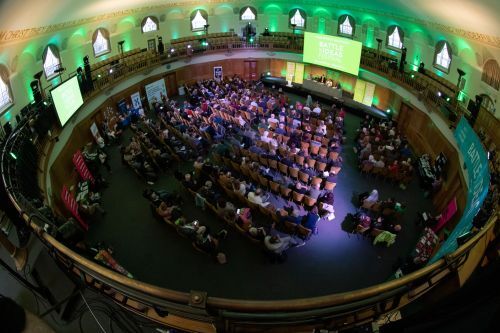
Battle of Ideas festival archive
This project brings together audio recordings of the Battle of Ideas festival, organised by the Academy of Ideas, which has been running since 2005. We aim to publish thousands of recordings of debates on an enormous range of issues, producing a unique of political debate in the UK in the twenty-first century.