Battle of Ideas Festival Audio Archive
The Battle of Ideas festival has been running since 2005, offering a space for high-level, thought-provoking public debate. The festival’s motto is FREE SPEECH ALLOWED. This archive is an opportunity to bring together recordings of debates from across the festival’s history, offering a wealth of ideas to enjoyed. The archive also acts as a historical record that will be invaluable in understanding both the issues and concerns of earlier years and the ways in which debates have evolved over time.
Listen on:

Episodes
Wednesday May 08, 2024
Wednesday May 08, 2024
Recorded at the Battle of Ideas festival 2011 on Sunday 30 October at the Royal College of Art, London.
ORIGINAL INTRODUCTION
To a casual observer, two of the biggest news stories of early 2011 – the Arab Spring and the partial meltdown of Japan’s Fukushima nuclear plant after an earthquake and tsunami – could hardly have seemed more different. But for many in the West, the two events had one important factor in common: both had global consequences for the problem of energy. Political unrest in the Middle East and North Africa sent panic through the energy markets as oil supplies were once again threatened, while the spectre of nuclear meltdown at Fukushima offered a grim reminder of the risks posed by moving beyond ‘dirty’ fossil fuels. Indeed, barely a year goes by without an energy problem dominating the headlines: be it the BP oil spill of 2010 or recurring disputes between Russia and Ukraine over gas supplies. Even before one factors in the challenge posed to the EU27 countries by their commitment to reduce carbon emissions by 20% on 1990 levels by 2020, energy security is near the top of the agenda of every leading nation.
With renewable energy still a long way from being able to meet the shortfall, many gloomily predict a future of brown-outs, tough energy efficiency measures, regular deep-sea drilling disasters and even bitter resource wars. Yet not everyone is so pessimistic. The discovery of huge reserves of shale gas around North America and Europe has been dubbed a ‘game-changer’ in terms of security and reducing environmental impact, although some doubt the safety of the apparently miraculous ‘fracking’ process. Despite the apocalyptic nightmares, however, even some leading sceptical campaigners conceded that the avoidance of catastrophe at Fukushima demonstrated the potential safety of nuclear energy over other available forms. Others advocate ambitious global energy grids of the sort under construction in the North Sea and west coast US, but even this might end up creating more security headaches than it solves.
Will the struggle for energy security result in a new ‘Great Game’, as some predict, with increasingly energy-thirsty developing countries joining the fight for dwindling resources? With the UK’s notoriously ambivalent approach to providing abundant energy, will ‘less is more’ become a patriotic duty as well as an eco-mantra? What role can innovation and alternative energy sources play in keeping the lights on?
SPEAKERSProfessor Gordon MacKerrondirector of Science and Technology Policy Research, School of Business, Management and Economics, University of Sussex
Tanya Morrisongovernment relations manager, climate changes, Shell
James Woudhuysenvisiting professor, London South Bank University
CHAIRTony Gillandassociate fellow, Academy of Ideas
Wednesday May 08, 2024
Wednesday May 08, 2024
Recorded at the Battle of Ideas festival 2011 on Sunday 30 October at the Royal College of Art, London.
ORIGINAL INTRODUCTION
Tolerance is a virtue, except when it isn’t. Critics of ‘the permissive society’ have long warned against the idea that anything goes, and even championed ‘zero tolerance’ policing. But many self-styled liberals are just as intolerant when it comes to ‘hate speech’ – for example the homophobic rants of the Westboro Baptist Church in the US, or misogynist rap lyrics – or the burqa, regarded as a symbol of women’s oppression. And the one thing many won’t tolerate is the intolerance of others. But do we confuse tolerance with respect and approval? Can we uphold the idea of tolerance while maintaining the right to criticise and judge rather than succumbing to moral relativism?
The tradition of tolerance – through John Locke, Voltaire, Kant and JS Mill – emphasised the importance of moral independence, not relativism. Locke tolerated what you thought because no one could ever establish tyranny in your heart. Mill also tolerated what you did – so long as it did not harm others. And crucially he valued the existence in society of views and opinions he found objectionable – their existence vital to the pursuit of truths which we should not assume we know. Tolerance, in this sense, was a response to a world made uncertain by the erosion of moral absolutes and conventional prejudices. As Voltaire wrote in his Essay on Tolerance: ‘Think for yourselves, and let others enjoy the privilege of doing so too’. Today, by contrast, the big issue is where the limits of tolerance should be. Defining the concept of harm to include subjective harm is one way of tightening those limits: society should not tolerate the emotional distress caused by offensive speech. Some even argue we should not tolerate acts which harm only ourselves: banning smoking; curbing binge drinking; warning against ‘junk’ foods. And, in the name of protecting tolerant societies from their enemies, the war on terror has justified intolerant measures – laws against incitement to terrorism or religious hatred – in many countries. Is this is a pragmatic limitation, without which tolerance would be just a naive ideal, or is it simply political censorship? What does tolerance mean today?
If we allow tolerance to mean being non-judgemental, do we risk becoming indulgent, indifferent even? Does the concept of ‘zero tolerance’ – often deployed in defence of those at risk of harm – mask an unwillingness to debate and argue? Should we approach the question of tolerance from the standpoint of my freedom to act, or your need for security? Can we afford to be tolerant of those who are themselves intolerant? Can we afford to tolerate other people making mistakes along the way to getting it right? Is tolerating the vulgar, the offensive, the shocking, not, in part, the price of liberty? Or are such concepts vain and dangerous in today’s very uncertain world?
SPEAKERSChristopher Caldwellsenior editor, Weekly Standard; columnist, Financial Times; author, Reflections on the Revolution in Europe: immigration, Islam and the West
Professor Frank Furedisociologist and social commentator; author, What's Happened to the University?, Power of Reading: from Socrates to Twitter, On Tolerance and Authority: a sociological history
Professor Anna Elisabetta Galeottichair of political philosophy, University of Piemonte Orienatale in Vercelli; author, Toleration as Recognition
GM Tamásvisiting professor, Central European University; author, Les Idoles de la Tribu
CHAIRAngus Kennedyconvenor, The Academy; author, Being Cultured: in defence of discrimination
Wednesday May 08, 2024
Wednesday May 08, 2024
Recorded at the Battle of Ideas festival 2011 on Saturday 29 October at the Royal College of Art, London.
ORIGINAL INTRODUCTION
Earlier this year, the media itself became the focus of a media-fuelled ‘moral panic’. The vocal political and media crusade against the News of the World quickly turned from an understandable disgust at the hacking of murdered teenager Milly Dowler’s phone into a seemingly out-of-control firestorm. What started with revelations about less-than-savoury tabloid excesses soon threatened to engulf the whole of journalism and became the focus of animated activity for everyone from left-wing anti-corporate activists to usually moribund parliamentary sub-committees. Scalps are still being gleefully taken in a feeding-frenzy that has resulted in the closure of one of Britain’s oldest newspapers and the demise of top executives.
For all the fury, it seems unlikely that what drove the Twitterstorm, parliamentary hyper-activity and general hysteria about Hackgate was simply the sudden discovery of ‘evil tabloid hacks’. After all, British public life has lurched from one such high-profile scandal to another in recent years, focusing on promiscuous celebrities, expenses-claiming MPs, greedy bankers and now scurrilous tabloid hacks working for Murdoch’s evil empire. Taking a sceptical view, the cultural script always seems to read: shocking revelation, followed by shrill denunciations of wrong-doers by an array of scandal-mongers; then fleeting but intense bursts of moral outrage, the search for ever more shocking revelations and new wrong-doers and demands that ‘something must be done’. One scandal emerges as quickly as the old one subsides. So is there something more fundamental driving this process?
These episodes in some ways seem similar to traditional ‘moral panics’, whether over crime, youth, drugs or sexual freedom, each considered a threat to the moral fibre of society at that particular time. Critics noted how these panics focused irrationally on ‘folk devils’, from teenagers to immigrants, expressing a deeper anxiety about challenges to traditional norms and values. Today’s panics, however, appear to have a different character. Contemporary ‘folk devils’ could literally be anybody, from any social group. The unpredictable, free-floating dynamic can attach itself to a wide variety of events or personas. In some ways today’s ‘panics’ seem to act as a substitute for morality itself, an outlet for the expression of moral fury. The discovery of scandal allows for the exercising of something that is increasingly rare – moral certainty itself, or at least the playing out of a fantasy about Good taking a stand against Bad. All sections of society seem to be animated by the latest scandal, with each exposure of terrible wrongdoing seeming to rally new layers of hand-wringing activitists and certainly expressing an urgent and real feeling of anger about something, anything. But does anything good come of all this? And if such bouts of fury reveal a deeper moral malaise, what can be done to address it?
SPEAKERSDavid Aaronovitchcolumnist, The Times; author, Voodoo Histories; chair, Index on Censorship
Brendan O'Neilleditor, spiked; columnist, Big Issue; contributor, Spectator; author, A Duty to Offend: Selected Essays
Jenni Russellcolumnist and broadcaster; writer, Evening Standard, Sunday Times and Guardian; 2011 winner of Orwell Prize for Political Journalism
CHAIRClaire Foxdirector, Academy of Ideas; panellist, BBC Radio 4's Moral Maze; author, I Find That Offensive
Wednesday May 08, 2024
Wednesday May 08, 2024
Recorded at the Battle of Ideas festival 2011 on Saturday 29 October at the Royal College of Art, London.
ORIGINAL INTRODUCTION
For many music lovers, it is the seeming inevitability of a musical sequence that makes it beautiful, as if it has always existed, waiting to be discovered by its ‘composer’. Typically, we value serious literature for the truths it tells about the human condition, rather than for mere flights of fancy. The proverbial Indian woodcarver, asked how he approached his work, answered that he simply cut away the wood that didn’t look like an elephant. Perhaps, as Oscar Wilde said, art really is ‘the science of beauty’, revealing the world to us rather than adding something new. Or is all this an illusion? Is it an aesthetic judgement rather than a scientific one that leads us to describe a work of art as ‘truthful’?
Historically, great artists were often employed by the Church to glorify God, and their work was seen as a mere reflection of His Creation. Early scientists like Isaac Newton also saw themselves as revealing the glory of Creation. For modern thinkers in the wake of the Enlightenment, however, man made God in his own image, not the other way round. The led to a more heroic conception of both artists and scientists. Looking back, the great medieval cathedrals could be seen as monuments to man’s own ingenuity. Artists came to be seen as ‘creative’ in their own right, while scientists seemed to be unravelling religious beliefs with their discoveries about the natural world. But the resulting scepticism also opened the door to new forms of fatalism, a process still unfolding today. As neuroscience advances, some think we will discover we are not much more than human ants, determined by natural laws. As for the mysteries of art, there are countless examples of scientific or mathematical explanations of the Mona Lisa’s beauty or the perfection of a symphony. At the same time, though, some doubt the objectivity even of mathematics. Some doubt that complex numbers really ‘exist’, for example, and suggest mathematicians are inventing theories rather than discovering eternal verities. Meanwhile, the romantic celebration of artists as special individuals has given way in many quarters to doubt about the value of ‘postmodern’ art that seems neither true nor beautiful.
Modern humanity exists in a vast cold universe, but (most of the time) we don’t feel crushed by its weight. Are we fooling ourselves with stories we tell each other, papering over the existential cracks? Should we be much more honest about our significance, given what scientific measurement might reveal to us? How far can art and creativity go in informing our understanding of the world? Does art just reflect reality? Is reality shaped by art? Do we find what we are looking for? Even create what we want to find? Are we human because we make ourselves so, or just animals putting on airs?
SPEAKERSDr Ken Arnoldhead of public programmes, Wellcome Trust; author, Cabinets for the Curious
Dr Tiffany Jenkinswriter and broadcaster; author, Keeping Their Marbles: how treasures of the past ended up in museums and why they should stay there
Professor Colin Lawsondirector, Royal College of Music; period clarinettist; author, Mozart: Clarinet Concerto and Brahms: Clarinet Quintet
Ruth Padelpoet and writer; author, The Mara Crossing and Darwin: a life in poems
Professor Raymond Tallisfellow, Academy of Medical Sciences; author, philosopher, critic and poet; recent books include NHS SOS and Aping Mankind; chair, Healthcare Professionals for Assisted Dying
CHAIRDolan Cummingsassociate fellow, Academy of Ideas; author, That Existential Leap: a crime story (forthcoming from Zero Books)
Wednesday May 08, 2024
Wednesday May 08, 2024
Recorded at the Battle of Ideas festival 2011 on Saturday 29 October at the Royal College of Art, London.
ORIGINAL INTRODUCTION
Not long ago, ‘corporate social responsibility’ (CSR) was all the rage. Leading consultants Giles Gibbons and Steve Hilton (now advisor to David Cameron) argued business could change the world, and it would be good for business too. Such rhetoric is increasingly seen as a cynical ruse, however, often dismissed as ‘green wash’, or a cynical means of avoiding unwanted regulation. But if the CSR brand is slightly tarnished, perhaps the Big Society offers a new lease of life to the idea of business as a force for good. David Cameron wants private enterprise to pick up the burden from the state and play a greater role in delivering public services. And while funding CSR programmes is no longer a no-brainer, at the 10th Annual Responsible Business Summit held in London at the start of May, top CEOs declared themselves eager to earn a ‘licence to operate’ by demonstrating their businesses’ social worth. This may be understandable, with the 2010 Edelman Trust Barometer showing trust in British CEOs dropping from 51% to 35%. The public seems increasingly cynical about fat cats and powerful corporations. But how should business contribute to society? Milton Friedman famously argued a corporation’s purpose is solely to maximise returns for its shareholders. Traditional free market advocates explain that businesses make profits by producing useful goods and services, creating jobs in the process. What more do you want?
Today, however, shareholders’ interests are often pitted against those of broader stakeholders. The new buzz-phrases are ‘social accounting’ and ‘the triple bottom line’, with demands that the social and environmental effects of a company’s economic actions are made transparent to consumers, investors such as pension funds, and communities in the areas where the corporation operates, as well as regulators and the media. A cursory glance at the course content of MBA courses - bulging with as many modules on environmental, ethical and social issues as traditional topics like accounting and management - shows young entrepreneurs and tomorrow’s senior managers are routinely taught to ‘think and act beyond the bottom line’. But is the bottom line and profit really at odds with society as implied? Is it naïve to insist corporations’ contribution stands on its own merits? After all, long-term improvements in health, living standards, the arts and higher education depend on wealth creation.
Does business leaders’ eagerness to demonstrate their social worth in new ways reflect a loss of confidence in that core contribution? Perhaps it is easier to turn a profit by manipulating the public perception of brands, and benefitting from government largesse in the form of spurious public-private partnerships, than by investing in innovation and creating jobs in new sectors of the economy. If so, are critics letting corporations off the hook? Do CSR demands help restore trust in business, or create a world of smoke and mirrors? Should corporations take responsibility for forging a Big Society, or should they mind their own business?
SPEAKERSSue Clarkcorporate affairs director, SABMiller
Professor Bill Durodiéhead of department and chair of international relations, University of Bath
Giles Gibbonsfounder and CEO, Good Business; founder, Sustainable Restaurant Association; co-author, Good Business: your world needs you
Leo Johnsonpartner, PwC Sustainability & Climate Change; host, BBC World's Down to Business
Philippe Legrainvisiting senior fellow, LSE’s European Institute; author, Immigrants: your country needs them and European Spring: Why Our Economies and Politics are in a Mess – and How to Put Them Right
CHAIRClaire Foxdirector, Academy of Ideas; panellist, BBC Radio 4's Moral Maze; author, I Find That Offensive
Wednesday May 08, 2024
Wednesday May 08, 2024
Recorded at the Battle of Ideas festival 2011 on Saturday 29 October at the Royal College of Art, London.
ORIGINAL INTRODUCTION
Even in our culturally advanced and technologically sophisticated modern world, it seems we are fascinated by the natural world. Recent government plans to sell off woodlands were met with a storm of outrage; David Attenborough’s Planet Earth and Blue Planet documentaries have been international success stories, and Cornwall’s Eden Project has long outlived the Millennium Dome as a tourist attraction. But what do we mean by ‘nature’? Many of the ‘natural’ habitats we revere are actually the products of human activity, from agriculture and horticulture to the very act of selective conservation itself. Moreover, for much of human history, untamed natural forces were to be feared rather than admired. Even the 21st century citizen is not entirely insulated from such forces: whether it is the devastation wreaked by natural disasters such as the Asian Tsunami, Hurricane Katrina or the Haiti earthquake, or the unintended consequences of our own activity, from landslides caused by deforestation to anthropogenic climate change, we are regularly reminded how precarious civilisation can be in the face of Mother Nature.
The contemporary reaction to such rare disasters – ‘Nature’s Revenge’ ran one headline after the Fukushima earthquake – seems to suggest we are a long way from the Enlightenment view of man gaining freedom by controlling nature. As Rousseau put it, ‘Nature commands every animal, and beasts obey. Man feels the same impetus, but he knows he is free to go along or to resist; and it is above all in the awareness of this freedom that the spirituality of his soul is made manifest.’ Today, mankind seems more concerned with protecting nature than mastering it: witness the ferocity with which the Heathrow airport expansion was opposed. While many talk up the possibilities of alternative energy sources drawn from wind, solar and biofuels, the prospect of using ambitious bio-engineering to ‘improve’ nature makes others uncomfortable. Environmentalists insist we should see ourselves as an integral part of nature, rather than somehow outside it.
Is human history the story of man’s gradual but relentless domination of nature? Or is it possible for even the most ardent modernist to argue for keeping some spaces ‘natural’? Is nature an obstacle for mankind to overcome, or should we learn to work within its limits? What do we look to nature for, and why does it still have such a hold on the imagination of those who have benefitted from industrialised living?
SPEAKERSJosie Appletondirector, civil liberties group, Manifesto Club; author, Officious: Rise of the Busybody State
Dr Jim Endersbysenior lecturer, University of Sussex; author, A Guinea Pig's History of Biology
Matthew Oatesspecialist on nature & wildlife engagement, National Trust
Ruth Padelpoet and writer; author, The Mara Crossing and Darwin: a life in poems
CHAIRPatrick Hayesdirector, British Educational Suppliers Association (BESA)
Wednesday May 08, 2024
Wednesday May 08, 2024
Recorded at the Battle of Ideas festival 2011 on Saturday 29 October at Barbican, London.
SPEAKERS
Ann Furedichief executive, British Pregnancy Advisory Service; author, The Moral Case for Abortion
Dr Paul Thompsonrector and vice-provost, Royal College of Art
Jamie Wallsvice president, UK communications, Shell
Mike Wrightexecutive director, Jaguar Land Rover
CHAIRClaire Foxdirector, Academy of Ideas; panellist, BBC Radio 4's Moral Maze; author, I Find That Offensive
Friday May 03, 2024
Friday May 03, 2024
Recorded at the Battle of Ideas festival 2013 on Saturday 19 October at Barbican, London.
ORIGINAL INTRODUCTION
‘An Englishman’s home is his castle’ is a phrase that sounds so quaint and dated today it’s hard to remember the ideal it expressed. This was a clear sense of a private sphere into which the state and public authorities had no right to enter and the individual enjoyed autonomy. Today, that private space is increasingly subject to public scrutiny. It is now official policy that family life and child-rearing be subject to greater external intervention and scrutiny. Concerns about domestic abuse seems to justify any amount of probing into the intimacy of marital disputes, with a broader assumption that away from public view and left to their own devices, people will use the privilege of privacy to perpetrate unspeakable horrors. Those who have secrets they would rather not share are often treated with suspicion, especially if they are in positions of authority. We demand to see people’s tax bills and wage slips, to read organisation’s memos, internal company emails and financial dealings. The institutionalisation of transparency, the ubiquity of leaking, the hero-worship of whistle blowers and suspicion of any institution that does not bare all, suggests an end to any validation of privacy.
Nevertheless, in recasting privacy as the refuge of behind-the-scenes malevolence, some argue we denigrate one of the most important sites of human experience. The private sphere provides a space for self-exploration and reflection – for organisations as well as individuals – and intimate relationships certainly require privacy. The ideas, emotions and passions that are expressed to an intimate soul mate become something very different when disclosed to a public audience.
What constitutes the barrier between private and public has become ever more fuzzy. Are comments made to ‘friends’ on Facebook public pronouncements or private mutterings? Who owns the personal photos of our families, our baby bumps, ourselves behaving badly when we publish them online? And have these questions arisen only because of new technology, or has there been a deeper cultural shift? Was it better when the media turned a blind eye to the indiscretions, leaving the public to judge them as purely public figured? Is our preoccupation with the private lives of artists and celebrities a distraction from what really matters? Where does the public domain start and end? Is a culture of transparency and revelation creating a refreshingly open society or a tyranny with nowhere to hide?
SPEAKERSDavid Aaronovitchcolumnist, The Times; author, Voodoo Histories; chair, Index on Censorship
Professor Frank Furedisociologist and social commentator; author, What's Happened to the University?, Power of Reading: from Socrates to Twitter, On Tolerance and Authority: a sociological history
Andrew Keenentrepreneur; founder, Audiocafe.com; author, Digital Vertigo: how today's online social revolution is dividing, diminishing, and disorienting us
Ursula Martinezcult cabaret diva; writer and performer, Me, Me, Me!, Hanky Panky and My Stories, Your Emails
Christine Rosenfellow, New America Foundation; senior editor, New Atlantis
CHAIRClaire Foxdirector, Academy of Ideas; panellist, BBC Radio 4's Moral Maze; author, I Find That Offensive
Friday May 03, 2024
Friday May 03, 2024
Recorded at the Battle of Ideas festival 2012 on Saturday 20 October at Barbican, London.
ORIGINAL INTRODUCTION
In his State of the Union speech this year, President Obama declared that inequality is ‘the defining issue of our time’. He said everyone should get ‘a fair shot’, do ‘their fair share’ and play by ‘the same set of rules’. Such fairness, such equality, was a matter beyond politics (‘not Democratic values or Republican values, but American values’), something without which the very fabric of society was at risk. In the UK, too, Prime Minister David Cameron has railed against ‘the incredible inequality of the modern world’. Economic debates are dominated by the spectre of dangerous inequalities. From Richard Layard’s economics of happiness, with its focus on relative income and the ‘paradox of prosperity’, to the fashionable endorsement of The Spirit Level, a bestselling book by academics much cited by politicians of all parties, to the Occupy movement, it has become an orthodoxy that unequal societies do worse in education, mental health and social cohesion.
The moral force of demands to lessen economic inequality seems to derive from the historically progressive demands for political equality. Who can object to that call for equal rights, whereby groups oppressed because of their gender, race or sexuality fought for their democratic rights? But does the fairness agenda really stand in the tradition of anti-slavery, civil rights and women’s suffrage? Is demanding regulation of bankers’ pay or calling for a mansion tax of the same order as the fight against Apartheid or the decriminalisation of homosexuality? Or are we in danger of confusing what we mean by equality by conflating the economic with the political?
The origin of the modern idea that ‘All men are created equal’ lies in Thomas Jefferson’s ‘immortal declaration’ in which equality was inalienably linked to liberty as a rebuttal against authoritarian rule. And yet demands for more equality can be used against individual freedom, religious freedom, free enterprise. Equal rights for minority groups may be progressive, but what about contemporary equal opportunity policies, such as quotas, that emphasise equality of outcomes? Talent is not equally distributed: some of us are fast, some bright, some musical. Some are not. That might not be ‘fair’, but there it is: we are not all born the same. Is it fair to discriminate and handicap to level the playing field? Or does such affirmative action come at too high a price in personal freedom? Do we really want economic redistribution to the level that we all have the same? Is the importance of equality more in allowing us to be different or in allowing us to be the same? What has equality come to mean today?
SPEAKERSSue Christoforoupolicy and research manager, The Equality Trust project, One Society; policy analyst
Thomas Hylland Eriksenprofessor of social anthropology, University of Oslo; novelist; author, Ethnicity and Nationalism and Globalization: the key concepts
Joyce McMillanchair, Hansard Society Working Group in Scotland; judge, 2010 Saltire Scottish Book of the Year Award; theatre critic, Scotsman
Brendan O'Neilleditor, spiked; columnist, Big Issue; contributor, Spectator; author, A Duty to Offend: Selected Essays
Trevor Phillipsformer chair, Equality and Human Rights Commission
CHAIRClaire Foxdirector, Academy of Ideas; panellist, BBC Radio 4's Moral Maze; author, I Find That Offensive
Friday May 03, 2024
Friday May 03, 2024
Recorded at the Battle of Ideas festival 2011 on Saturday 29 October at Royal College of Art, London.
ORIGINAL INTRODUCTION
Men at some time are masters of their fates:The fault, dear Brutus, is not in our stars,But in ourselves, that we are underlings.(Julius Caesar, 1.2.146), Cassius to Brutus
Education Minister Michael Gove says the government wants to help all Britain’s children shape their own destinies and become ‘masters of their own fate’. But is this a realistic aspiration, or even a meaningful one? Certainly the human struggle for self-mastery has a fine pedigree, going back to the ancients. But has the modern age brought us closer to this goal, or simply revealed the futility of trying to tame the fates? After all, one scientific discovery follows the next suggesting our behaviour is genetically driven. Some scientists claim everything from sexual preference to criminality, altruism to greed, is hardwired. Brain research and evolutionary psychology are mobilised to argue that even religious beliefs and morality are expressions of genetic and neurological dispositions. When US President Franklin Roosevelt said in 1939, ‘Men are not prisoners of Fate, but only prisoners of their own minds’, he was of course unaware of the gains of modern neuroscience. Bestselling authors like Sam Harris in The Moral Landscape: How Science Can Determine Human Values and David Brooks in The Social Animal tell us a ‘cognitive revolution’ has occurred in recent years, ‘producing amazing insights about who we are’. Behavioural economics suggests we are essentially irrational, simply acting out our unconscious urges. Social determinism is also influential: it is taken for granted in the current discussion on social mobility that where you are born, both geographically and in class terms, is likely to dictate your future. Meanwhile, we feel increasingly powerless to deal with external forces, from international terrorism to swine flu, climate change to volcanic ash clouds.
The fatalistic zeitgeist means we tend increasingly to downplay the significance of our own actions and focus instead on external forces beyond our control. Frequently this leads to a conspiratorial mindset, and fears of being manipulated by anything from subliminal advertising to unknown powers that have no name. In such circumstances, our ability to change our destiny seems futile; we have little option but to defer to fate. What explains today’s intellectual temper of fatalism? If we believe individuals cannot control their own behaviour, let alone their future, where does that leave the exercise of free will? If our capacity to influence events is so limited, can there be any meaningful sense of responsibility? How can we be held to account if ‘my genes made me do it m’lud’? Or is it cowardly to avoid understanding that man-made science is now freeing us from the metaphysical ignorance that suggested we could determine who we are? Can the capacity for moral independence be rescued or is it a futile rage against the inevitable? Where does fate end and free will begin?
SPEAKERSProfessor Frank Furedisociologist and social commentator; author, What's Happened to the University?, Power of Reading: from Socrates to Twitter, On Tolerance and Authority: a sociological history
Peter Hunter OPprincipal tutor, philosophy, Blackfriars Hall; Dominican Friar
Steve RaynerJames Martin Professor of Science and Civilization; director, Institute for Science, Innovation and Society, University of Oxford
Jeffrey Rosenprofessor of law, George Washington University; author, The Supreme Court: the personalities and rivalries that defined America
CHAIRClaire Foxdirector, Academy of Ideas; panellist, BBC Radio 4's Moral Maze; author, I Find That Offensive
Tuesday Apr 30, 2024
Tuesday Apr 30, 2024
Recorded at the Battle of Ideas festival 2023 on Saturday 28 October at Church House, London.
ORIGINAL INTRODUCTION
From ‘street votes’ to ‘parish deals’, county councils to metro mayors, ‘devo-max’-style national governments to reforming the House of Lords, the UK is awash with new measures designed to enhance devolution and localism as a counter to ‘gross over-centralisation’. When Keir Starmer said a Labour government would empower communities to ‘take back control’, some commentators decried it as cynical repurposing of that renowned Brexit slogan. But in reality, parties of all colours now proclaim the need to ‘turbocharge’ devolution as the means to revitalise democracy.
Critics of centralisation seem to have a point. County, city and local authorities operate at the behest of Whitehall and a national ‘one size fits all’ approach. This often leaves local leaders without the powers and investment to direct funds and strategies to meet local needs. Legislation with enormous impact, for example on migration, can be determined by unelected Lords, with seemingly little thought to the towns and cities under pressure to house new arrivals. With England now the one UK country lacking its own devolved government, new decision-making powers at local level on employment support, transport, housing, culture or childcare provision appear to make sense.
But if devolution pushes power closer to the people, to what extent are people now in control? While place-based approaches seem commonsensical, do they simply add more bureaucracy or become a trojan horse for new elites? After all, measures such as low-traffic neighbourhoods and ultra-low emissions zones are led by experts – who often ignore the results of consultations with residents and businesses. Private-public collaborations such as Local Enterprise Partnerships hand over power to business and unelected ‘public’ appointees. Meanwhile, devolved national parliaments arguably reinforce technocratic power, implementing for example, restrictions on lifestyle choices or, in the notable case of the Scottish Government’s Gender Recognition Act, measures that most Scots opposed.
Is there a means to ensure that new mechanisms of local democracy – from public consultations to local partnerships to devo-max governments – help to expand local control? With the Northern Ireland Assembly paralysed and the SNP-led Holyrood government imploding, are opponents of devolution right to argue it should be reversed? And where does the citizen figure in the new devolved world? At a time of disenchantment with citizenship, can there ever be a serious level of cultural support for democracy and commitment to engage with the demos?
SPEAKERSNiall Crowleydesigner; writer; former East End pub landlord
Dolan Cummingsauthor, Taking Conscience Seriously and The Pictish Princess.. and other stories from before there was a Scotland
Frank McKennagroup chairman & chief executive, Downtown in Business; former leader, North-West Regional Assembly; business programme host, City Talks radio
Jo Phillipsjournalist; co-author, Why Vote? and Why Join a Trade Union?; former political advisor; fellow, Radix
Dr Dan Robinsondirector of research, Pharos Foundation; author, Natural and Necessary Unions: Britain, Europe, and the Scottish Question
CHAIRAlastair Donaldco-convenor, Battle of Ideas festival; convenor, Living Freedom; author, Letter on Liberty: The Scottish Question
Tuesday Apr 30, 2024
Tuesday Apr 30, 2024
Recorded at the Battle of Ideas festival 2023 on Saturday 28 October at Church House, London.
ORIGINAL INTRODUCTION
Over a million incidents of anti-social behaviour were recorded last year. The problem has been making headlines, from the government’s ban on the ‘laughing gas’ canisters that litter parks to the home-invasion trend that saw the infamous Mizzy walking into random houses with his fellow TikTokers. But how big a problem is it when anti-social behaviour is mostly just young people hanging about on the streets?
According to research, 43 per cent of victims of anti-social behaviour suffer mental-health impacts, while vandalism and disorder blight many areas. As for the perpetrators, the shadow justice secretary, Steve Reed, has spoken of ‘tackling the effects of the trauma that leads them to offend’. But is this therapeutic approach to young people and to those on the receiving end of anti-social behaviour just as disempowering as the punitive approach also advocated by both main parties?
The government’s Anti-Social Behaviour Action Plan promises to treat it ‘with the urgency it deserves’ and to take a ‘zero-tolerance’ approach. The campaign group Manifesto Club, however, describes it as a ‘significant increase in police and local authority powers to direct individual behaviour, ban public activities, and issue on-the-spot penalties’.
Shoplifting seems to be on the rise – with John Lewis and other corporations announcing profit losses linked to ‘steal-to-order’ shoplifters. In big supermarkets, many items such as baby formula or cheese are kept behind the counter or are security tagged. For some, the kinds of products being targeted signifies that the increase in criminality is linked to the cost-of-living crisis. But others argue that the inability of the police to respond to shoplifting calls means that thieves know they can operate with impunity. In September, a row over shoplifting hit the headlines after an altercation between a black woman and an Asian owner at a store in Peckham, London escalated into violence. What seems to have begun as an allegation of theft has inspired protests outside multiple shops in Peckham, where critics argue black women are being routinely mistreated.
Is the political and media response excessive or are we too easily resigned to youthful misbehaviour, petty crime and incivility? Do we have a role to play in ‘policing’ our communities ourselves or are we too scared, or disinclined, to intervene?
SPEAKERSEmma Burnellfounder and political consultant, Political Human; journalist; playwright, No Cure For Love, Triggered and Venom
Neil Davenportcultural critic; head of faculty of social sciences, JFS Sixth Form Centre
Francis Fosterteacher; comedian; co-host, TRIGGERnometry
Lisa McKenzieworking-class academic; author, Getting By: estates class and culture in austerity Britain and Working Class Lockdown Diaries
Ed RennieCatholic writer; political strategist
CHAIRDave Clementswriter; school governor; public servant
Tuesday Apr 30, 2024
Tuesday Apr 30, 2024
Recorded at the Battle of Ideas festival 2023 on Sunday 29 October at Church House, London.
ORIGINAL INTRODUCTION
The sporting world is in the throes of a major culture war. After a series of controversial wins by trans athletes, some organisations like British Cycling and Swim England have placed restrictions on trans women competing in female categories. Multiple female athletes, particularly ex-swimmer Sharron Davies, have supported the move, claiming that anatomical and hormonal differences between biological men and women make it unfair for them to compete in the same category.
However, this has been met with criticism on the grounds that this is exclusionary towards trans athletes. Critics argue that the science in this area is insufficient to prove that biological differences will always affect the outcome of a competition. Some point to cases like double Olympic champion Caster Semenya, who suffers from hyperandrogenism, who has been subject to intense and often cruel media scrutiny about her identity. If the difference between men and women’s sport gets boiled down to testosterone levels, the lines can become blurred.
Many institutions have proposed the creation of open categories to include trans people. For example, the World Boxing Council is working towards creating an open category for trans athletes after some male boxers refused to fight athletes with XX chromosomes out of fear of fatally injuring them. But is an open category the solution, or merely a way to segregate trans athletes?
Supporters of trans inclusion have been critical of such debates, arguing that questioning an individual’s identity is unacceptable. ‘Trans people don’t transition for athletics. We transition to be happy and authentic and to be ourselves’, trans swimmer Lia Thomas told Good Morning America. For some, biological differences between men and women can be transcended by prioritising an athlete’s sense of who they really are. But others point to a seeming contradiction in the world of sport, where the differences between men and women’s ability is celebrated as a defining factor. When it comes to the success of the Lionesses – or the sexism scandals in the Independent Commission for Equity in Cricket and the Welsh Rugby Union – what it means to be a woman in the sporting world was clearly understood.
Should sport overcome the challenges of biological difference – and if so, how? This isn’t just an issue at elite level – many parents oppose open categories in their children’s sports day for fear of boys winning all the prizes. Is it fair for girls to grow up believing they will always be second best, or does the inclusion of trans children in sport take precedence? Do we have to be exclusive to become inclusive? And how can we ensure that sport remains a passionate, enjoyable activity for all while still enforcing safety and fairness requirements?
SPEAKERSDr Tim Blackbooks and essays editor, spiked
Dr Sara Dahlenwriter; ethicist; researcher, King’s College London
Baroness Kate Hoeynon-aligned peer, House of Lords; former Labour MP; former sports minister; former unpaid commissioner for sport, London Mayor's office; Leave campaigner
Fiona McAnenadirector of sport, Fair Play For Women
CHAIRGeoff Kidderdirector, membership and events, Academy of Ideas; convenor, AoI Book Club
Tuesday Apr 30, 2024
Tuesday Apr 30, 2024
Recorded at the Battle of Ideas festival 2023 on Sunday 29 October at Church House, London.
ORIGINAL INTRODUCTION
The scandal of the British Museum inside-job theft might well suggest that documenting, preserving and displaying artefacts is no longer museums’ top priority. Certainly, the traditional function of museums – centred around scholarly research and the exhibition of significant objects from past human civilisations – is under strain. Most museums have now taken on a different role: embracing a responsibility to confront historical injustices, offering apologies for past transgressions and warning about the malevolent associations of objects with colonialism, slavery, the oppression of women or even the challenges of climate change.
Critics fear that the consequence of this reading of history backwards might be the perversion of scholarship. Cambridge University’s archaeology museum got into hot water for displaying signs explaining the ‘misleading impression’ of the whiteness and ‘absence of diversity’ in the ancient world among its ancient sculpture plaster casts, seeking to recast Greek and Roman civilisation as the cradle of modern racism. Indeed, some curators now seek to ‘queer’ their collections, or find the roots of transgender people in ancient times. So much so that Portsmouth’s Mary Rose Museum now identifies nit combs found on Henry VIII’s ship that sank in 1545 (used by sailors to scrape insect infestations from their hair) as ‘queer objects’ which show ‘how hair is central to LGBTQ identity’.
Many museums now seem to work on the principle that historical figures should be judged and, where necessary, condemned for their ‘racism’ or ‘transphobia’. For some, this is a necessary step to reveal the ‘whole picture’ of history, unearthing truths about individuals and their actions which had hitherto been whitewashed. But in the process, they risk tarnishing the reputations of long-dead philanthropists whose collections they are charged with protecting. The curatorial staff at the Wellcome Trust permanently closed their exhibition ‘Medicine Man’, which gathered together objects, paintings and instruments belonging to their benefactor Henry Wellcome. Why? Because staff argued that Wellcome represented ‘a version of medical history that is based on racist, sexist and ableist theories and language’ which would ‘perpetuate[s] the wrong view of history’. The curators asked the existential question: ‘What’s the point of museums?’
How should museums seek to portray the past? Is there a problem with framing objects and figures within a contemporary political framework, or is this necessary for a twenty-first-century public to be able to engage with history, warts and all? What fate awaits the object and the collection in this context? Will the traditional pursuit of neutrality and universalism be compromised if museums are seen to be stoking up cultural and political polarisation? And by taking sides, do museums risk alienating segments of their audience who hold differing viewpoints, leading to a decline in public trust and support?
SPEAKERSDenise Fahmydirector, Freedom in the Arts
Dr Tiffany Jenkinswriter and broadcaster; author, Strangers and Intimates (forthcoming) and Keeping Their Marbles
Dr Zareer Masanihistorian, author, journalist, broadcaster
Emma Webbwriter, broadcaster and presenter; director, Common Sense Society, UK branch; fellow, New Culture Forum
CHAIRDr Wendy Earlewriter; convenor, Arts and Society Forum; former impact development officer, Birkbeck, University of London
Friday Apr 26, 2024
Friday Apr 26, 2024
Recorded at the Battle of Ideas festival 2019 on Saturday 2 November at Barbican, London.
ORIGINAL INTRODUCTION
It feels good to rail against the establishment. Politicians across the world have found that positioning themselves as the brave outsider challenging the status quo is a political weapon. Whether they promise to ‘drain the swamp’, take on the ‘deep state’, challenge the ‘metropolitan elite’, or stick it to the ‘chattering classes’, there is a clear urge to identify the establishment and take it to task. But does the establishment exist. If so, what is it?
In Britain, the establishment was traditionally understood along historic class lines, as a network of people who went to the best private schools, went on to Oxbridge, and then took prominent positions in arts, politics and industry. Today, many allege, little has changed: Eton still produces a disproportionate number of politicians, and, according to the Sutton Trust, alumni of private schools and Oxbridge still dominate top jobs.
But does this account for the changes that the UK and other countries have experienced? Many argue that, whatever the stats on certain top jobs, cultural power – what is often called ‘hegemony’ – resides elsewhere. They allege that a new establishment, defined less by birth or privilege and more by adherence to certain cultural and political ideas like multiculturalism or feminism, dominates the arts and media. Rather than employing old and declining institutions like the church, this contemporary establishment exercises power through new institutions like social media.
Whatever the truth in these assertions, where do more traditional analyses like class and capitalism fit in? The world economy is vastly more interconnected than previously, with financial and economic elites seemingly as comfortable in Singapore as New York or London. Sometimes termed the ‘Davos set’, some allege these are the real establishment: globetrotters who evade both taxes and democratic control.
All of this raises the question of how to define the establishment. What gives people power: is it money, cultural influence, personal networks, adherence to certain ideas, or something else? Perhaps the idea that there is any single establishment is equally unclear: in a fragmented world, maybe there are multiple establishments depending on the context.
How useful, then, is the idea of the establishment? Is it an indispensable part of a serious analysis of power, or a cheap slur that can be used by any side of an argument? How, if at all, has the establishment changed in recent years, and is there a new cultural hegemony as is sometimes alleged? Who exercises real power today, and how?
SPEAKERSSteve Richardsbroadcaster; political commentator; presenter, BBC Radio 4’s Week in Westminster; author, The Prime Ministers: reflections on leadership from Wilson to May
Jill Ruttersenior fellow, Institute for Government; former director of strategy and sustainable development, Defra
David Starkeyhistorian; broadcaster; professor of history; author, Henry: model of a tyrant; documentary maker
Robert Tombsemeritus professor of French history, Cambridge University; author, The English and their History
Bruno WaterfieldBrussels correspondent, The Times
CHAIRClaire Foxdirector, Academy of Ideas; Brexit Party MEP; author, I STILL Find That Offensive!
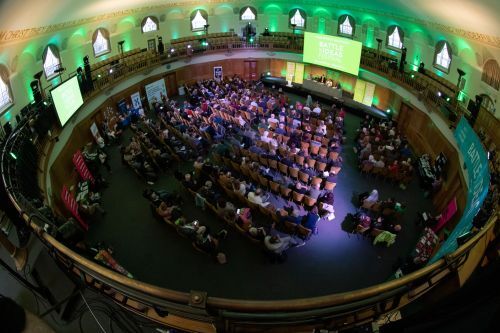
Battle of Ideas festival archive
This project brings together audio recordings of the Battle of Ideas festival, organised by the Academy of Ideas, which has been running since 2005. We aim to publish thousands of recordings of debates on an enormous range of issues, producing a unique of political debate in the UK in the twenty-first century.