Battle of Ideas Festival Audio Archive
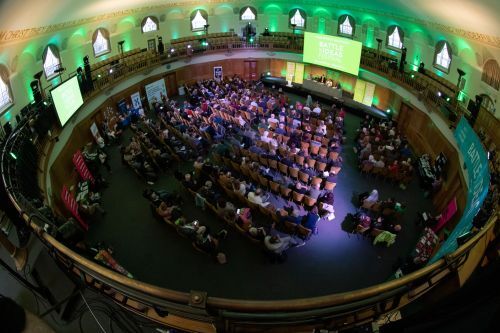
The Battle of Ideas festival has been running since 2005, offering a space for high-level, thought-provoking public debate. The festival’s motto is FREE SPEECH ALLOWED. This archive is an opportunity to bring together recordings of debates from across the festival’s history, offering a wealth of ideas to enjoyed. The archive also acts as a historical record that will be invaluable in understanding both the issues and concerns of earlier years and the ways in which debates have evolved over time.
Listen on:

Episodes
May 9, 2024
May 9, 2024
1hr 39 min
Recorded at the Battle of Ideas festival 2012 on Sunday 21 October at Barbican, London.
ORIGINAL INTRODUCTION
We often seem to struggle today to get the balance right between reasonable risk-taking and sensible precaution. It seems every new risk is met with ever-more petty, sometimes draconian, measures and laws. Excessive safety regulations threaten to make normal parts of life – like the humble school trip – increasingly impractical. At the same time, nobody wants to do away with sensible precautions that protect life and limb. Is there a danger that in a bid to free ourselves from excessive regulations, we might go to the opposite extreme and get burned in an unlicensed bonfire of red tape?
Whether it is the dangers of nuclear power, the risks of excessive drinking, the uncertainties around GM crops or the threat posed by trolls on Facebook, the mantra is always the same: ‘Better safe than sorry.’ And while more serious incidents may appear to demand action, policies often regulate far beyond the original cause. Recently, there has been some kick-back against this risk-averse culture, but for ‘common sense’ to prevail, we have to trust one another to exercise it, and trust powerful organisations and institutions to take public welfare seriously too. And who trusts corporations not to put profits first and safety second? Who trusts the media to self-regulate in the era of Leveson? Who argues banks should be free to take more risks in the wake of the financial crisis? And who trust bankers even to abide by existing regulations after the Libor rate-fixing scandal? Organisations have responded to the trust deficit by instituting procedures to minimise risk – and protect their reputations. So, for example, the scientific community champions the precautionary principle, even when it inhibits the scope of their own research. Or, in child-protection circles, many self-imposed regulations are seen as necessary to protect agencies in the event of something going wrong.
If we don’t take risks sometimes, how can we make progress, or even learn from our mistakes? At the same time, letting powerful organisations off the leash entirely might mean throwing out important regulations designed to protect the vulnerable from abuse. Might freeing firms from the red tape of employment law be a green light to unfair dismissal? When some procedural measures are designed to protect individuals from unwanted state intrusion, how much red tape can we afford to throw on the bonfire? How do we properly assess safety in an age in which both private and public bodies are encouraged to imagine the worst possible outcome, rather than prepare for what’s probable? Will more regulation help, or are there deeper cultural issues at stake?
SPEAKERSMarco Amitranopartner and head, risk assurance services, PwC
Josie Appletondirector, civil liberties group, Manifesto Club; author, Officious: Rise of the Busybody State
Nick Butlervisiting professor and chair, King's Policy Institute, King's College London; treasurer, the Fabian Society; former special advisor to Gordon Brown; former group vice-president, strategy and policy development, BP
Mark Littlewooddirector general, Institute of Economic Affairs
Simon Nixonchief European commentator, Wall Street Journal; author, The Credit Crunch: how safe is your money?
CHAIRClaire Foxdirector, Academy of Ideas; panellist, BBC Radio 4's Moral Maze; author, I Find That Offensive
May 9, 2024
May 9, 2024
1hr 6 min
Recorded at the Battle of Ideas festival 2012 on Sunday 21 October at Barbican, London.
ORIGINAL INTRODUCTION
With their huge populations and buoyant growth rates, China and India are two of the economic and technological powerhouses of the twenty-first century. And though many seem to forget it after the Lost Decade, Japan is the third largest economy in the world, the second largest developed economy and the world’s largest creditor nation. Its GDP per capita growth in the past 10 years still outpaced Europe and the United States. Nevertheless, all three countries have giant problems, too. China’s property and banking sectors raise some worrying questions. In Japan, Toyota is back, but to turn Sony round will require a miracle. In India, scandals around licences for 2G telephone networks, and the sale of coal assets, have reduced the state to impotence – while in the countryside, despite improvements, child malnutrition continues. Nor do the three giants get on. They dispute borders (China-India), as well as maritime boundaries and islands (China-Japan). Moreover, to its two rivals, China looks too friendly towards countries like Pakistan and North Korea.
For America, China saves too much, consumes too little, steals US innovations, engages in cyber-war, runs its currency too cheap, hoards rare earth metals, and tramples on human rights. For many environmentalists, the industrialisation and motorisation of China and India is a step too far for a fragile planet. Meanwhile Japan still takes flak for its resistance to inward investment, immigration, women’s rights and political reform. Despite the opportunities it sees in Asia, the West can seem fundamentally disdainful of the giants there.
The West perhaps underestimates China’s growing consumer class, and China’s powers of innovation. But can the country’s leader-in-waiting, Xi Jinping, control property and the banks enough to prevent social and economic turmoil – turmoil that Wen Jiabao, his forerunner, warned could be as great as that of the Cultural Revolution? Can Japan’s economy, now effectively nuclear-free, really avoid a third ‘lost decade’ of zombie banks and ineffectual governments? David Cameron has high hopes for UK plc in India. But can India’s own ineffectual government restore growth – or will the country’s general election, due by 2014, lay bare the country’s wasted years for all to see? Will the giants of Asia stumble in the face of the US rebound? And when might Asian production finally and decisively shift to low-cost Indonesia, Bangladesh and Vietnam?
SPEAKERSProfessor Barry Buzanemeritus professor, LSE; author, The United States and the Great Powers: world politics in the twenty-first century
James Woudhuysenvisiting professor, London South Bank University
Dr Linda Yuehfellow in economics, St Edmund Hall, University of Oxford; adjunct professor of economics, London Business School; economics editor, Bloomberg TV
CHAIRPhil Mullaneconomist and business manager; author, Creative Destruction: How to start an economic renaissance
May 9, 2024
May 9, 2024
1hr 29 min
Recorded at the Battle of Ideas festival 2012 on Sunday 21 October at Barbican, London.
ORIGINAL INTRODUCTION
Free will is at the root of our notions of moral responsibility, choice and judgment. It is at the heart of our conception of the human individual as an autonomous end in himself. Nevertheless, free will is notoriously hard to pin down. Philosophers have denied its existence on the basis that we are determined by the laws of nature, society or history, insisting there is no evidence of free will in the iron chain of cause and effect. Theologians have argued everything happens according to the will of God, not man. And yet, when we decide we want something and act on that, it certainly seems as if we are choosing freely. Are we just kidding ourselves?
Some of the most profound contemporary challenges to the idea of free will come from neuroscientists, evolutionary psychologists and biologists. They argue we are effectively programmed to act in certain ways, and only feel as if we make choices. Some argue, for example, that we can easily be nudged into certain types of behaviour if only the right stimuli are applied. It is widely believed that advertising can make us buy things we don’t need or even want. Stronger forms of this reasoning can be found in the idea that early intervention, usually before the age of three, can determine the sort of adult a child will grow up to be. Without such intervention, we are told, their future will be determined by genetics, by their environment, by the way their parents treat them.
Nevertheless, common sense still gives strong support to the idea that we have free will. We understand there are relatively large areas of our lives in which it makes sense to say we could have acted differently, with correspondingly different results. The law recognises this too: it is no defence to say you stole because your parents were cruel to you. We feel remorse at opportunities we could have taken but did not. And we do sometimes choose to do the right thing even against our own interests: in extreme cases some even lay down their lives for others and for ideals. Jean-Paul Sartre argued, ‘the coward makes himself cowardly, the hero makes himself heroic; and that there is always a possibility for the coward to give up cowardice and for the hero to stop being a hero’. Is the idea that we might be born cowards, or heroes, an excuse for not facing up to our moral responsibilities? Or is free will really an illusion, the by-product of a vain belief that we are all special?
SPEAKERSJoe Friggieriprofessor of philosophy and former head of department, University of Malta; poet; playwright; theatre director; three-times winner, National Literary Prize
Dr Daniel Glaserdirector, Science Gallery London, King's College London
Neal Lawsonchair, Compass; author, All Consuming; former adviser to Gordon Brown; co-editor, Progressive Century
Dr Ellie Leereader in social policy, University of Kent, Canterbury; director, Centre for Parenting Culture Studies
CHAIRAngus Kennedyconvenor, The Academy; author, Being Cultured: in defence of discrimination
May 9, 2024
May 9, 2024
1hr 15 min
Recorded at the Battle of Ideas festival 2012 on Saturday 20 October at Barbican, London.
ORIGINAL INTRODUCTION
It has become a maxim of Western society that citizens should be equal before the law. A legal system that discriminates against minorities is widely recognised as a symptom of an unjust society. But does this mean the law should be used to make society itself more equal? Since the Equality Act 2010 has been on the statute books, a number of cases have shown how the law is being used to challenge and punish discriminatory attitudes, in the name of greater equality and the celebration of diversity. Some have welcomed this as a move towards a more just society, while others condemn it as illegitimate ‘judicial activism’.
Take, for example, the Christian couple who were successfully sued in 2011 by two gay men to whom they had refused a room in their bed & breakfast. While many saw this as a victory for tolerance, some argued that the act had limited the rights of the Christian couple to choose with whom to mix or not. Since then, Christian lobby groups have argued that the provisions of the act should apply equally to protect Christians from prejudice. Apart from the fact that it may be impossible to legislate to protect everyone in society from prejudice, another more fundamental question arises: is it dangerous to use the law to change people’s minds?
Historically, changes in the law have always codified and reflected attitudes in wider society. However, rather than simply back-up prevailing beliefs, should the law start ‘taking the lead’? Racial desegregation in the US in the 1950s and 1960s certainly involved legal coercion, but it was also driven by a mass movement for equality. In the case of something like equal recognition for gay marriage in the US and UK, or proposals that corporate boards should contain a certain proportion of women, it remains unclear whether legal moves are ‘with the tide of history’ or merely promoting an eccentric, elite agenda. If the law is allowed to intrude into private decisions about whom we employ, for example, or with whom we associate or do business, we are denied the right to make these decisions independently. Is this justified in the name of equality? Or is a society in which people only decide to treat others equally because the law tells them to really an equal society at all?
SPEAKERSDavid Allen Greenlegal correspondent, New Statesman; writer of acclaimed Jack of Kent blog
Alex Deanemanaging director, FTI Consulting; Sky News regular; BBC Dateline London panellist; author Big Brother Watch: The state of civil liberties in modern Britain
John Fitzpatrickprofessor of law and director, Kent Law Clinic, University of Kent, Canterbury
Wendy KaminerUS-based writer on law, liberty, feminism, religion, and popular culture; author, Worst Instincts: cowardice, conformity and the ACLU
CHAIRLuke Gittoscriminal lawyer; director of City of London Appeals Clinic; legal editor at spiked; author, Why Rape Culture is a Dangerous Myth: From Steubenville to Ched Evans
May 9, 2024
May 9, 2024
1hr 30 min
Recorded at the Battle of Ideas festival 2012 on Saturday 20 October at Barbican, London.
ORIGINAL INTRODUCTION
The Western economic slump is conventionally attributed to a surfeit of capitalism, a market that is too free and insufficiently regulated. The financial crisis of 2008-9 is often assumed to have been caused by the unrestrained greed of bankers, personifying the financial excesses that crashed the economy. This narrative extends into a wider critique of the problems said to result from ‘neoliberal’ ideology. David Cameron, for example, quotes variants of GK Chesterton’s phrase, we have ‘too much capitalism and too few capitalists’, as he distances himself from what is termed crony or irresponsible capitalism. The heartless free market is said to exacerbate social exclusion: too much pay for the rich is said to widen inequality and reduce social mobility; too much consumption and we over-exploit and endanger the planet to the detriment of future generations; too much debt from trying to live off the future produces an economic millstone that condemns us to years of austerity.
Some, however, argue that the state has become increasingly involved in a market that, far from being free, is much more heavily controlled than ever before. In this view, our current problems are really caused by the absence of a genuine capitalism; society is being let down by too few people being prepared to promote the virtues of capitalism, with tomorrow’s entrepreneurs being driven offshore by punitive tax demands, and the business sector choked by health-and-safety legislation and bureaucratic red tape. For such critics, a political climate in which even the Financial Times can appear supportive of the Occupy movement, and in which governments plump for bailing out uncompetitive industries in the interests of short-term political expediency, can hardly be described as overly capitalist. Maybe capitalism actually needs to be freed up to renew itself through ‘creative destruction’; to concentrate on being profitable rather than responsible. Such critics demand a much-reduced role for the state to set the animal spirits of capitalism running free.
So is the market too free or too constrained? Is it as simple as cutting the red tape or must the state continue to take a leading role in kick-starting growth? If it does not, might the reality of contemporary capitalism pose an unacceptable cost to life and liberty? Just how can we manage capitalism in the twenty-first century?
SPEAKERSFerdinand Mountauthor, The New Few: or a very British oligarchy; former editor, Times Literary Supplement
Phil Mullaneconomist and business manager; author, Creative Destruction: How to start an economic renaissance
Vicky Pryceboard member, Centre for Economics and Business Research; economic advisor, British Chamber of Commerce
Mike Shortsenior vice-president, industry affairs, SABMiller
CHAIRAngus Kennedyconvenor, The Academy; author, Being Cultured: in defence of discrimination
May 9, 2024
May 9, 2024
1hr 40 min
Recorded at the Battle of Ideas festival 2012 on Saturday 20 October at Barbican, London.
ORIGINAL INTRODUCTION
‘The culture war is back’, proclaimed one American newspaper earlier this year. And it’s not difficult to see why. A variety of social issues, be it gay marriage or contraception, have seemingly cleaved America in two. The tribal battle lines look familiar: on one side the socially conservative, the Christian, the blue-collar; on the other, the liberal progressive, the secular, the white-collar. American politics is now steeped in culture-war polemic. Former Republican presidential candidate and social conservative Rick Santorum talked darkly of the liberals’ ‘organised war on religion’, and his adversary, the progressive President Obama, has charged that heartland America ‘clings to religion’. But is there anything new about the current revival of the culture wars?
For those immersed in the numerous conflagrations, claims of a resurgent culture war are often rejected. This is about the rights and wrongs of a particular issue, we are told: gay marriage is, depending on whom you listen to, a matter of civil rights or one of traditional values; the exemption of religious bodies from Obama’s contraception mandate is a matter of religious freedom or women’s reproductive rights. But are these battlegrounds in fact part of a broader war between two almost entirely divergent moral communities? When Edmund White, a longtime opponent of gay marriage came out in support of it because he ‘realised how opposed to [gay marriage] the Christian right is’, did this reveal the real impetus behind such cause-fighting? Given the vituperative language used, from ‘redneck’ and ‘hick’, to ‘racist’ and ‘homophobe’, are self-styled liberals now proving themselves as illiberal as the Christian fundamentalists they rail against?
And are we seeing the emergence of something similar in the UK? When prime minister Tony Blair introduced civil partnerships back in 2004, there was virtually no fanfare. Current prime minister David Cameron’s gay-marriage proposals, however, have been presented as a cultural marker, a test of what kind of person you are. So are debates about religion or gender issues now being conducted in terms of an emerging cultural battle, one that marks out liberals from conservatives on the American model? If so, it is not only liberals making moves. The sight of angry anti-abortion campaigners arrayed outside an abortion provider has become familiar in the UK as well as the US, and the abortion debate seems to have become more antagonistic since Conservative MP Nadine Dorries’ attempt to strip abortion providers of their role counselling pregnant women. But what does all this mean? Are long-held rights and traditions really at stake, or are we witnessing the emergence of a type of politics in which fighting for a cause is less important than marking oneself out as a certain type of person?
SPEAKERSProfessor Frank Furedisociologist and social commentator; author, What's Happened to the University?, Power of Reading: from Socrates to Twitter, On Tolerance and Authority: a sociological history
John Haldaneprofessor of philosophy, University of St Andrews; chairman, Royal Institute of Philosophy; author, An Intelligent Person's Guide to Religion and Reasonable Faith
Wendy KaminerUS-based writer on law, liberty, feminism, religion, and popular culture; author, Worst Instincts: cowardice, conformity and the ACLU
John WatersIrish newspaper columnist; author, Jiving at the Crossroads and Was It For This? Why Ireland Lost the Plot
CHAIRClaire Foxdirector, Academy of Ideas; panellist, BBC Radio 4's Moral Maze; author, I Find That Offensive
May 9, 2024
May 9, 2024
1hr 2 min
Recorded at the Battle of Ideas festival 2012 on Saturday 20 October at Barbican, London.
ORIGINAL INTRODUCTION
‘For a mass society is nothing more than that kind of organised living which automatically establishes itself among human beings who are still related to one another but have lost the world once common to all of them.’ Hannah Arendt, Between Past and Future
The closing ceremony of the Olympics 2012 was dubbed ‘A Symphony of British Music’, but there was little that was classical about it. Despite the presence of the London Symphony Orchestra, supporting pop group Elbow, this symphony was all Spice Girls not Vaughan Williams, Russell Brand not Elgar; avowedly modern and popular. Of course there is no reason a closing party should not have a rocking soundtrack, but in many areas today it appears that the dethroning of what was once deemed ‘high’ culture has gone so far that the music of Queen, by default almost, is better than Handel. Is there such a separation between the adherents of different ‘cultures’ as to amount to a total communication breakdown between their camps?
‘Good society’, the taste of elites, has long been struggling to respond to the emergence of the masses into public life, and not just in popular forms of culture, but even the mannered aping of culture that Matthew Arnold attacked among the philistine bourgeoisie of the nineteenth century. Since the end of the Second World War, the decline in the authority of traditional forms of culture has become more and more evident: think of the late Robert Hughes’ Shock of the New; British ‘In-Yer-Face’ theatre; Schoenberg, Phillip Glass and John Cage. Or the vast numbers of questionable initiatives designed to attract new audiences to opera, galleries and concert halls. Is yesterday’s ‘high’ culture being consigned to today’s museum? Should we lament its passing? Try to preserve it? Or accept its day had come and that it’s only misplaced cultural nostalgia to imagine that what we have today is in anyway inferior? Might it even be better?
Maybe the difficulty is with our ability to discriminate between what is good and what doesn’t make the grade, between ‘high’ and ‘low’. Maybe it is our cultural judgement that has eroded, rather than classical music itself having somehow passed its sell-by-date. In the past, after all, high and low rubbed up together and influenced each other: think of composers like Dvořák and Janáček, both influenced by folk music. Is there a possibility today for such a healthy interchange between pop and classical? TV and art-house film? Street dance and ballet? Damien Hirst and Jack Vettriano? Or, in an avowedly non-judgemental age, one of relative values, of ‘I like what I like because I like it’, is what was once potentially a common and shareable cultural world, now irretrievably shattered? Reduced to the lonely perspective of the individual, as unique to him as his birth, or, on the other hand, to the mass spectacle, to entertainment rather than culture?
SPEAKERSIvan Hewettchief music critic, Daily Telegraph; professor, Royal College of Music; broadcaster; author, Music: healing the rift
Dr Tiffany Jenkinswriter and broadcaster; author, Keeping Their Marbles: how treasures of the past ended up in museums and why they should stay there
Roly Keatingchief executive, British Library; formerly first Director of Archive Content, BBC; former Controller, BBC Two; member, Barbican Centre Board
CHAIRDolan Cummingsassociate fellow, Academy of Ideas; author, That Existential Leap: a crime story (forthcoming from Zero Books)
May 9, 2024
May 9, 2024
21 min
Recorded at the Battle of Ideas festival 2012 on Saturday 20 October at Barbican, London.
ORIGINAL INTRODUCTION
The eighth annual Battle of Ideas festival opened with a Welcome Address hosted by Claire Fox, Director of the Academy of Ideas.
SPEAKERS
Sean Gregorydirector of creative learning, Barbican
Alison Sharpehead of thought leadership, PwC
Raymond Tallisemeritus professor of geriatric medicine, University of Manchester
Mike Wrightexecutive director, Jaguar Land Rover
May 9, 2024
May 9, 2024
40 min
Recorded at the Battle of Ideas festival 2011 on Sunday 30 October at the Royal College of Art, London.
ORIGINAL INTRODUCTION
One thing the riots this summer revealed is that in recent years there has been an implosion of community life in much of Britain. Many urban youth seem to have so little commitment to the neighbourhoods they live in that they are prepared to trash them. While the riots may be an extreme example, the broader dearth of solidarity is not confined to British teenagers. Throughout the Western world, policy-makers and social critics are increasingly concerned about social fragmentation, individuation, and a ‘look the other way’ culture. While commentators variously blame government cuts and neoliberal greed or street gangs and poor parenting for destroying social bonds, there seems to be a deeper problem that is barely addressed. The erosion of basic ties of solidarity between parents and other adults, between the generations, and across cultural groups, suggests a diminished sense of society per se, and a loss of agreement about where authority lies. Explanations focusing on individual behaviour and those pointing to impersonal economic forces seem equally inadequate in accounting for what amounts to a crisis of meaning. Arguably this trend has been accelerated by decades of misguided government interventions meant to alleviate or compensate for social fragmentation, from divisive multicultural policies and short-termist welfare programmes to over-zealous child protection schemes that institutionalise distrust.
The historic context is surely the demise of more organic social bonds, from churches to trades unions, and the associated political ideals. Indeed, collective political action seems a distant memory. While some talk up relatively feeble examples of political activity, from sporadic student gatherings to marches against the cuts, critics contend that in the absence of a much more coherent and persuasive vision for social change, this is little more than wishful thinking. There is little evidence of an upsurge of people coming together seriously to confront the economic and social problems we face, and candidly debate the barriers to social solidarity.
Even calls for us to come together for the sake of the greater good (such as David Cameron’s Big Society) implicitly assume we must put aside self-interest in favour of abstract community cohesion (‘we’re all in it together’), rather than making genuinely common cause on the basis of shared interests that might involve changing society. Artificial schemes for community service, compulsory volunteering, even supervised networking can make matters worse. What could be more corrosive to spontaneous social bonds than collective schemes supervised from on high by the state and its agencies? So how do we distinguish between sham solidarity and the real thing? Can we develop a real stake in our own communities, and look to each other - rather than the state - to solve the problems we face? How can we cultivate a more powerful sense of solidarity?
SPEAKERSProfessor Frank Furedisociologist and social commentator; author, What's Happened to the University?, Power of Reading: from Socrates to Twitter, On Tolerance and Authority: a sociological history
CHAIRClaire Foxdirector, Academy of Ideas; panellist, BBC Radio 4's Moral Maze; author, I Find That Offensive
May 9, 2024
May 9, 2024
1hr 12 min
Recorded at the Battle of Ideas festival 2011 on Sunday 30 October at the Royal College of Art, London.
ORIGINAL INTRODUCTION
A new generation of online activists is credited with fuelling a resurgence in contemporary protest, using blogs, Twitter and other social media to mobilise and get their message across. These so-called ‘clicktivists’ boast they are transforming the way protests are organised, taking a leaderless, spontaneous and quick-moving form. Blogger Laurie Penny even claims the web is ‘the greatest democratising force of our times’. Numerous commentators have dubbed the uprisings in Tunisia and across the Middle East ‘Wikileaks revolutions’ because of the way activists used the web to communicate and coordinate protests. And clicktivists aren’t just fomenting protests on the streets: internet group ‘Anonymous’ has taken on the websites of some of the world’s largest companies, and many claim the world’s first ‘cyberwar’ is on the horizon. Nevertheless, this new kind of online activism is also being promoted by governments. The US State Department is actively encouraging digital activists in certain countries with oppressive governments. Even the UK government is encouraging a kind of clickivism, with new forms of e-petitions being proposed to better engage with the views and desires of the public.
Is the internet just another tool in the activists’ toolbox, accelerating normal protests, or has it brought about fundamental changes? If it has, for better or worse? Is it increasing the amount of debate and discussion around protests, or actually making protests more superficial; diminishing what it is to be committed to a cause and estranging campaigners from grassroots concerns? Does the new ‘leaderless’ form of organisation online mark the development of a powerful weapon against the status quo, or instead mean protests are likely to be fleeting, ineffective and chaotic? In his book The Net Delusion, Evgeny Morozov argues that the internet can just as easily be used by governments to counter protests and for increased surveillance and control. Hosni Mubarak’s faltering administration even shut down the internet in Egypt for a week, suggesting it would be a mistake to make activism too dependent on the web.
Is proclaiming ‘It’s Twitter wot won it’ diminishing the hard work and dedication that goes into meaningful protests? Will future revolutions happen online, or do the clicktivists need to put down their laptops and get out more?
SPEAKERSDavid Babbsexecutive director, 38 degrees, an online campaigning community
Phil Boothcoordinator, medConfidential
Paul Masonbroadcaster; author, Financial Meltdown and the End of the Age of Greed; technology editor, BBC's Newsnight
Martyn Perksdigital business consultant and writer; co-author, Big Potatoes: the London manifesto for innovation
CHAIRPatrick Hayesdirector, British Educational Suppliers Association (BESA)
May 8, 2024
May 8, 2024
1hr 34 min
Recorded at the Battle of Ideas festival 2011 on Sunday 30 October at the Royal College of Art, London.
ORIGINAL INTRODUCTION
“…individualism is a disturbing and disintegrating force. There lies its immense value. For what it seeks is to disturb monotony of type, slavery of custom, tyranny of habit, and the reduction of man to the level of a machine” Oscar Wilde, The Soul of Man under Socialism
Everything from social fragmentation to the economic crisis, and the riots that broke out across English cities in the summer, has been blamed on a modern ‘cult of individualism’, epitomised by Margaret Thatcher’s insistence that ‘there is no such thing as society’. Labour leader Ed Miliband denounces ‘a “take what you can” culture’ that began in the 1980s, which he concedes New Labour did little to challenge. But Tory Prime Minister David Cameron also seeks to distance himself from his infamous predecessor, championing the ‘Big Society’. It has become routine to despair of individuals’ greed for consumer goods. More broadly, strong-willed individuals who know their own minds are accused of arrogance, egotism, even bullying. But isn’t there something to be said for individualism? After all, the individual has historically been asssociated with independence of mind, self-determination and self-reliance. Strong individuals have been admired for their courage and imagination, even valued for the unique contributions they can make to society rather than regarded as necessarily undermining social solidarity. So are we wrong to focus on the negatives, or is it time we recognised the damaging effects of individualism? Critics remind us that the individual smoker’s choice can imperil public health; one person’s free speech can cause offence and sow discord for countless others; motorists who insist on their individual freedom to drive petrol-guzzling SUVs clutter the roads and pollute the air.
Meanwhile, developments in neuroscience, evolutionary psychology and genetics cast doubt on the very idea of individual autonomy: some suggest free will is an illusion. Individuals are seen as hapless and hopeless if left to their own devices, too easily influenced by the malign advertisers or populist demagogues. Paternalist policy-makers and ‘choice architects’ regard the idea of moral autonomy as little more than an inconvenience, preferring to nudge individuals into making the right choices. But don’t diminished views of the individual also undermine the possibility of a strong society? If the ‘we’ in any collective comprises such feeble individuals, what is the content of society or solidarity?
Arguably, even seemingly self-sacrificing acts of public service - from volunteering to help others to laying down one’s life for a greater cause - require a strong sense of personal autonomy. By contrast, if we value conformity to social norms above individuality, is our ‘free will’ reduced to what JS Mill called ‘ape-like imitation’? And anyway, does self-interest necessarily preclude generosity, empathy and solidarity? Was selfish individualism really to blame for the summer’s riots? Or was it a breakdown of any sense of individual responsibility that caused so many to join the frenzy of looting? Can ‘individualism’ be good for society?
SPEAKERSDr Maurice Glasmanarchitect, ‘Blue Labour’; director, faith and citizenship programme, London Metropolitan University; Labour life peer (Baron Glasman); author, Unnecessary Suffering: managing market utopia
Clifford Longleyauthor, broadcaster and journalist; leader writer and columnist, Tablet; pannellist; BBC Radio 4's Moral Maze
John SutherlandEmeritus Lord Northcliffe Professor of English Literature, University College London; author, The Lives of the Novelists
Bruno WaterfieldBrussels correspondent, The Times; co-author, No Means No
CHAIRClaire Foxdirector, Academy of Ideas; panellist, BBC Radio 4's Moral Maze; author, I Find That Offensive
May 8, 2024
May 8, 2024
1hr 41 min
Recorded at the Battle of Ideas festival 2011 on Sunday 30 October at the Royal College of Art, London.
ORIGINAL INTRODUCTION
Until recently, leaking - the disclosure of confidential information - was generally perceived as an act of disloyalty, irresponsibility or betrayal. It was also rare, and for the leaker it involved a moral dilemma. More recently, it is secrecy, confidentiality and privacy that have been stigmatised. So what was once castigated as an act of betrayal is increasingly recast as the heroic deed of a brave whistle-blower. Loyalty is no longer seen as an unalloyed virtue, disloyalty no longer viewed wholly negatively. One reason breaches of confidence have become normalised is that trust in officialdom and institutions, from parliament to multinational corporations, has been steadily eroded. We seem to take it for granted that politicians lie and big business is involved in dodgy dealings behind closed doors. In such circumstances, it is not what politicians, officials and business leaders say or do, but rather what they are allegedly trying to hide that becomes the subject of interest. Hence, the leaking of information per se is presented as an heroic act: anything that means more transparency can only be good.
This feeds a new form of conspiratorial thinking. Wikileaks’ Julian Assange and his followers argue that as long various networks of conspirators are free to plot behind the scenes, their domination of the world will continue. Thus, exposing their nefarious activities to the public gaze represents a blow for freedom, since it diminishes the flow of ‘important communication between authoritarian conspirators’ and weakens their grip over society. Others suggest this worldview is overly simplistic, and actually fuels rumour, suspicion and mistrust? If people believe their lives are controlled by hidden forces beyond their comprehension, won’t the public become even more immobilised and cynical? And if institutions and individuals in positions of authority constantly fear their private deliberations and confidential correspondence may be leaked, won’t they become more wary of frank exchanges? More guarded, more secretive? And how useful is all this leaked information anyway? While leaks can embarrass individuals and institutions and occasionally bring to light important facts, are they a serious replacement for what can potentially be learned through analysing the world, through research and investigation, and, of course, through the clash of opinions and ideas?
Should organisations expect loyalty from staff? Should colleagues demand loyalty from one another? What distinguishes loyalty from blind obedience? Is the problem that there are too few organisations and causes that are genuinely worthy of loyalty?
SPEAKERSMick Humeeditor-at-large, online magazine spiked; author, Trigger Warning: Is the Fear of Being Offensive Killing Free Speech?
Joyce McMillanchair, Hansard Society Working Group in Scotland; judge, 2010 Saltire Scottish Book of the Year Award; theatre critic, Scotsman
Henry Porterpolitical columnist, Observer; UK editor, Vanity Fair; novelist; author, Brandenburg winner of Ian Fleming Steel Dagger award for best thriller
Gwyn Prinsresearch professor, LSE; director, LSE Mackinder Programme for the Study of Long Wave Events
Richard Sextonpartner, PwC
CHAIRClaire Foxdirector, Academy of Ideas; panellist, BBC Radio 4's Moral Maze; author, I Find That Offensive
May 8, 2024
May 8, 2024
1hr 3 min
Recorded at the Battle of Ideas festival 2011 on Sunday 30 October at the Royal College of Art, London.
ORIGINAL INTRODUCTION
To a casual observer, two of the biggest news stories of early 2011 – the Arab Spring and the partial meltdown of Japan’s Fukushima nuclear plant after an earthquake and tsunami – could hardly have seemed more different. But for many in the West, the two events had one important factor in common: both had global consequences for the problem of energy. Political unrest in the Middle East and North Africa sent panic through the energy markets as oil supplies were once again threatened, while the spectre of nuclear meltdown at Fukushima offered a grim reminder of the risks posed by moving beyond ‘dirty’ fossil fuels. Indeed, barely a year goes by without an energy problem dominating the headlines: be it the BP oil spill of 2010 or recurring disputes between Russia and Ukraine over gas supplies. Even before one factors in the challenge posed to the EU27 countries by their commitment to reduce carbon emissions by 20% on 1990 levels by 2020, energy security is near the top of the agenda of every leading nation.
With renewable energy still a long way from being able to meet the shortfall, many gloomily predict a future of brown-outs, tough energy efficiency measures, regular deep-sea drilling disasters and even bitter resource wars. Yet not everyone is so pessimistic. The discovery of huge reserves of shale gas around North America and Europe has been dubbed a ‘game-changer’ in terms of security and reducing environmental impact, although some doubt the safety of the apparently miraculous ‘fracking’ process. Despite the apocalyptic nightmares, however, even some leading sceptical campaigners conceded that the avoidance of catastrophe at Fukushima demonstrated the potential safety of nuclear energy over other available forms. Others advocate ambitious global energy grids of the sort under construction in the North Sea and west coast US, but even this might end up creating more security headaches than it solves.
Will the struggle for energy security result in a new ‘Great Game’, as some predict, with increasingly energy-thirsty developing countries joining the fight for dwindling resources? With the UK’s notoriously ambivalent approach to providing abundant energy, will ‘less is more’ become a patriotic duty as well as an eco-mantra? What role can innovation and alternative energy sources play in keeping the lights on?
SPEAKERSProfessor Gordon MacKerrondirector of Science and Technology Policy Research, School of Business, Management and Economics, University of Sussex
Tanya Morrisongovernment relations manager, climate changes, Shell
James Woudhuysenvisiting professor, London South Bank University
CHAIRTony Gillandassociate fellow, Academy of Ideas
May 8, 2024
May 8, 2024
1hr 32 min
Recorded at the Battle of Ideas festival 2011 on Sunday 30 October at the Royal College of Art, London.
ORIGINAL INTRODUCTION
Tolerance is a virtue, except when it isn’t. Critics of ‘the permissive society’ have long warned against the idea that anything goes, and even championed ‘zero tolerance’ policing. But many self-styled liberals are just as intolerant when it comes to ‘hate speech’ – for example the homophobic rants of the Westboro Baptist Church in the US, or misogynist rap lyrics – or the burqa, regarded as a symbol of women’s oppression. And the one thing many won’t tolerate is the intolerance of others. But do we confuse tolerance with respect and approval? Can we uphold the idea of tolerance while maintaining the right to criticise and judge rather than succumbing to moral relativism?
The tradition of tolerance – through John Locke, Voltaire, Kant and JS Mill – emphasised the importance of moral independence, not relativism. Locke tolerated what you thought because no one could ever establish tyranny in your heart. Mill also tolerated what you did – so long as it did not harm others. And crucially he valued the existence in society of views and opinions he found objectionable – their existence vital to the pursuit of truths which we should not assume we know. Tolerance, in this sense, was a response to a world made uncertain by the erosion of moral absolutes and conventional prejudices. As Voltaire wrote in his Essay on Tolerance: ‘Think for yourselves, and let others enjoy the privilege of doing so too’. Today, by contrast, the big issue is where the limits of tolerance should be. Defining the concept of harm to include subjective harm is one way of tightening those limits: society should not tolerate the emotional distress caused by offensive speech. Some even argue we should not tolerate acts which harm only ourselves: banning smoking; curbing binge drinking; warning against ‘junk’ foods. And, in the name of protecting tolerant societies from their enemies, the war on terror has justified intolerant measures – laws against incitement to terrorism or religious hatred – in many countries. Is this is a pragmatic limitation, without which tolerance would be just a naive ideal, or is it simply political censorship? What does tolerance mean today?
If we allow tolerance to mean being non-judgemental, do we risk becoming indulgent, indifferent even? Does the concept of ‘zero tolerance’ – often deployed in defence of those at risk of harm – mask an unwillingness to debate and argue? Should we approach the question of tolerance from the standpoint of my freedom to act, or your need for security? Can we afford to be tolerant of those who are themselves intolerant? Can we afford to tolerate other people making mistakes along the way to getting it right? Is tolerating the vulgar, the offensive, the shocking, not, in part, the price of liberty? Or are such concepts vain and dangerous in today’s very uncertain world?
SPEAKERSChristopher Caldwellsenior editor, Weekly Standard; columnist, Financial Times; author, Reflections on the Revolution in Europe: immigration, Islam and the West
Professor Frank Furedisociologist and social commentator; author, What's Happened to the University?, Power of Reading: from Socrates to Twitter, On Tolerance and Authority: a sociological history
Professor Anna Elisabetta Galeottichair of political philosophy, University of Piemonte Orienatale in Vercelli; author, Toleration as Recognition
GM Tamásvisiting professor, Central European University; author, Les Idoles de la Tribu
CHAIRAngus Kennedyconvenor, The Academy; author, Being Cultured: in defence of discrimination
May 8, 2024
May 8, 2024
1hr 17 min
Recorded at the Battle of Ideas festival 2011 on Saturday 29 October at the Royal College of Art, London.
ORIGINAL INTRODUCTION
Earlier this year, the media itself became the focus of a media-fuelled ‘moral panic’. The vocal political and media crusade against the News of the World quickly turned from an understandable disgust at the hacking of murdered teenager Milly Dowler’s phone into a seemingly out-of-control firestorm. What started with revelations about less-than-savoury tabloid excesses soon threatened to engulf the whole of journalism and became the focus of animated activity for everyone from left-wing anti-corporate activists to usually moribund parliamentary sub-committees. Scalps are still being gleefully taken in a feeding-frenzy that has resulted in the closure of one of Britain’s oldest newspapers and the demise of top executives.
For all the fury, it seems unlikely that what drove the Twitterstorm, parliamentary hyper-activity and general hysteria about Hackgate was simply the sudden discovery of ‘evil tabloid hacks’. After all, British public life has lurched from one such high-profile scandal to another in recent years, focusing on promiscuous celebrities, expenses-claiming MPs, greedy bankers and now scurrilous tabloid hacks working for Murdoch’s evil empire. Taking a sceptical view, the cultural script always seems to read: shocking revelation, followed by shrill denunciations of wrong-doers by an array of scandal-mongers; then fleeting but intense bursts of moral outrage, the search for ever more shocking revelations and new wrong-doers and demands that ‘something must be done’. One scandal emerges as quickly as the old one subsides. So is there something more fundamental driving this process?
These episodes in some ways seem similar to traditional ‘moral panics’, whether over crime, youth, drugs or sexual freedom, each considered a threat to the moral fibre of society at that particular time. Critics noted how these panics focused irrationally on ‘folk devils’, from teenagers to immigrants, expressing a deeper anxiety about challenges to traditional norms and values. Today’s panics, however, appear to have a different character. Contemporary ‘folk devils’ could literally be anybody, from any social group. The unpredictable, free-floating dynamic can attach itself to a wide variety of events or personas. In some ways today’s ‘panics’ seem to act as a substitute for morality itself, an outlet for the expression of moral fury. The discovery of scandal allows for the exercising of something that is increasingly rare – moral certainty itself, or at least the playing out of a fantasy about Good taking a stand against Bad. All sections of society seem to be animated by the latest scandal, with each exposure of terrible wrongdoing seeming to rally new layers of hand-wringing activitists and certainly expressing an urgent and real feeling of anger about something, anything. But does anything good come of all this? And if such bouts of fury reveal a deeper moral malaise, what can be done to address it?
SPEAKERSDavid Aaronovitchcolumnist, The Times; author, Voodoo Histories; chair, Index on Censorship
Brendan O'Neilleditor, spiked; columnist, Big Issue; contributor, Spectator; author, A Duty to Offend: Selected Essays
Jenni Russellcolumnist and broadcaster; writer, Evening Standard, Sunday Times and Guardian; 2011 winner of Orwell Prize for Political Journalism
CHAIRClaire Foxdirector, Academy of Ideas; panellist, BBC Radio 4's Moral Maze; author, I Find That Offensive
Battle of Ideas festival archive
This project brings together audio recordings of the Battle of Ideas festival, organised by the Academy of Ideas, which has been running since 2005. We aim to publish thousands of recordings of debates on an enormous range of issues, producing a unique of political debate in the UK in the twenty-first century.