Battle of Ideas Festival Audio Archive
The Battle of Ideas festival has been running since 2005, offering a space for high-level, thought-provoking public debate. The festival’s motto is FREE SPEECH ALLOWED. This archive is an opportunity to bring together recordings of debates from across the festival’s history, offering a wealth of ideas to enjoyed. The archive also acts as a historical record that will be invaluable in understanding both the issues and concerns of earlier years and the ways in which debates have evolved over time.
Listen on:

Episodes

Feb 12, 2026
Feb 12, 2026
1hr 16 min
Recorded at the Battle of Ideas festival 2025 at Church House and the Abbey Centre, Westminster, on Saturday 18 October.
ORIGINAL INTRODUCTION
In January 2025, as promised in its manifesto, the Labour government imposed VAT on private school fees, justifying the policy as ending the ‘luxury’ of private school ‘tax exemptions’. Supporters see this as social justice in action, a righteous attack on privilege. But according to the education secretary, Bridget Phillipson, the policy is simply a revenue raiser, one that she claims will fund 6,500 urgently needed teachers in the state sector. This narrative is somewhat contradicted both by real figures, which suggest the policy will raise far less than suggested, but also by Phillipson’s own X feed, where she referred, somewhat sneeringly, to private schools’ ‘embossed stationery’ and ‘new pools’.
There has been a loud backlash, with critics arguing this is a spiteful tax on aspiration, and an attack on parental choice over where and how to educate their children. Perhaps inevitably, the policy has led to increased school fees across the independent sector, and the closure of longstanding private schools, forcing parents to compete for limited places in local state schools.
There are many who sympathise with the education secretary on grounds of fairness. Why should asset-rich private schools enjoy charitable status when many of their students are not receiving bursaries or grants? Private schools have long been associated with higher exam attainment, smaller classes and networking opportunities that many state-school children do not enjoy. Perhaps a commitment to equality makes it justifiable that the private sector should provide revenue for less-privileged children.
Conversely, private-school parents claim the policy is unfair since they are already paying for their children’s education twice: once for a state school place through conventional taxation and again for private-school fees. Supporters of public schools also claim this is fundamentally about the right to educate your own children as you see fit.
Some note that when the state system is in a mess regarding, for example, special educational needs and disabilities (SEND), having the option of independent schools that offer specialist help for children with learning difficulties is essential. Others note that this financial penalty will have little impact on those rich enough to send their kids to Eton. Rather, the real pain will be for the many parents who are not rich but aspirational, hard-working savers. Is there an inconsistency at work here, too, when some parents can supplement state-school education with private tuition that remains untaxed?
Is the government right to level up children’s opportunities through the taxation system? On principle, is private education an affront to fair play and a key reason for social inequality? If this debate only affects a minority of parents, does it matter? Or is there more at stake in terms of state over-reach into parental autonomy? Is this a crass form of chippy class vengeance that everyone should be concerned with?
SPEAKERSBaroness Joanne Cashlife peer and radical
Joe Nutteducational consultant; author, including John Donne: The Poems and An Introduction to Shakespeare’s Late Plays
Stella Tsantekidoupolitical commentator
Charlie Winstanleyauthor, Bricking it: The UK Housing Crisis and the Failure of Policy; public affairs & social policy development professional
CHAIRIan MitchellEnglish literature and psychology teacher; writer, Teachwire; member, AoI Education Forum
Feb 12, 2026
Feb 12, 2026
1hr 16 min
Recorded at the Battle of Ideas festival 2025 at Church House and the Abbey Centre, Westminster, on Saturday 18 October.
ORIGINAL INTRODUCTION
This year marks the centenary of one of the most famous novels of the twentieth century: F Scott Fitzgerald’s The Great Gatsby. The book is still taught in schools on either side of the Atlantic, has inspired countless film and theatre adaptations, and was described by Fitzgerald himself as ‘the best American novel ever written’. But what is it that has made the novel resonate with readers for so long?
In the book, Fitzgerald uses his naive narrator Nick, a wannabe stockbroker, to exploit the limits of social mobility in an affluent area of 1920s New York. A love triangle forms between Nick’s cousin Daisy Buchanan, a flapper, her aristocratic husband Tom, who is having a simultaneous affair with social climber Myrtle Wilson, and Nick’s neighbour Jay Gatsby, who has hidden his low-class and criminal past in order to reinvent himself as a member of the affluent elite.
After Daisy finds out about the actual source of Gatsby’s wealth, the central romance devolves into tragedy. Gatsby and Myrtle, the class ‘fakers’ in the story, get caught in the cross-hairs of the two affairs; neither comes out alive. Nick moves back to the Midwest, convinced that none of his group were meant to abandon the earthier values of rural America.
Could there be something special in its depiction of a fledgling consumer society? Gatsby’s backstory, appearance and famous nightly parties are engineered purely to win Daisy over – an all-consuming and ultimately pointless pursuit. Perhaps this resonates more than ever in our new age of keeping up appearances: our social media feeds have made us obsessed with cultivating the perfect image for those who might be watching, and corporations rely on paid influencers to sell an aspirational lifestyle ideal.
Or could the novel be used to explain America’s current political situation? A 2018 Atlantic article posed Tom Buchanan, Gatsby’s generationally wealthy unmasker, as a fictional answer to the then-ascendant Donald Trump. But there’s an equal argument that Trump is Gatsby: his opulent empire, scandalous background and anti-establishment positions have created a sense of pathos among his supporters, many of whom live far away from Fitzgerald’s decadent east coast.
Does ‘life, liberty and the pursuit of happiness’ still hold sway over the American dream – or is cash and consumerism a more enticing prospect? Is there still truth in the book’s doomed depiction of class mobility? And why has Fitzgerald’s novel troubled our culture for so long?
SPEAKERSKara Danskylawyer; author, The Reckoning: How the Democrats and the Left Betrayed Women and Girls (2023)
Jonathan Grantchartered accountant; arts critic
Dr Cheryl Hudsonlecturer in US political history, University of Liverpool; author, Citizenship in Chicago: Democracy, Race, and the Remaking of American Identity 1894-1924
Vinay Kapooreducation and engagement officer; Free Speech Union
Helen Searlsco-founder, Hyenas book club, Washington DC
CHAIRAlan Millerco-founder and chair, Together Association
Feb 12, 2026
Feb 12, 2026
1hr 22 min
Recorded at the Battle of Ideas festival 2025 at Church House and the Abbey Centre, Westminster, on Saturday 18 October.
ORIGINAL INTRODUCTION
When Sarah Pochin used her first parliamentary question as a new Reform Party MP to ask about banning the burqa, she reignited a longstanding, smouldering issue. The issue is nothing if not controversial. From France’s 2010 prohibition on face-covering veils in public, to similar legislation in Denmark, Austria and Belgium, laws banning the burqa or niqab have become European flashpoints for debates about freedom, feminism, multiculturalism and social cohesion.
Some proponents of a ban in the UK, such as Pochin, argue it is ‘in the interests of public safety’ to ban an article of clothing which is ‘offensive to British culture’. They also see the veil as an obstacle to integration, a threat to British identity that allows ethno-religious enclaves to develop by encouraging immigrants not to integrate. For some, the burqa seems to embody a visceral symbol of certain migrant communities’ alienation and separation from British norms, frequently visible on British streets.
Others, especially women’s rights campaigners, focus on the burqa as inherently misogynistic, forcing women to cover their faces around men. Therefore, a ban would be an act of liberation in the fight for women’s equality.
Critics of a ban, however, are unconvinced. They see such measures as state overreach, swapping one form of control for another under the banner of women’s liberation. Many women wear the niqab or burqa voluntarily, seeing it not as subjugation but as a statement of devotion or privacy. And where coercion does exist, they argue, empowerment will more likely come through education and dialogue, not prohibition. To them, compelling a woman to unveil is as intrusive as compelling her to cover up. Some argue such a ban singles out Muslim women for special scrutiny, framing cultural difference as a threat, fostering resentment rather than cohesion.
More generally, the principle of freedom is at stake – especially women’s freedom – to choose their dress, faith and identity. As Boris Johnson controversially said in 2018, ‘it is absolutely ridiculous that people should choose to go around looking like letter boxes… [but with a ban] you risk a general crackdown on any public symbols of religious affiliation’.
Is the issue as binary as sometimes heated rows suggest? Even those who feel squeamish about a ban worry about a practice that prevents face-to-face interactions, upon which open societies depend. For the public square to act as a place of genuine exchange and human connection, and civil society to function openly, some suggest a third way of temporary restrictions in places as varied as schools, hospitals or banks.
Is the burqa a threat to British identity or an important aspect of tolerance in a pluralistic, democratic society? Does legislating the boundaries of cultural expression risk hardening difference instead of fostering cohesion? Which side best serves women’s freedom? When values clash – security, equality, cohesion, freedom – which should take priority?
SPEAKERSJosie Appletondirector, civil liberties group, Manifesto Club; author, Officious: Rise of the Busybody State; writer, Notes on Freedom
Faika El-Nagashidirector, Athena Forum; political scientist; former MP (Austria)
Khadija Khanjournalist and broadcaster; editor, A Further Inquiry; co-host, A Further Inquiry podcast
Ralph Leonardauthor, Unshackling Intimacy: Letters on Liberty; contributor, UnHerd, Quillette, New Statesman and Sublation Magazine
CHAIRDr James Pantondeputy head welfare, St Edwards School, Oxford; associate lecturer in philosophy, The Open University
Feb 12, 2026
Feb 12, 2026
1hr 16 min
Recorded at the Battle of Ideas festival 2025 at Church House and the Abbey Centre, Westminster, on Saturday 18 October.
ORIGINAL INTRODUCTION
Has society completely turned its back on opera? Alexandra Wilson says no, opera-going is closely connected to modern culture, and has been for at least the past century. While opera is routinely called elitist, Wilson – in her book Someone Else’s Music – challenges that belief, arguing that opera is part of the very fabric of British life and culture, transcending class divides.
Has opera been cancelled? Today, opera has faced much controversy due to the increased push for diversification. Should traditional opera be expanded to include voices previously unheard? Or is opera sacred, a reflection of an established past?
Opera is pervasive, necessary to understand modern debates about everything from education and art policy to public broadcasting. Music has shaped the modern British cultural landscape, and opera is included. Highlighting working-class Londoners, musically inclined Welsh miners, soldiers in wartime Italy and the modern socialite, Wilson proves that opera has always been for everyone, and it can be again. It ain’t over till the fat lady sings.
Examining the shifting cultural perception of opera over the past century, Wilson finds that opera has never gone truly out of style. While the perception has changed, mostly due to deep-seated British anxiety about class and education, opera’s popularity, up until recently, has not dwindled.
Why do we perceive opera as elitist? Is the age of opera over? Or will we see a renaissance of composition?
SPEAKERSYoel Gamzouconductor and composer
Elisabetta Gasparonilinguist; teacher; founder, Aesthetic Study Group
Professor Carl Gombrichuniversity dean, programme director
Ivan Hewettwriter and broadcaster; chief music critic, Telegraph; professor, Royal College of Music; author, Music: healing the rift
Alexandra Wilsonarts writer, author, academic
CHAIRLuke Gittoscriminal lawyer; author, Human Rights – Illusory Freedom; director, Freedom Law Clinic
Feb 12, 2026
Feb 12, 2026
1hr 14 min
Recorded at the Battle of Ideas festival 2025 at Church House and the Abbey Centre, Westminster, on Saturday 18 October.
ORIGINAL INTRODUCTION
Too often, it is assumed that the spectacular rise of populist parties across the West has fueled discontent about a host of issues, from mass migration to reactions against EDI policies. We are told that if it weren’t for those charismatic populist leaders – political snake-oil salesmen – stirring the pot, there would far be less hostility to establishment institutions and mainstream parties.
But in his forthcoming book, Professor Frank Furedi argues this gets things the wrong way round. In fact, the enthusiasm for populist movements, he argues, arises from a prior popular demand for a new politics, driven by those who feel that their concerns have been systematically ignored.
The fact that so many professional political observers seem to have been taken by surprise at the sudden surge in electoral support for populist parties across Europe says much about official indifference to the long-standing frustrations that have been brewing for years. To those paying attention, these tensions were all too evident.
The populist zeitgeist seems to transcend particular problems faced by different countries. Populists are on the up in America, Germany, France, Italy, and even Japan. What do they all have in common? Yes, individual populist politicians and parties come in all shapes and sizes, with eccentric policies and political cranks, yet they all give voice to a sense of political and social homelessness, economic dislocation, deindustrialisation, feeling left behind by globalisation, and the disorienting effect of mass migration. This populist spirit shares an attachment to ideals like popular and national sovereignty, majoritarian democracy, and the search for pride in the nation.
Those in legacy parties who assume there’s a weakness in movements that don’t provide detailed legislative programmes miss a key point. Furedi argues that the populist mood is more cultural, existential and focused on values. There’s a general desire by the public that their wishes are at last taken seriously and not sneered at; that their traditions and customs are respected and not smeared as outdated and backward.
There’s undoubtedly a feeling in the air that enough is enough: that the era of being patronised by those who presume they know better about how ordinary people should live is being stridently rejected. But does this sensibility equate with an ideology? Can the sometimes-chaotic parties that are the vehicles for allowing more and more people to find their voice have any sustainable moral authority? If it’s concluded that we should vote now and sort out the details later, is there a danger of disappointment if the insurgent populist parties fail to deliver?
Is national populism any more than a democratic vibe? Does the political establishment’s dubbing of populism as ‘far right’ stand up to scrutiny, especially when more leftist and green movements are describing themselves as populist? Are we on the brink of a new and vibrant democratic era?
SPEAKERSFrank Furedisociologist and social commentator; executive director, MCC Brussels
Dr James Orrassociate professor of philosophy of religion, University of Cambridge
Graham Stringer MPmember of parliament, Blackley and Middleton South
CHAIRClaire Foxdirector, Academy of Ideas; independent peer, House of Lords; author, I STILL Find That Offensive!
Feb 12, 2026
Feb 12, 2026
1hr 31 min
Recorded at the Battle of Ideas festival 2025 at Church House and the Abbey Centre, Westminster, on Saturday 18 October.
ORIGINAL INTRODUCTION
Earlier this year, Times columnist James Marriot wrote that ‘a successful society requires a shared moral and cultural reality. A democracy whose citizens are divided not only on policy but on fundamental questions of what is and isn’t true will grow increasingly dysfunctional’.
The arguments over what is and isn’t misinformation – especially as presented by the mainstream media – are now so commonplace that, arguably, people are losing trust in truth per se. ‘Narratives’ may well have always been subjective, Whether you were left or right, young or old, theist or atheist has always dictated how you might feel about a particular issue, on anything from tax reform to the Middle East. But today we have wildly conflicting ‘facts’, such as the vast disparity on how many attended the Unite the Kingdom demonstration, or whether people like Lucy Connolly or Charlie Kirk are malign figures or wholesome mums and dads, with opinions at odds with the commentariat.
Some suggest we need an army of fact-checkers and misinformation tsars to legitimise truth. Phrases such as ‘fake news’, ‘alternative facts’ and ‘post-truth society’ hog the headlines. Those in power often claim views they consider beyond the mainstream are ‘fuelled by disinformation on social media’. For example, earlier this year, lawyers arguing that Epping’s Bell Hotel should be reopened to asylum seekers, invoked the spectre of misinformation to dismiss protestors’ concerns around the risks of housing illegal migrants.
But even when it comes to more objective issues, such as vaccine efficacy, defining ‘a woman’, or even election results, old certainties and ‘common sense’ views have become subject to vociferous dispute. Traditional gatekeepers of public conversations – experts and academics, newspaper editors and TV producers – are eyed suspiciously. This assault on all expertise can obviously be corrosive. But while dissenters to the range of new orthodoxies – around issues like race, gender and the environment – are personally vilified as pedalling misinformation for having alternative opinions, isn’t such cynicism an inevitable outcome?
Many now worry about the prospect for truth-seeking through reasoned debate – particularly in a world where online discourse prevails. Commentator Douglas Murray believes the problem is both cultural and political. Whereas in the first Dark Age, there was a dearth of information, today’s new ‘Dark Age’ is characterised by an information surfeit making it difficult to absorb a calculable portion of it and leading to concerns about what is true.
Other commentators have argued that, in the middle of a culture war, facts are no longer common currency across society, and its ‘vibes’ that matter. On the issue of immigration, Trevor Phillips recently argued, ‘when it comes to issues of identity, facts are largely pointless. In fact, an injudicious defence of reason may simply inflame passions.’
Has the destruction of elite authority been a triumph of freedom, or is it the seedbed of anarchy? Can democracy survive without some broadly shared definition of truth? How does the media endow ideas and information with authority, and on whose terms?
SPEAKERSFrank Furedisociologist and social commentator; executive director, MCC Brussels
Sonia Gallegoreporter, Al Jazeera English
Nicole Lampertjournalist
James Marriottcolumnist and writer, The Times
Michael Murphyjournalist and documentary filmmaker
CHAIRBruno WaterfieldBrussels correspondent, The Times
Feb 12, 2026
Feb 12, 2026
1hr 34 min
Recorded at the Battle of Ideas festival 2025 at Church House and the Abbey Centre, Westminster, on Saturday 18 October.
ORIGINAL INTRODUCTION
In August, the New Statesman ran a front-page article entitled ‘The millennial parent trap: This generation are desperate to raise their children differently. Why?’ Certainly, one of the clearest generational divides between millennials and their boomer parents is found in parenting styles. ‘Gentle parenting’ – non-confrontational and positive-reinforcing – has been adopted by many young parents in opposition to their parents and grandparents’ preferred means of discipline.
In the midst of endless books and articles full of these new theories and methods of child-rearing, gentle parenting is embraced as respecting the emotions of a child and the motivations behind those emotions. If a child is naughty, has a tantrum, spits at toddler friends, even hits a sibling, it’s the parents’ job to try and get to the bottom of why, and to address the root cause of the child’s frustrations. As one commentator notes: ‘A child should be understood, never punished.’ Or, God forbid, smacked.
Because there hasn’t merely been a shift in methods – many now think that physical punishment is so wrong it should be illegal. The slipper, the belt, the wooden spoon – physical discipline that used to be the norm, particularly in Irish, African and Asian immigrant families – is now associated with the bad old days and characterised as on a par with child cruelty.
Smacking bans came into force in Scotland in 2020 and Wales in 2022. There are now calls for UK-wide criminalisation – removing the current allowance for ‘reasonable punishment’. NSPCC representatives, MPs and campaigners say that smacking – even when light and performative – causes physical and psychological harm leaving children with a warped view of violence.
Those who oppose a ban argue that there is a great difference between loving disciplinary methods and the kind of abuse that would harm a child. They also point to worsening behaviour standards among young children, arguing that the shift towards gentle parenting – in which parents don’t discipline at all, whether physical or verbal – is failing to provide the boundaries that children need to socialise. But gentle parenting advocates suggest their child-centred approach is more holistic, that traditional discipline is too crude and cruel, and lazily avoids teaching children to express themselves and learn to think through what motivates their actions.
But if parenting – as a verb – becomes a demand for psychological sophistication in encounters with one’s own kids, does it undermine parents’ autonomy? Does it weaken confidence in Mum and Dad’s instinctive sense of knowing what’s best for their children? Already, the chatter amongst Gen Zers is that the fashion for gentle parenting makes the prospect of having children so demanding and daunting that they are nervous they won’t be able to live up to the task.
Are traditional methods of discipline, like smacking, so harmful that we should ban them, or are there consequences for allowing interference into private family decisions? Is gentle parenting creating a nation of naughty kids, or is it time to start rethinking how we socialise children without the need for physical discipline?
SPEAKERSNaomi Firshtjournalist and commentator
Dr Ashley Frawleysociologist; author, Significant Emotions and Semiotics of Happiness
Emma Gillandevent co-ordinator, Academy of Ideas; convener; Battle Book Club
Nancy McDermottdirector, Genspect USA; US editor, Inspecting Gender; author, The Problem with Parenting
Dr Lola Salemlecturer in French and music, University of Oxford; author; professional singer, Maîtrise de Radio France
CHAIRProfessor Ellie Leeprofessor of family and parenting research, University of Kent, Canterbury; director, Centre for Parenting Culture Studies
Feb 12, 2026
Feb 12, 2026
1hr 33 min
Recorded at the Battle of Ideas festival 2025 at Church House and the Abbey Centre, Westminster, on Saturday 18 October.
ORIGINAL INTRODUCTION
Since 2020, the Academy of Ideas has published Letters on Liberty – a radical pamphlet series aimed at reimagining arguments for freedom today and inspiring rowdy, good-natured disagreement.
In his Letter – AI: Separating Man from Machine – Sandy Starr questions whether the fears and controversies caused by generative AI are really the fault of the machines, or due to the questions they pose to our understanding of humanity. He asks whether we are incapable of dealing with both the challenges and the opportunities of generative AI. Should we not be able to harness its creativity, using its power to aid to human possibility rather than taking away from it? Reflecting King Lear’s assertion that ‘Nothing can come from nothing’, much of what AI creates requires human imagination and input. Can we not take solace in some credit for what it produces?
Narratives of fear surrounding generative AI often deflect concerns around human nature onto the machine. Giving chatbots prompts to cheat on homework, or to create deepfakes, are dependent on the desire to use computers to cheat or deceive. What is it about the temptation to use AI for bad, or out of laziness, rather than for progress?
Join Sandy and respondents to discuss how AI changes our perception of what it means to be human, how this is so often shaped by the creative process, and why AI is seen as such a threat. Is it that while the speed and ability of machines have their benefits it distracts from the greater meaning of human creativity? Are there not greater possibilities of AI being used to further humanity, rather than to diminish it?
SPEAKERSDr Shahrar Aliformer deputy leader, Green Party
Simon Cullenfaculty research fellow; visiting research professor of civil discourse and artificial intelligence, Heterodox Academy
Dr Patrik Schumacherprincipal, Zaha Hadid Architects; author, The Autopoiesis of Architecture and Tectonism – Architecture for the 21st Century
Sandy Starrdeputy director, Progress Educational Trust; author, AI: Separating Man from Machine
Leo Villaarchivist and promotions manager, Academy of Ideas
CHAIRSally Taplinbusiness consultant, Businessfourzero; visiting MBA lecturer, Bayes Business School; former board member, Lewes FC
Feb 12, 2026
Feb 12, 2026
1hr 31 min
Recorded at the Battle of Ideas festival 2025 at Church House and the Abbey Centre, Westminster, on Saturday 18 October.
ORIGINAL INTRODUCTION
‘Wheesht’ is Scottish Gaelic for ‘hold your tongue’ and the scandal engulfing the National Library for Scotland’s exclusion of a book in its centenary exhibition demonstrates that, yet again, the women of Scotland absolutely won’t.
The Women Who Wouldn’t Wheesht (WWWW) is a collection of essays by female writers ranging from anonymous bloggers to well-known authors, including JK Rowling. It details five years of the grassroots fightback against the institutional capture of the Scottish political and cultural establishment by trans activism.
With a series of freedom of information requests, the book’s editors discovered that despite being fairly voted in by the public and even passing the Library’s own ‘sensitivity test’, WWWW was pulled from the exhibition following complaints and threats by the library’s LGBTQ+ staff network, who insisted that the suffragette-coloured tome was ‘hate speech’. (The Library reversed the decision after an outcry.)
The Edinburgh International Book Festival was also criticised for not featuring this best seller or any other popular gender-critical books, such as Jenny Lindsay’s Hounded, denying these writers the platform to discuss their work on their home turf. Festival organisers responded that it was an ‘inflammatory’ and ‘divisive’ issue, which they had decided to avoid this year.
It’s not just women that are being bullied out of opportunities for public recognition in publishing. A similar furore has erupted over the Polari Prize, whose stated mission is ‘to discover, celebrate, and promote LGBTQ+ literature written by authors born or based in the UK and Ireland’. Objections to the nomination of Earth by John Boyne, one of Ireland’s most successful gay authors, started as a single complaint but quickly blew up into judges and nominees removing themselves from the competition and an angry open letter from over 800 activists. The organisers eventually capitulated and announced a ‘pause’ of this year’s awards.
Gillian Philip lost her successful career writing youth fiction just for tweeting #IStandWithJKRowling. She is one of 25 case studies featured in the report by SEEN in Publishing and Sex Matters, Everyday Cancellation in Publishing, of authors and publishing professionals who have been cancelled for their gender-critical views in recent years.
But trans authors also claim to be victims of censorship. Politicians and pride organisers recently condemned Kent County Council’s Reform UK leader when she posted on X that the authority had removed transgender-related books from the children’s sections of its libraries, importing the raging debate over the age-appropriateness of kids’ books from the US.
Banned books can of course benefit from the Streisand Effect and both Earth and WWWW have reportedly been flying off the shelves due to the controversy. However, this is little consolation to lesser-known writers and publishers whose livelihoods have been destroyed, or never even given the opportunity to launch.
What can be done to push back against the current climate of a censorious and ideologically driven publishing industry?
SPEAKERSMatilda Goslingsocial researcher; author, Evidence-Based Parenting and Teenagers – The Evidence Base
Jenny Hollandwriter and critic; former assistant, New York Times; author, Saving Culture (from itself) Substack
Suzanne Moorewriter, the Daily Telegraph
Meghan Murphywriter and journalist; podcast host, The Same Drugs
Gillian Philipwriter and haulage worker
CHAIRTimandra Harknessjournalist, writer and broadcaster; author, Technology is Not the Problem and Big Data: does size matter?; presenter, Radio 4's FutureProofing and How to Disagree
Feb 11, 2026
Feb 11, 2026
1hr 31 min
Recorded at the Battle of Ideas festival 2025 at Church House and the Abbey Centre, Westminster, on Saturday 18 October.
ORIGINAL INTRODUCTION
The world has gone mad for true crime – the real stories of serial killers, abductions and abusers. Crime podcasters and YouTubers gain audiences in the millions; Netflix is stuffed with documentaries about cold cases. Unsolved mysteries are particularly appealing: Madeleine McCann’s disappearance still draws mass attention from wannabe sleuths nearly two decades on.
Some accuse these entertainers of making light of serious crimes, and bring up potential emotional harm to victims’ families. This sensationalism, they argue, only desensitises us to the full range of human horrors. But fans defend their interest – and women seem to be especially drawn in. Certain enthusiasts argue the detailed descriptions of abduction, rape and murder make female fans safer; they become more aware of their surroundings, and learn to spot potential predators.
There’s also an argument that true crime brings the legal system into public scrutiny. Fans bring mistrials, ignored evidence and police malpractice to light. The level of exposure granted by this new media complex reduces the likelihood of the worst cases happening again. But others complain, as in last year’s Lucy Letby case, that excessive press coverage might prejudice ongoing legal cases.
How can we explain true crime’s contemporary appeal? Why are women more affected? Is there space in public life for these graphic tell-alls? Is it possible to reconcile the sensationalism of our mass media with genuine concern for the victims and their families?
SPEAKERSProfessor Ian Achesonsenior advisor, Counter Extremism Project; visiting professor, school of law, policing and forensics, University of Staffordshire; author, Screwed: Britain’s prison crisis and how to escape it
Peter Bleksleywriter and broadcaster; former detective, Scotland Yard
Dr Mark Dapinauthor; historian; journalist; broadcaster (Australia)
Dr Ruth Dudley Edwardsjournalist; historian; crime novelist; broadcaster; awards include the Crime Writers’ Association Non-Fiction Gold Dagger for Aftermath: The Omagh Bombing and the Families’ Pursuit of Justice
Dr Philip Kiszelysenior fellow, New Culture Forum; director, NCF Literary Festival, national organiser, NCF Locals
CHAIRMax Sandersonassistant managing editor, Guardian
Feb 11, 2026
Feb 11, 2026
1hr 30 min
Recorded at the Battle of Ideas festival 2025 at Church House and the Abbey Centre, Westminster, on Saturday 18 October.
ORIGINAL INTRODUCTION
Under plans being drawn up by the Labour government, anyone over the age of 16 will be allowed to vote in the next UK General Election. According to Keir Starmer, ‘seismic’ change is necessary to ensure young people’s voices are heard. Do you agree?
There are longstanding arguments for and against lowering the voting age. However, critics claim Labour is motivated by partisan advantage, as age has become the biggest demographic divide in British politics, with younger people being more likely to vote Labour.
Opponents argue 16-year-olds are not allowed to drink alcohol unsupervised, get a tattoo, consume pornography, watch explicit films, play violent video games or even lie on a sunbed. Most importantly, anyone under the age of 18 must be in some form of education or training, even if they also work. If they are treated like children in these instances, is it not inconsistent and hypocritical to treat them as adults when it comes to voting?
In contrast, supporters of lowering the voting age argue that 16 is the same age at which you can legally marry, have sex, join the army, leave home and pay taxes. In the German federal states, Austria, Argentina and Brazil, research shows 16- to 18-year-olds are highly engaged and turn out in higher numbers than 18- to 20-year-olds.
Will lowering the voting age to 16 disproportionately benefit Labour and Greens as some suggest or is the answer far from clear? Evidence from recent elections in Austria and Brazil indicate young people voted quite similarly to other age groups. In recent EU elections in Germany, the right-wing AfD did very well among 16- to 24-year-olds. Likewise, in France, young voters turned out in large numbers for Marine Le Pen’s National Rally.
What it is to be a citizen and an adult in 2025? What are the political and philosophical arguments for lowering the voting age? What is motivating the government to lower the voting age? Would you trust 16-year-olds with the vote?
SPEAKERSIsobel Elkan16-year-old A-level student
Kevin Meaghercommentator; associate editor, Labour Uncut; author, A United Ireland: Why unification is inevitable and how it will come about; former ministerial special adviser, Labour
Fraser Myersdeputy editor, spiked; host, the spiked podcast
Tallulah Suttonsociology and politics researcher; University of Cambridge; author, Labour Heartlands in Brexit Britain
CHAIRKevin Rooneyreligion, philosophy and ethics teacher; editor, irishborderpoll.com; convenor, AoI Education Forum; co-author, The Blood Stained Poppy
Feb 11, 2026
Feb 11, 2026
1hr 37 min
Recorded at the Battle of Ideas festival 2025 at Church House and the Abbey Centre, Westminster, on Saturday 18 October.
ORIGINAL INTRODUCTION
Speaking at this year’s Munich Security Conference, the US vice president, JD Vance, declared: ‘Free speech, I fear, is in retreat’, vowing that the Trump administration would ‘fight to defend it’.
The early days of the administration suggested this promise would be fulfilled. The administration moved quickly to challenge entrenched race and gender ideologies, dismantle DEI mandates, oppose federal censorship on social media, and confront ideological overreach in universities and public institutions, offering hope for free speech.
Yet some of the administration’s actions have triggered alarm among civil-liberties groups. Deportations of foreign students voicing pro-Palestine and pro-Hamas opinions – carried out using visa revocations – have led to accusations of selective suppression. Will Creely of the Foundation for Individual Rights and Expression (FIRE) has described the deportations as some of the most serious threats to free speech in recent memory. Seven FIRE members even signed an open letter urging universities, media outlets and law firms to resist what they saw as state overreach.
Commentators like Jacob Mchangama argue that many of the cases in question, such as the deportation of Mahmoud Khalil, fail to meet the ‘clear and present danger’ test historically used to justify state interference in speech. Critics also highlight Trump’s continued antagonism to the press, including labelling media outlets ‘enemies of the people’ and excluding journalists from briefings for refusing to refer to the ‘Gulf of America’. Executive orders targeting ‘anti-American ideology’ have even promoted changes to public museum exhibits, with some accusing the administration of using it to enforce a singular narrative.
Supporters argue that these steps are necessary corrections to what they view as the enforced ideological monoculture in US institutions, especially regarding race, gender, and foreign policy. Others frame these actions as defensive, designed to safeguard national security and prevent incitement. But even some conservative voices are questioning whether recent actions have shifted from defending free expression to imposing a new orthodoxy.
While critics see hypocrisy, defenders see pragmatism. Is this the revival of free speech or simply the repurposing of state power for expedient ends? Are those who once decried cancel culture now engaging in it from the other side? Can free speech be meaningfully protected without ideological bias? Is censorship still censorship if it comes dressed as national security? Is free speech being degraded in a more potent way than before?
SPEAKERSSimon Hankinsonsenior research fellow, The Heritage Foundation; author, The Ten Woke Commandments (You Must Not Obey)
Dr Cheryl Hudsonlecturer in US political history, University of Liverpool; author, Citizenship in Chicago: Democracy, Race, and the Remaking of American Identity 1894-1924
Dr James Orrassociate professor of philosophy of religion, University of Cambridge
Tom Slatereditor, spiked; co-host, spiked podcast and Last Orders
Nadine StrossenJohn Marshall Harlan II Professor of Law Emerita, New York Law School; senior fellow, FIRE; former president, American Civil Liberties Union
CHAIRAlastair Donaldco-convenor, Battle of Ideas festival; convenor, Living Freedom; organiser, European Free Speech Network
Feb 11, 2026
Feb 11, 2026
1hr 30 min
Recorded at the Battle of Ideas festival 2025 at Church House and the Abbey Centre, Westminster, on Saturday 18 October.
ORIGINAL INTRODUCTION
In July, Ursula von der Leyen survived a no-confidence vote as president of the European Commission – the first time the so-called ‘nuclear option’ had been used by the European Parliament since November 2014. Though the motion was defeated, the debates before, during and after demonstrated the pressure on the alliance of centrist parties in the European Parliament. The EU’s weakness was demonstrated by the thoroughly one-sided trade deal it was forced to agree with President Trump.
The pressure on centrists in the EU institutions reflects similar difficulties in many of the EU’s nation states. Chancellor Merz’s CDU-led coalition government in Germany is nose-diving in the polls. The electorate voted for change and ended up with something very similar to the previous coalition – all because the CDU refuses to work with the increasingly popular AfD. Or consider the political instability of the French government, after President Macron called a snap election in 2024 that resulted in a meaningless and hence fragile coalition of the ‘anything but’ Le Pen’s National Rally party.
At the heart of the situation lies growing public anger and raging debates on key issues such as mass migration, the EU’s role in a changing international landscape and the impact of the EU’s Green Deal and Net Zero policies. All these issues and more, such as the farmer protests, played a significant role in the European Parliamentary elections of June 2024, where the so-called ‘far-right’ made significant gains in several nations. Whilst the ‘cordon sanitaire’ against the far-right remains in place for now, the highly instrumental alliance at the centre, with little common purpose other than to remain in power, is fracturing.
The centre-right European People’s Party (EPP) – the party of von der Leyen – has already worked with parties to its right to water down anti-greenwashing and deforestation legislation, as well as to call for greater accountability over the EU’s funding of NGOs. This has resulted in cries of foul play from the EPP’s supposed partners on the left (Socialists, Liberals and Greens) and warnings to von der Leyen not to backtrack on the Green Deal.
With an increasingly febrile atmosphere over mass migration, flatlining economic productivity, punishingly high energy prices and the EU struggling to navigate geopolitical challenges from Trump to China and Russia – can the centre hold or is a fundamental political realignment increasingly likely? As the evolving political situation continues to unfold within European nation states – with national elections due in Czechia, Netherlands, Slovenia, Hungary, Cyprus, Sweden, Latvia and Denmark over the coming year and unstable coalitions struggling on in France, Germany, Austria and Poland – what are the prospects for the future of the centrist parties clinging to power across the EU?
SPEAKERSPieter Cleppeeditor-in-chief, BrusselsReport.eu
Suzanne Evansdirector, Political Insight
James Hollandpolitical advisor, European Parliament
Richard Schenkresearch fellow, MCC Brussels
CHAIRTony Gillandchief of staff, MCC Brussels; associate fellow, Academy of Ideas
Feb 11, 2026
Feb 11, 2026
1hr 32 min
Recorded at the Battle of Ideas festival 2025 at Church House and the Abbey Centre, Westminster, on Saturday 18 October.
ORIGINAL INTRODUCTION
In last autumn’s Budget, Rachel Reeves announced that full agricultural property relief for inheritance tax on farms would be limited to £1million, leaving family farms potentially facing huge tax bills. The announcement inspired mass protests by farmers, with tractors parked all the way down Whitehall. Many pointed out that it would spell the end for all but the smallest farms being passed down through generations. The issue proved to be a lightning rod for wider concerns about farming today.
The issues facing farmers have received greater publicity thanks to the popularity of the Amazon Prime series Clarkson’s Farm. Farmers have long complained about the behaviour of the major supermarkets in driving down prices, particularly for milk. Subsidies based on how much land is farmed are being replaced by payments for providing environmental benefits, creating uncertainty, while Net Zero policies increase costs. Brexit has led to labour shortages and made exporting to Europe more difficult. The cost of important inputs, from fuel to fertiliser, shot up during the energy price crisis and have not reverted to previous levels.
Overall, many farmers struggle to make a living from producing food and are forced to diversify by using their land and buildings for other purposes – or selling up altogether, often to replace agricultural farms with solar farms.
Yet the UK is far from self-sufficient in food and the proportion of the food we eat that is homegrown is in decline. Defra figures suggest we now grow just 62 per cent of the food we need. It’s not just farmers who worry that we aren’t producing enough, leaving us at the mercy of global markets.
On the other hand, being able to buy food from around the world protects us from the danger of bad harvests at home. Moreover, if we can buy more cheaply from abroad, doesn’t that mean more money to be spent in the rest of the economy? Some argue that British agriculture needs a shake-up, with fewer but bigger farms having the resources to invest in the best equipment and techniques. The Labour government’s ‘reset’ deal with the EU promises to make it easier for smaller producers to export, too.
What should be the future of farming in the UK? Should we do more to support local production? What can we do to make life easier for farmers? Do Westminster and Whitehall really understand – or even care about – the concerns of the countryside?
SPEAKERSRosie Duffield MPmember of parliament for Canterbury
Baroness Kate Hoeynon-aligned peer, House of Lords; former Labour MP; former sports minister; former unpaid commissioner for sport, London Mayor's office; Leave campaigner
Alan Hughesbusiness owner, Farmers to Action
Catherine McBrideeconomist and trade specialist
Kurt Mortonfarmer and owner, Manor Farm Partnership; member, Farmers To Action
CHAIRAlan Millerco-founder and chair, Together Association
Feb 11, 2026
Feb 11, 2026
1hr 36 min
Recorded at the Battle of Ideas festival 2025 at Church House and the Abbey Centre, Westminster, on Saturday 18 October.
ORIGINAL INTRODUCTION
Is the British state broken? Voters increasingly seem to think so. From seemingly out-of-control rents, taxes, mortgages and bills to a dysfunctional health service, few of the building blocks of modern life seem to work well in contemporary Britain.
On the face of it, the extreme disfunction of the country is odd. Britain is not just home to the so-called ‘Rolls Royce civil service’ but also dominated by elites whose claim to their position is that they have unique technical and managerial skills that ordinary people lack. British institutions are dominated by targets, performance reviews, experts and managers. Yet each government seems less able than the last to deliver on its promises.
Some argue that the rot is deeper than mere dysfunction. The state seems to view the nation with unbridled suspicion, relying on propaganda, secrecy and cover-ups. The recent Afghanistan scandal – where it emerged that successive governments had engaged in a comprehensive cover-up to avoid scrutiny of a massive data leak and a top-secret plan to fly thousands of Afghans to the UK – seems a case in point. Other scandals, like the grooming gangs or the miscarriage of justice for sub-postmasters, point to a similar level of deep, institutional complicity. But it not just scandals. The so-called ‘Boriswave’ – the enormous surge in migration, post-Brexit, presided over by Boris Johnson – seems to confirm ordinary people’s suspicions that, no matter how they vote, the elites respond time and again with the same policies.
Is it less a case, then, of how to reform the state than how to totally re-imagine it? A number of new initiatives, from Fix Britain to Dominic Cummings’s plan to reshape government, argue for systematic changes to make the state respond to political priorities. The Civil Service regularly comes in for particular scrutiny. When civil servants are not being accused of laziness for preferring to work from home, they are described as actively hostile to national political priorities – a kind of deep state, a behind-the-scenes government, unaccountable to anyone. This was summed up by the remarks of Gus O’Donnell, formerly the UK’s most senior civil servant, who claimed: ‘I think it’s my job to maximise global welfare not national welfare.’
Certainly, not all civil servants think in such hostile terms. Many of them point to a lack of leadership, not just inside the Civil Service, but politically as well. Indeed, the whole culture of targets, reviews, DEI and other elements of managerialism seem to actively frustrate anyone who wants to actually get things done. In response, Reform UK has proposed bringing into government more individuals with business experience to totally change the culture. But is this a question of technocratic skills or something deeper?
So, what’s behind the crisis of the British state? Is it a question of incompetence, or leadership? Do we need better incentives, managers and experts, or something more far-reaching? In fact, is the failure of the state more a failure of politics – an absence of political vision, will and, above all, a drive to actually represent the concerns of the wider nation at the heart of government?
SPEAKERSLord David Frostmember of the House of Lords
Munira Mirzachief executive, Civic Future
Jacob Reynoldshead of policy, MCC Brussels; associate fellow, Academy of Ideas
Andreas Wesemannpartner, Ashcombe Advisers LLP
CHAIRClaire Foxdirector, Academy of Ideas; independent peer, House of Lords; author, I STILL Find That Offensive!
Battle of Ideas festival archive
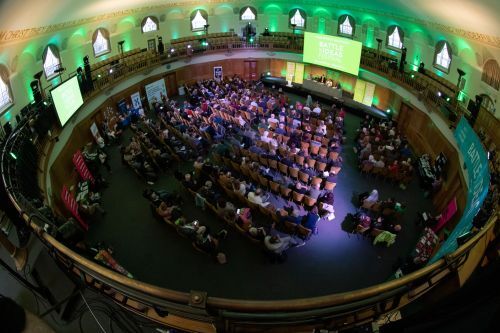
This project brings together audio recordings of the Battle of Ideas festival, organised by the Academy of Ideas, which has been running since 2005. We aim to publish thousands of recordings of debates on an enormous range of issues, producing a unique of political debate in the UK in the twenty-first century.